Insurance
Asset Tracking Database for Insurance Inventory

Many homeowners, renters, and business owners rely on insurance policies to protect their valuable assets in case of loss, theft, vandalism, or unexpected disasters. These perils can include natural events such as earthquakes, hurricanes, tornadoes, floods, or fires, as well as accidents like water damage, sewer backups, or other unexpected incidents. Whether you own a property, rent an apartment, or operate a business, insurance coverage is designed to help you recover from losses. However, to fully benefit from your policy, you must provide an accurate record of the items lost or damaged. This is where an asset tracking database becomes invaluable.
Even the most comprehensive insurance policy cannot replace items if you cannot prove ownership or provide details to your insurance adjuster. While paper records or spreadsheets might seem sufficient initially, these methods can become cumbersome and unreliable over time. A dedicated database system streamlines inventory tracking, allowing you to generate reports, organize information, and access your records quickly, especially during stressful circumstances after a loss.
What to Track
When creating an insurance inventory database, you should track key details about each asset. This includes the product type, manufacturer, purchase price, location, date of purchase, condition, and features. Scanning or photographing receipts and attaching them to your database entry provides further proof of purchase and value. It is also important to note the replacement value of each item. Some insurance policies reimburse the full replacement cost, while others provide actual cash value based on depreciation.
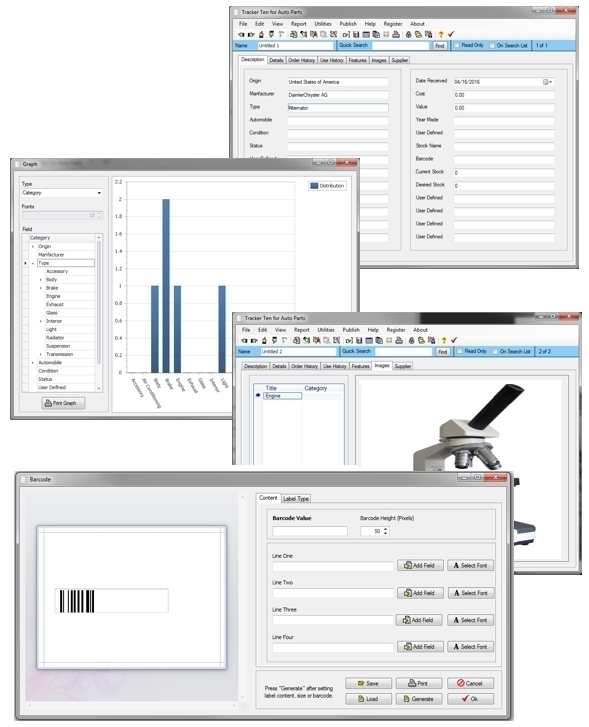
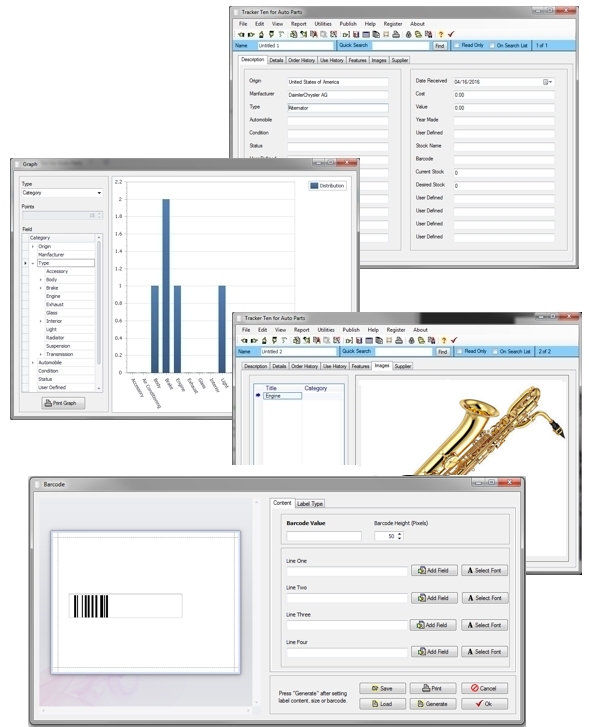
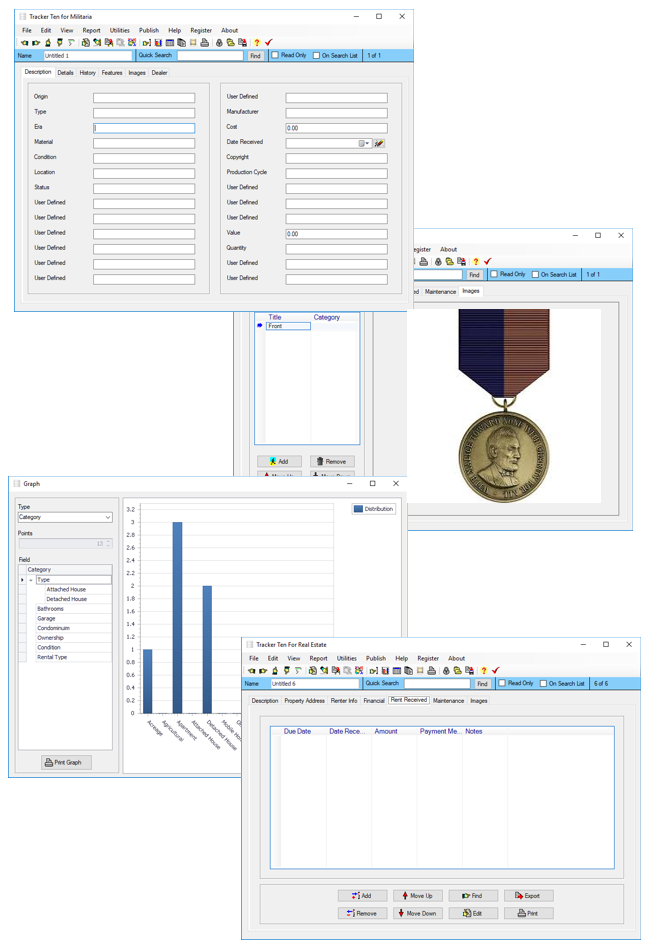
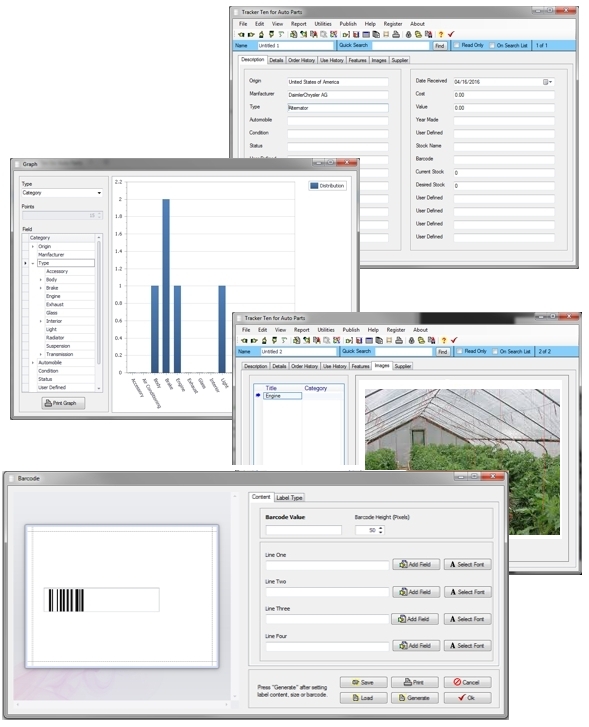
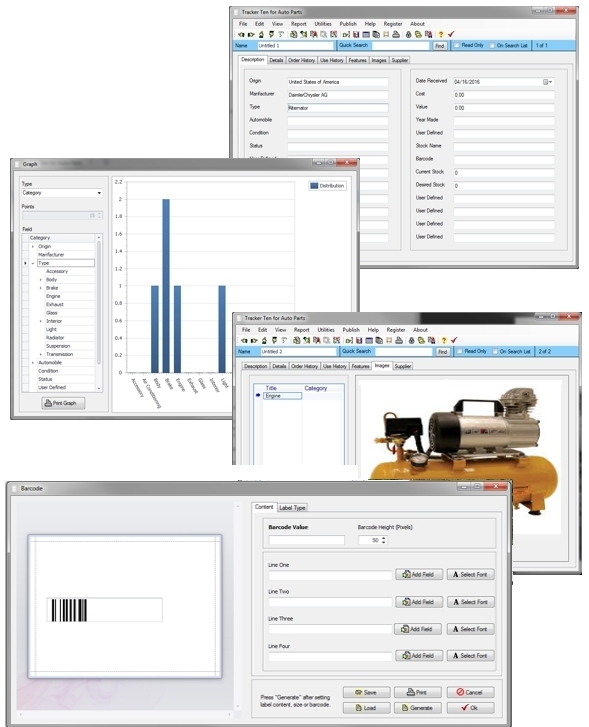
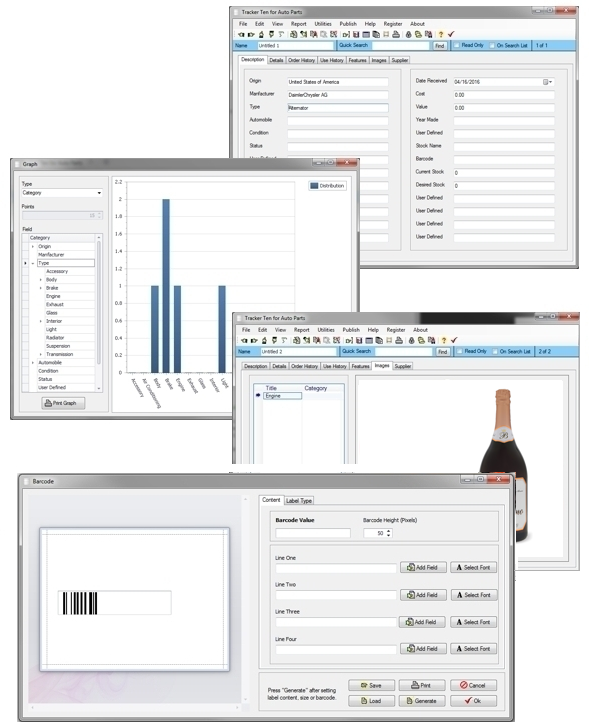
Photographs are particularly important. Digital cameras, smartphones, and tablets make it easy to capture multiple angles of your items. High-quality images serve as evidence of both ownership and condition, which can reduce depreciation deductions during claims. A database like Tracker Ten allows you to store multiple photos per asset, track items from acquisition to retirement, and document the entire lifecycle of each asset.
Beyond insurance-specific tracking, a database can manage other attributes, such as item location, loan status, warranty details, service history, or digital copies of manuals. Tracker Ten software can even generate reminders for upcoming service or maintenance tasks. Its customizable categories and fields allow you to adapt the system to your specific asset tracking needs, whether for home, office, or specialized equipment.
Business and Home Insurance Contents Calculator
In addition to tracking individual items, a database can calculate the total value of your assets for insurance purposes. If asked to provide the replacement value of all contents in your home or business, you might struggle to provide an accurate estimate without proper records. Tracker Ten products include reporting features that total the value of your inventory, allowing you to present clear, detailed reports to your insurance adjuster. These reports can be printed or exported for documentation purposes.
Completing a full inventory may also reveal gaps in your coverage. You might discover that your current insurance policy does not adequately cover the replacement cost of all items. Identifying this before a disaster strikes ensures you have sufficient coverage and reduces potential financial losses. Maintaining a detailed asset record also allows your insurance broker to recommend optimal coverage levels tailored to your specific needs.
Home and Contents
Your home insurance policy typically covers two main aspects: the structure itself and the contents. While calculating the value of your home is relatively straightforward based on size, location, and finishing, valuing contents is often more complex. Home contents include furniture, appliances, electronics, jewelry, designer clothing, artwork, collectibles, sporting goods, pet supplies, and even cash or cryptocurrency.
Valuing contents is especially challenging if items fluctuate in value, are stored in multiple locations like garages or sheds, or are located in vacation homes or cabins that remain unattended for long periods. In the aftermath of a traumatic event, you may not remember all your possessions. However, an asset tracking system like Tracker Ten for Home Inventory allows you to document and organize all your assets, making it easy to provide insurance adjusters with a complete list of items requiring replacement.
Churches, Schools, and Other Non-Profits
Educational institutions, churches, and non-profit organizations often have valuable equipment that needs to be protected. Schools may have audiovisual, computer, and laboratory equipment, which can be efficiently tracked using Tracker Ten for Classroom Equipment. Churches and non-profits frequently have office furniture, electronics, and other assets, all of which can be documented using Tracker Ten for Inventory. Accurate records allow these organizations to recover losses quickly and provide proof of assets to insurance companies.
Commercial Contents Insurance
Businesses require insurance coverage for office and operational equipment, including computers, furniture, telephones, tools, manufacturing machinery, and other high-value items. Tracker Ten for Inventory simplifies tracking and provides detailed records for insurance claims. Specialized offices, such as dental or medical practices, may have laboratory equipment and medical supplies that require detailed tracking, which can be handled using Tracker Ten for Medical Equipment.
Maintaining accurate records ensures full recovery in case of unexpected events. Insurance companies often require an updated asset list to process claims efficiently, making an organized inventory essential for businesses of all types.
Insurance for Warehouses, Stock Rooms, and Retail Stores
Warehouse, retail, and salon operators often use inventory or point-of-sale systems to manage stock. If you still track assets manually, software like Tracker Ten for Inventory can automate this process. Barcode-enabled systems can track inventory movements while maintaining records for insurance purposes.
Beyond stock, many businesses have auxiliary equipment, such as forklifts, POS terminals, and other machinery. Tracker Ten software can document these assets, ensuring that high-value items are accounted for in the event of loss or damage.
Construction Site Insurance
Construction companies deploy tools, materials, and equipment across various job sites. Construction sites can be vulnerable to theft, fire, and accidents. Using software like Tracker Ten for Stock or Tracker Ten for Tools helps track deployed assets, providing proof of ownership and detailed documentation for insurance purposes. Proper tracking reduces financial risk and simplifies claim processing in the event of loss.
Storage of Data
It is crucial to store copies of your inventory data in multiple locations. A total loss due to fire, theft, or natural disaster could destroy physical records along with your assets. A simple strategy is to back up your data onto a USB drive kept in a fireproof safe, but even this is not entirely secure. Offsite storage or cloud-based backup systems, such as Dropbox or Microsoft OneDrive, provide an additional layer of protection, ensuring your records are accessible even if the primary site is compromised.
Regularly updating backups and storing them in secure, remote locations is essential for safeguarding your data. Digital storage solutions not only provide redundancy but also allow for easy sharing with insurance adjusters, auditors, or brokers when required.
Conclusion
An asset tracking database is an essential tool for homeowners, renters, businesses, and organizations to protect valuable assets. It simplifies documentation, improves accuracy, and ensures that you can provide proof of ownership and value in the event of loss. From personal items to commercial equipment, specialized tools, and collectibles, a well-maintained inventory supports insurance claims and ensures adequate coverage.
Software like Tracker Ten offers comprehensive solutions for a variety of asset tracking needs, including home inventory, classroom equipment, medical tools, and commercial stock. By combining accurate data collection, multiple backups, and customizable features, these systems provide peace of mind and practical support for asset management and insurance purposes.
In summary, maintaining an up-to-date asset database enhances preparedness, protects financial interests, and streamlines insurance claims. Regardless of whether you are managing personal belongings, school equipment, office assets, or industrial machinery, a robust tracking system is a crucial part of responsible asset management.
Looking for windows database software? Try Tracker Ten
- PREVIOUS Stock Room Inventory Management Database Sunday, December 3, 2023
- NextDatabase Roles and Privileges Monday, October 30, 2023