Database
Cloud Based Database

Cloud based databases have become a foundational technology in modern computing, transforming how organizations store, manage, and access data. As businesses, governments, and institutions increasingly rely on digital systems, the need for scalable, flexible, and reliable data storage has driven widespread adoption of database platforms hosted in the cloud. Rather than maintaining databases on local servers or on-premises infrastructure, cloud based databases operate on remote servers managed by cloud service providers and accessed over the internet. This shift has changed not only the technical architecture of data systems but also the economics, security models, and operational practices surrounding database management.
At a basic level, a cloud based database is a database that runs on cloud computing infrastructure instead of on a local server or desktop computer. The database software itself may be traditional, such as SQL-based relational databases, or it may be purpose-built for cloud environments, such as distributed NoSQL databases. What distinguishes a cloud based database is that the underlying hardware, networking, and often much of the administrative responsibility are handled by a cloud provider. Users interact with the database through web interfaces, management tools, or application programming interfaces, without needing direct access to the physical servers.
One of the primary drivers behind cloud based databases is scalability. Traditional on-premises databases require organizations to estimate future storage and performance needs in advance. If usage grows faster than expected, systems may run out of capacity, requiring expensive and time-consuming hardware upgrades. Cloud based databases, by contrast, are designed to scale on demand. Storage, processing power, and memory can often be increased or decreased dynamically, allowing systems to handle sudden spikes in usage or long-term growth without major infrastructure changes. This elasticity is especially valuable for applications with unpredictable workloads, such as e-commerce platforms, mobile apps, or seasonal services.
Cost efficiency is another major advantage of cloud based databases. On-premises database systems often involve significant upfront costs, including server hardware, data center space, power, cooling, and licensing fees. In addition, organizations must hire or train staff to manage and maintain these systems. Cloud based databases typically operate on a pay-as-you-go model, where users pay only for the resources they consume. This shifts database spending from capital expenditures to operational expenditures, making costs more predictable and reducing financial risk. For startups and small organizations, this model lowers the barrier to entry, enabling access to enterprise-grade database technology without large initial investments.
Cloud based databases also simplify deployment and management. Setting up a traditional database can be a complex process involving server configuration, operating system installation, database tuning, backups, and security hardening. Cloud providers often offer managed database services that automate many of these tasks. With a few configuration choices, users can create a database instance that is already optimized, secured, and backed up according to best practices. Routine tasks such as software updates, patching, and failover may be handled automatically by the provider, allowing database administrators and developers to focus on application logic and data usage rather than infrastructure maintenance.
Reliability and availability are critical concerns for any data system, and cloud based databases are designed with these priorities in mind. Cloud providers typically operate multiple data centers across different geographic regions. Cloud databases can replicate data across multiple locations, ensuring that if one server or even an entire data center fails, the database remains accessible. Automated backups, snapshots, and point-in-time recovery options further protect against data loss. For organizations that require high availability, cloud based databases offer configurations that would be costly and complex to implement in an on-premises environment.
Security is often a topic of intense discussion when it comes to cloud based databases. While some organizations initially worry about storing sensitive data off-site, major cloud providers invest heavily in security infrastructure and expertise. Cloud databases typically include features such as encryption at rest and in transit, fine-grained access controls, identity and authentication integration, and detailed audit logging. Responsibility for security is shared between the provider and the user, with the provider securing the underlying infrastructure and the user controlling access policies, application security, and data governance. When properly configured, cloud based databases can meet or exceed the security standards of traditional systems.
Cloud based databases support a wide range of data models and use cases. Relational cloud databases, based on structured tables and SQL, remain popular for transactional systems such as financial applications, inventory management, and customer records. These databases emphasize data consistency, integrity, and well-defined schemas. At the same time, cloud environments have accelerated the adoption of NoSQL databases, which are designed to handle large volumes of unstructured or semi-structured data. Key-value stores, document databases, column-family databases, and graph databases each address different needs, from real-time analytics to social networks and recommendation systems.
Performance is another area where cloud based databases have evolved significantly. Early cloud systems were sometimes criticized for latency and inconsistent performance. Modern cloud databases use advanced caching, distributed architectures, and high-speed networking to deliver performance comparable to, and sometimes better than, on-premises systems. Many cloud providers allow users to choose performance tiers or instance types optimized for specific workloads, such as read-heavy applications or high-write transaction processing. This flexibility allows organizations to tailor database performance to their exact requirements.
One of the defining characteristics of cloud based databases is their integration with broader cloud ecosystems. Databases in the cloud are rarely used in isolation. They are often connected to cloud-based analytics tools, data warehouses, machine learning platforms, and application hosting services. This tight integration enables powerful data workflows, such as real-time analytics, automated data pipelines, and intelligent applications that adapt based on user behavior. By keeping data close to the services that consume it, cloud based databases reduce complexity and improve efficiency.
Cloud based databases also support modern development practices. Continuous integration and continuous deployment workflows benefit from the ability to quickly create, clone, and destroy database environments for testing and development. Developers can spin up temporary databases for experiments or automated tests and shut them down when no longer needed, reducing costs and risk. Infrastructure as code tools allow database configurations to be version-controlled and deployed consistently across environments, improving reliability and collaboration between teams.
Despite their many advantages, cloud based databases are not without challenges. One consideration is vendor lock-in. Each cloud provider offers unique database services, APIs, and management tools, which can make it difficult to migrate systems between providers or back to on-premises environments. Organizations must carefully evaluate their long-term strategy and consider portability when designing cloud database architectures. Using open standards, abstraction layers, or hybrid approaches can help mitigate this risk.
Data sovereignty and compliance are also important concerns, particularly for organizations operating across multiple countries. Regulations may require certain types of data to be stored within specific geographic boundaries or handled according to strict privacy rules. Cloud providers address these needs by offering region-specific deployments and compliance certifications, but organizations remain responsible for ensuring their database usage aligns with applicable laws and policies.
Another challenge is cost management. While cloud based databases can reduce upfront expenses, costs can grow unexpectedly if resource usage is not monitored carefully. High traffic, inefficient queries, or excessive data retention can drive up monthly bills. Effective cost management requires visibility into usage patterns, performance tuning, and regular review of database configurations. Many cloud providers offer monitoring and budgeting tools to help users stay in control.
Hybrid and multi-cloud strategies are becoming increasingly common as organizations seek to balance flexibility, performance, and risk. In a hybrid approach, some databases remain on-premises while others run in the cloud, often connected through secure networks. Multi-cloud strategies involve using databases from multiple cloud providers to avoid dependency on a single vendor or to optimize for specific capabilities. Cloud based databases are well-suited to these models, offering the connectivity and management tools needed to operate across diverse environments.
Looking ahead, cloud based databases will continue to evolve alongside advances in distributed systems, artificial intelligence, and data analytics. Serverless database models, where users do not manage servers at all and pay only for actual query execution, are gaining traction. Automated tuning, self-healing systems, and intelligent scaling are reducing the need for manual database administration. As data volumes grow and applications become more data-driven, cloud based databases will play an increasingly central role in enabling innovation.
In conclusion, cloud based databases represent a significant shift in how data is stored, managed, and used. By offering scalability, cost efficiency, reliability, and integration with modern cloud services, they provide organizations with powerful tools to support a wide range of applications and workloads. While challenges such as security, compliance, and cost control require careful attention, the benefits of cloud based databases have made them a cornerstone of modern information systems. As technology continues to advance, cloud based databases will remain a key enabler of digital transformation across industries.
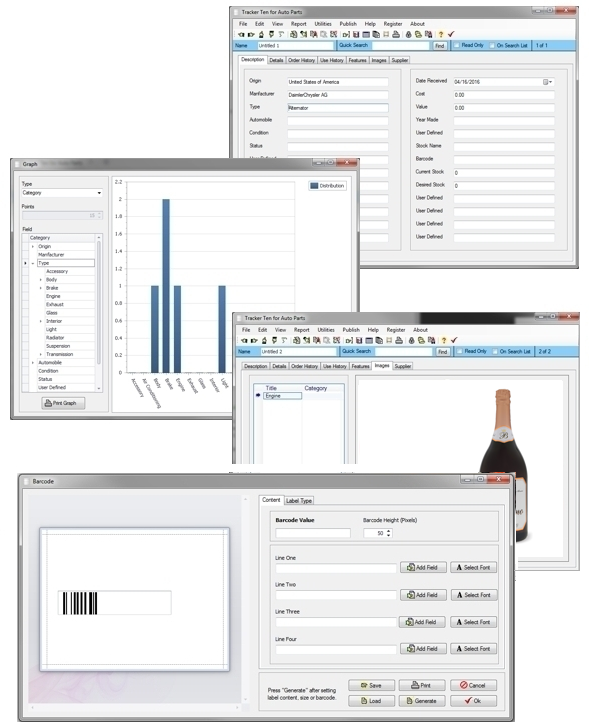
Looking for windows database software? Try Tracker Ten
- PREVIOUS Collecting Beanie Babies Wednesday, May 7, 2025
- NextAutomated Agent Ready Data Wednesday, April 30, 2025