Database
Tracking Customers For Your Small Business

Tracker Ten for Customers is a versatile Windows-based software solution designed to help small businesses organize, understand, and strengthen their relationships with customers and clients. For many small businesses, customer information is scattered across email inboxes, spreadsheets, paper files, and contact apps. This fragmentation makes it difficult to deliver consistent service, follow up effectively, or gain insights into customer behavior. Tracker Ten for Customers addresses these challenges by providing a centralized, customizable system that turns customer data into a practical business asset.
At the foundation of Tracker Ten for Customers is its ability to store comprehensive customer profiles. Each record can include customer type, full contact information, postal address, email address, and other essential details. This allows small businesses to clearly distinguish between different kinds of customers, such as retail clients, wholesale buyers, long-term accounts, or one-time customers. By categorizing customer types, businesses can tailor communication, pricing, and service levels more effectively. Having all contact details in one place also reduces time spent searching for information and minimizes errors caused by outdated or inconsistent records.
Beyond basic contact details, Tracker Ten supports contact history tracking, which is especially valuable for relationship-driven businesses. Every interaction with a customer—whether it is a phone call, email, meeting, or service visit—can be recorded within the customer’s profile. Over time, this builds a clear timeline of communication that helps staff understand the context of each relationship. When a customer reaches out, employees can quickly review past interactions and respond knowledgeably, creating a more professional and personalized experience. This is particularly beneficial for small teams where multiple people may interact with the same customer.
The software also includes rich text format data areas for notes, allowing businesses to store detailed and well-organized information. Rich text support means notes can include formatting such as headings, bullet points, and emphasis, making them easier to read and update. Small businesses can use these notes to record preferences, special requirements, service instructions, or reminders. For example, a service provider might note preferred appointment times, while a supplier-facing business might record negotiation details or contract terms. This level of documentation helps ensure consistency, even as staff change or the business grows.
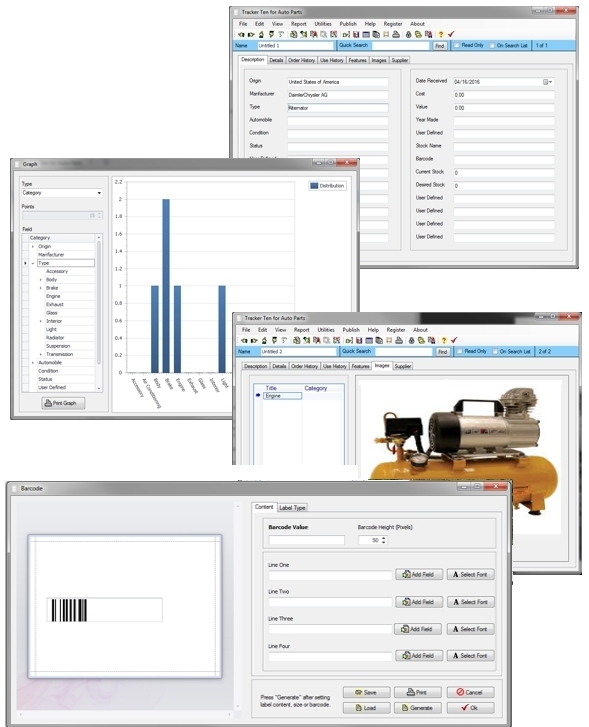
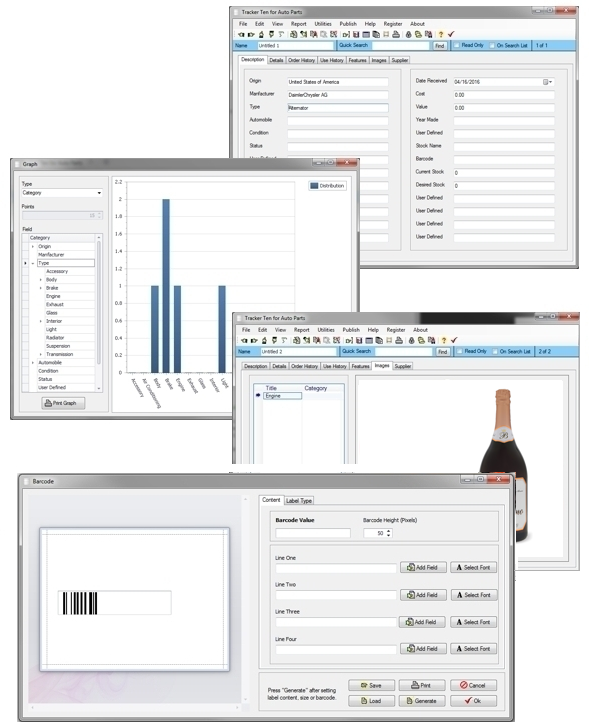
Tracker Ten for Customers goes beyond text by supporting associated document scans, images, and multiple image attachments for each customer record. This is a powerful feature for businesses that rely on paperwork or visual references. Contracts, signed agreements, identification documents, invoices, and correspondence can be scanned and attached directly to the relevant customer profile. Images can be used to store photos of job sites, delivered products, or completed work. Having these materials linked to the customer record reduces reliance on physical filing systems and makes important documents instantly accessible.
The album view and multiple image support further enhance usability by allowing staff to visually browse customer-related images. This is particularly useful for industries such as construction, design, repair services, or custom manufacturing, where visual context matters. Being able to quickly review images tied to a customer improves understanding and reduces miscommunication. It also saves time, as employees do not need to search through separate folders or external systems.
Finding information quickly is critical for day-to-day operations, and Tracker Ten for Customers includes a powerful search engine to support this need. Users can search across customer records using various criteria, such as name, customer type, location, or keywords within notes. This allows small businesses to retrieve information in seconds, even as their customer database grows. Fast search capability improves responsiveness and helps staff stay focused on serving customers rather than managing data.
Reporting is another key strength of Tracker Ten for Customers. The built-in report writer enables businesses to generate customized reports based on their customer data. Reports can be used to analyze customer distribution, activity levels, or communication history. For example, a business might create a report showing all customers contacted within a certain timeframe, or all clients within a specific region. These reports support better decision-making by turning stored data into actionable insights.
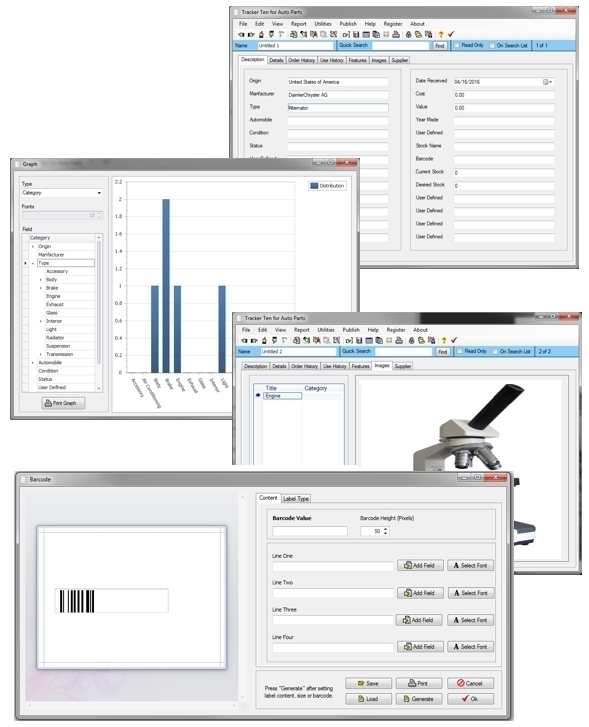
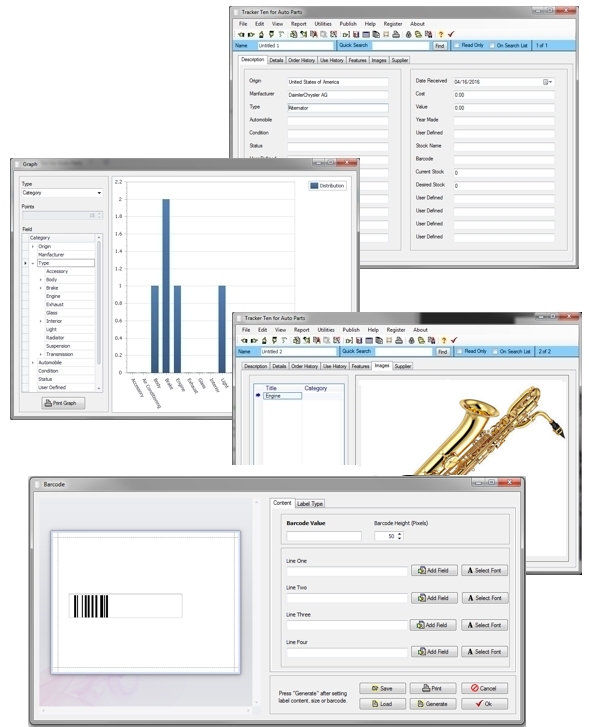
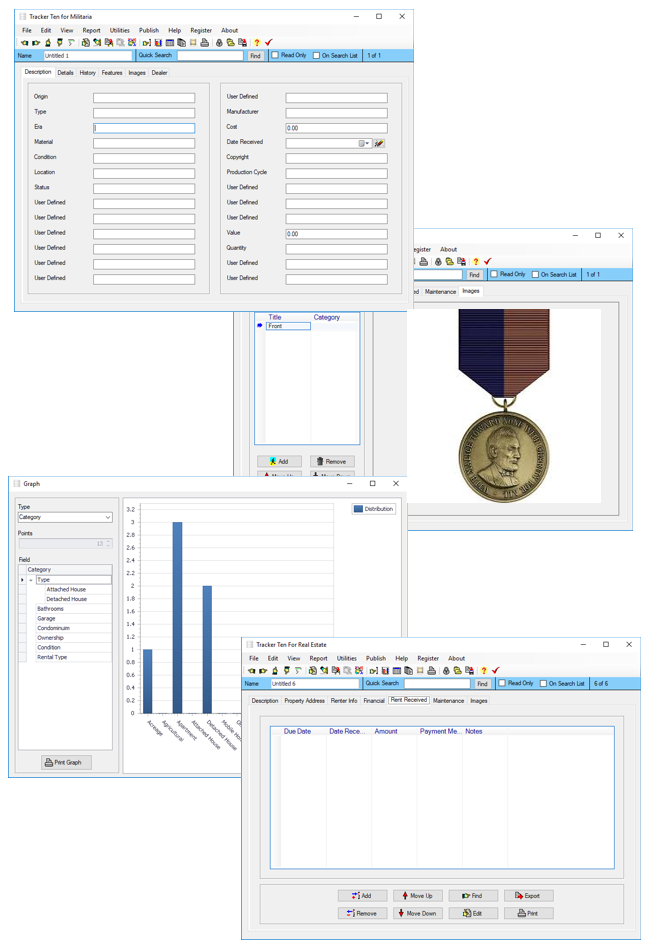
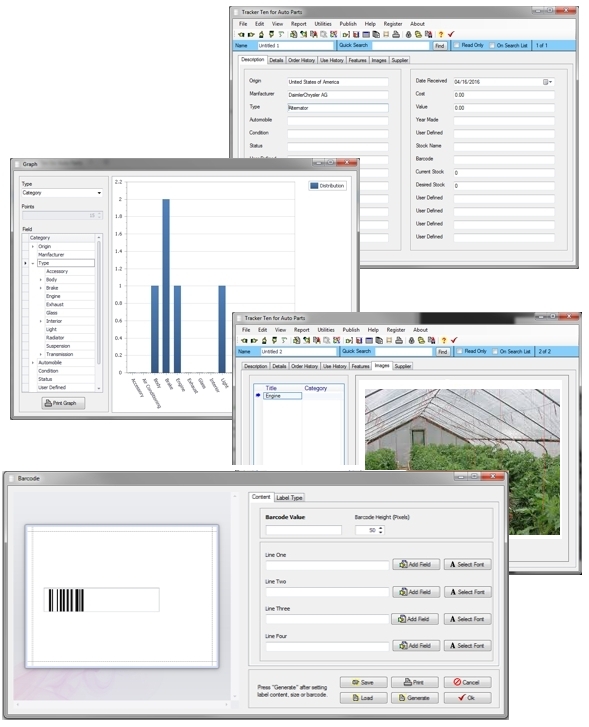
In addition to traditional reports, Tracker Ten includes a graph generator that allows businesses to visualize customer data. Graphs and charts can make trends easier to understand, such as growth in customer numbers over time or the proportion of different customer types. Visual data presentation is especially helpful for small business owners who want quick, high-level insights without digging through raw data. These visual tools can also be useful when sharing information with partners or team members.
The software’s spreadsheet view offers another way to interact with customer data. This view presents records in a tabular format similar to common spreadsheet applications, making it familiar and easy to use. Small businesses that are transitioning from spreadsheets to a more structured system will appreciate this feature, as it eases the learning curve. The spreadsheet view allows for quick scanning, sorting, and comparison of records, supporting both everyday tasks and data cleanup efforts.
Tracker Ten for Customers also supports HTML generation, which opens up additional possibilities for using customer data. Businesses can generate HTML-based outputs for internal use, reporting, or integration with websites and other systems. This feature adds flexibility and supports workflows where customer information needs to be shared or published in a controlled format.
Communication and outreach are essential for maintaining customer relationships, and Tracker Ten includes mailing label printing on standard label printers. This makes it easy to produce professional mailing labels for invoices, promotional mailings, or holiday cards. For small businesses that still rely on physical mail, this feature saves time and ensures consistency. By using the stored postal address data, labels can be generated quickly without retyping information, reducing errors and improving efficiency.
Customization is one of the most important aspects of Tracker Ten for Customers. The software can be easily adapted to suit individual business needs through customizable fields and layouts. This means businesses are not forced into a rigid structure that may not match their operations. Whether a business needs to track industry-specific information, internal classifications, or custom metrics, Tracker Ten can be configured accordingly. This flexibility makes the software suitable for a wide range of industries, from professional services to retail, trades, and beyond.
Data export capabilities further enhance flexibility by allowing customer information to be shared with other software applications. Small businesses often use multiple tools for accounting, marketing, or operations, and the ability to export data helps avoid duplication of effort. Exported data can be used for email campaigns, financial analysis, or backups, ensuring that customer information remains useful beyond the Tracker Ten environment.
An added advantage of Tracker Ten for Customers is the option for further customization. If the software does not fully meet a business’s requirements out of the box, additional changes can be made to better align it with specific workflows. This is especially valuable for small businesses with unique processes that off-the-shelf software often fails to address. Customization allows the system to evolve alongside the business, protecting the initial investment and extending the software’s lifespan.
From a strategic perspective, using Tracker Ten for Customers helps small businesses move from reactive to proactive customer management. Instead of scrambling to find information or relying on memory, businesses gain a structured, reliable system that supports consistent service and thoughtful follow-up. This leads to stronger customer relationships, improved retention, and a more professional image.
In conclusion, Tracker Ten for Customers provides small businesses with a comprehensive and adaptable solution for tracking and managing customer information. Its ability to store detailed profiles, track contact history, manage documents and images, generate reports and graphs, and support communication tasks makes it a powerful tool for customer relationship management. Combined with strong search capabilities, customization options, and data export features, the software helps small businesses stay organized, informed, and responsive. By centralizing customer data and making it easy to access and analyze, Tracker Ten for Customers enables small businesses to build stronger relationships and operate more efficiently in a competitive environment.
Looking for windows database software? Try Tracker Ten
- PREVIOUS Managing Equipment for a Fitness Studio Wednesday, November 13, 2024
- NextDental Lab Equipment and Supply Tracking Database Software Sunday, November 10, 2024