Database
Database Naming Conventions Best Practices

Naming conventions are a critical yet often underestimated aspect of database design and development. Every database, regardless of size or purpose, relies on names to identify tables, columns, attributes, fields, views, keys, stored procedures, triggers, indexes, and constraints. These names form the vocabulary that developers, database administrators, analysts, and even business users rely on to understand how data is organized and how different elements relate to one another.
Selecting good names can make your database significantly easier to work with, easier to maintain, and far less error-prone over time. Conversely, poorly chosen or inconsistent names can lead to confusion, bugs, misinterpretation of data, and expensive refactoring efforts later in the life of a system. For this reason, it is always a good idea to start any database project with a clear, well-documented set of naming rules. This set of rules is known as a naming convention.
If you carefully follow a consistent naming convention, your SQL queries will be easier to read, your reports will be more intuitive, and your database schema will be largely self-documenting. Although it is technically possible to rename tables and fields after a database goes live, doing so can be risky and time-consuming. Every reference to a renamed object must be updated in queries, views, stored procedures, reports, applications, and integrations. Choosing the right names from the beginning is far more efficient and far less disruptive.
Pseudocode Naming Conventions
Before you formally design and implement a database schema, you will often begin with a conceptual or logical design. This design might be sketched on paper, modeled in a software design tool, created using an object-relational mapping (ORM) framework, or drafted in a database workbench. Even at this early stage, adopting proper naming conventions is extremely important.
Using realistic, well-thought-out names in pseudocode and design diagrams reduces the time and effort required to convert designs into actual database objects. It also minimizes misunderstandings when designs are handed off to developers or database administrators for implementation. If your design documents use vague or placeholder names, those names often find their way into production systems, where they become difficult to justify and even harder to change.
This practice becomes even more important when working with larger teams or distributed teams. Developers may be working in different time zones or may not share the same first language. Clear, descriptive, and consistent names help ensure that everyone interprets the design in the same way. Well-chosen names communicate intent, reduce ambiguity, and serve as a form of lightweight documentation.
By treating pseudocode and early designs as a first-class representation of your future database, you set a strong foundation for the rest of the project. Naming conventions should be applied consistently from the very first sketch through to the final production deployment.
Consistent Naming Convention
The single most important principle in database naming is consistency. A consistent naming convention allows developers and users to quickly recognize patterns, understand relationships, and identify duplicate or overlapping data elements. Inconsistent naming, on the other hand, almost guarantees confusion and increases the likelihood of design flaws.
Your naming convention should define how objects are named across the entire database. Names should be descriptive enough to convey meaning but short enough to remain readable. In most cases, keeping names under 50 characters is a good guideline. Avoid unnecessary verbosity, but do not sacrifice clarity for the sake of brevity.
Special characters such as dollar signs, spaces, or dashes should generally be avoided. Many database systems either restrict their use or require special quoting, which can make queries harder to read and maintain. Alphabetic characters are the safest choice, and underscores are commonly used to separate words. It is also usually best to avoid numbers in object names unless they convey universally understood meaning. A number that makes sense to one developer may be meaningless to another.
Some database platforms impose specific rules on identifiers. For example, SQL identifiers typically must begin with a letter, and certain characters may be prohibited altogether. Understanding these constraints upfront helps you design a naming convention that is portable and compliant across systems.
Whenever possible, use full words rather than cryptic abbreviations. If you choose to use abbreviations, ensure they are commonly understood within your organization or industry. Avoid redundant prefixes such as "tbl_" or "table_" for tables or "col_" for columns. The context in which a name is used usually makes its purpose obvious.
If you need to separate words within a name, choose one method and apply it consistently throughout the database. Common approaches include:
- Underscore separation (for example, student_address)
- Camel case (for example, studentAddress)
- Pascal case (for example, StudentAddress)
You should never mix these styles within the same schema. Some databases and frameworks have preferences or requirements regarding case sensitivity. While personal preference plays a role, underscore-separated names are often favored in databases because they are easy to read and unambiguous.
Consistency also applies to terminology. If you decide to refer to people in a school database as "student," use that term everywhere. Do not alternate between "student," "pupil," and "learner," even if those words are technically synonymous. Inconsistent terminology makes it difficult to recognize relationships and can lead to duplicate or conflicting data structures.
Finally, avoid embedding application-specific names into your database objects. Applications change over time, but the underlying concepts often remain the same. Naming objects based on business concepts rather than application names improves the longevity and reusability of your database design.
Singular or Plural Names
One of the most common debates in database design concerns whether to use singular or plural names, particularly for tables. For example, should a table that stores information about students be named student or students?
While both approaches are technically valid, industry best practices generally favor using singular nouns for all database object names. Using singular names keeps conventions consistent across tables, columns, and relationships. A row in a table represents a single entity, so a singular name often aligns more naturally with the data model.
Using singular names also avoids complications related to pluralization rules. In English, plural forms are not always predictable. Words like "mouse" become "mice," and some nouns such as "water" or "equipment" do not have standard plural forms at all. By standardizing on singular names, you eliminate these linguistic edge cases.
Consistency is more important than the specific choice itself. Once you decide on singular naming, apply it everywhere. A table named student might contain columns such as student_id, student_name, and enrollment_date, reinforcing a clear and predictable pattern.
Avoid Reserved Words
All database management systems rely on reserved words to represent commands, functions, and internal concepts. Examples include words such as SELECT, TABLE, INDEX, USER, GROUP, and ORDER. Using these words as object names can lead to confusion and may require awkward escaping or quoting in queries.
For instance, many SQL dialects use the word "user" to refer to a security principal. If you also create a table or column named "user," it may be unclear whether a query is referring to your data or to a system object. This ambiguity can make code harder to read and maintain, especially for developers who are new to the project.
To avoid these issues, familiarize yourself with the list of reserved words for your chosen database system and avoid using them in object names. Even if a particular word is not currently reserved, it may become reserved in future versions, creating upgrade challenges.
Data Export and Naming Conventions
Modern databases rarely exist in isolation. They often exchange data with other systems through APIs, data feeds, reports, and integrations. As a result, your database naming conventions should be considered in the broader context of your overall system architecture.
APIs, particularly those that use formats such as JSON or XML, often have their own naming conventions. For example, JSON commonly uses camelCase for property names. If your database uses underscore-separated names, you may need to map between conventions when exporting or importing data.
Where possible, aligning database and API naming conventions can simplify development and reduce the need for transformation logic. Even if exact alignment is not feasible, being aware of how names will be exposed externally can help you make more informed decisions during schema design.
Consistency across system boundaries improves maintainability and makes it easier for developers to reason about data as it flows through different components of your application stack.
Tracker Ten Field Naming
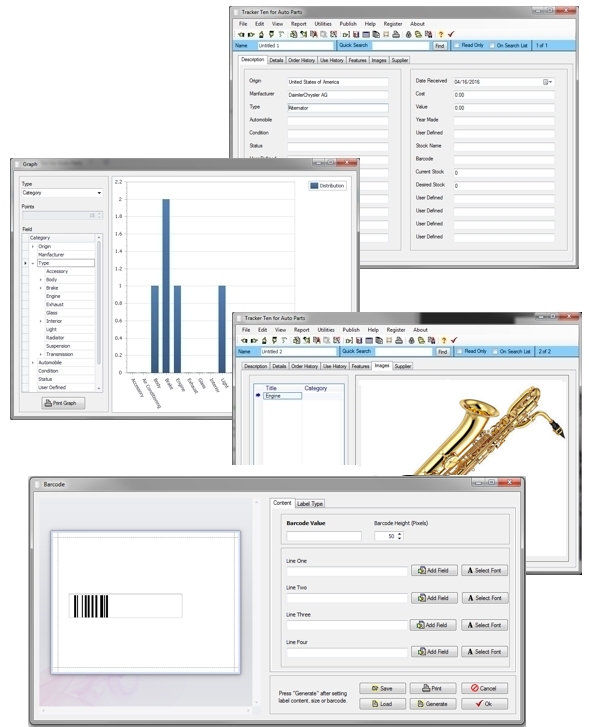
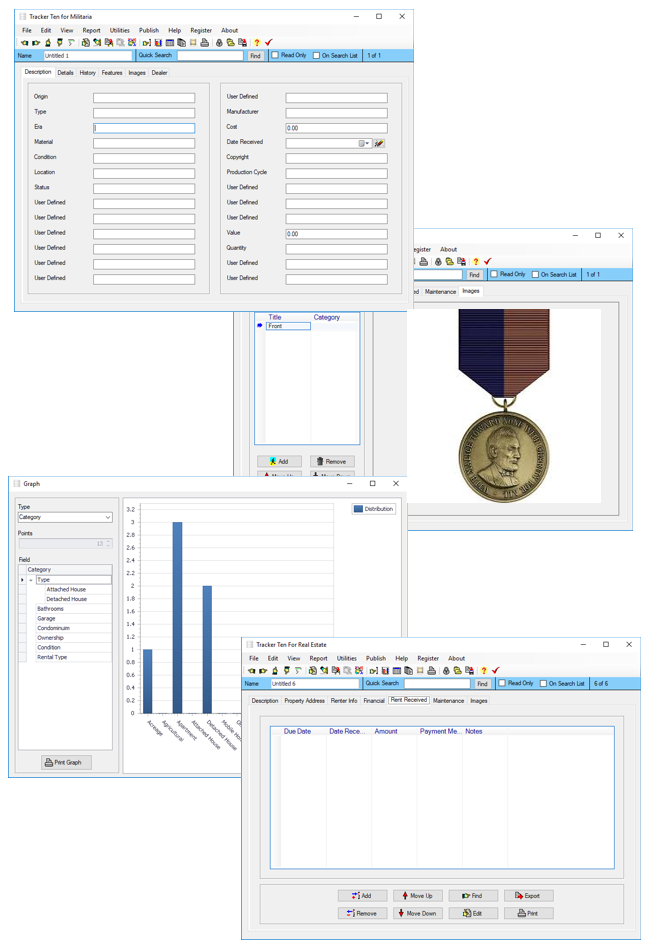
Using the Windows desktop Tracker Ten database system, you can easily define and modify field names by simply double-clicking on them within the interface. Tracker Ten is designed to manage naming changes gracefully, automatically updating references behind the scenes to maintain consistency and integrity.
This flexibility makes it easier to refine naming conventions as your understanding of the data evolves. However, even with tools that simplify renaming, establishing strong naming conventions from the start remains a best practice. Thoughtful, consistent naming improves collaboration, reduces errors, and ensures that your database remains understandable and maintainable for years to come.
Looking for windows database software? Try Tracker Ten
- PREVIOUS Keeping Track of your Toy Car Collection Friday, May 16, 2025
- NextCollecting Beanie Babies Wednesday, May 7, 2025