Database
Data Mining Windows Desktop Application

Once you have information stored in a database, you may perform a process called "data mining" to analyze the stored data and derive new insights. Data mining, also known as knowledge discovery in databases (KDD), is a process that examines large datasets to identify patterns, correlations, trends, and anomalies that might otherwise go unnoticed. It combines elements from statistics, machine learning, and database systems to extract meaningful knowledge from raw data. The results of data mining can be used for business intelligence, operational efficiency, predictive modeling, risk management, and informed decision-making.
While data mining is often associated with large organizations, such as banks, insurance companies, and multinational corporations, small businesses and individual users can also benefit from it. By uncovering hidden patterns in their own datasets, small business owners can make smarter decisions, optimize resource allocation, and improve customer experiences. For example, observing sales trends during specific holidays or detecting which products sell together are simple forms of data mining that can guide inventory management, marketing campaigns, and product bundling strategies.
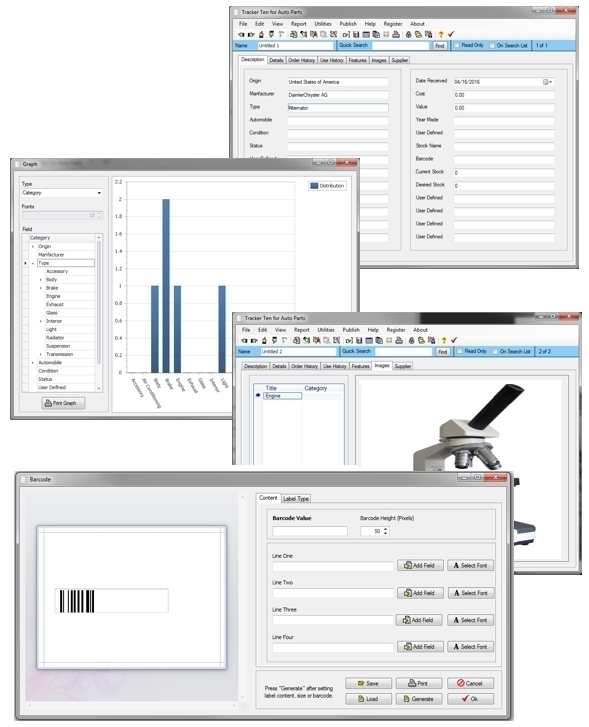
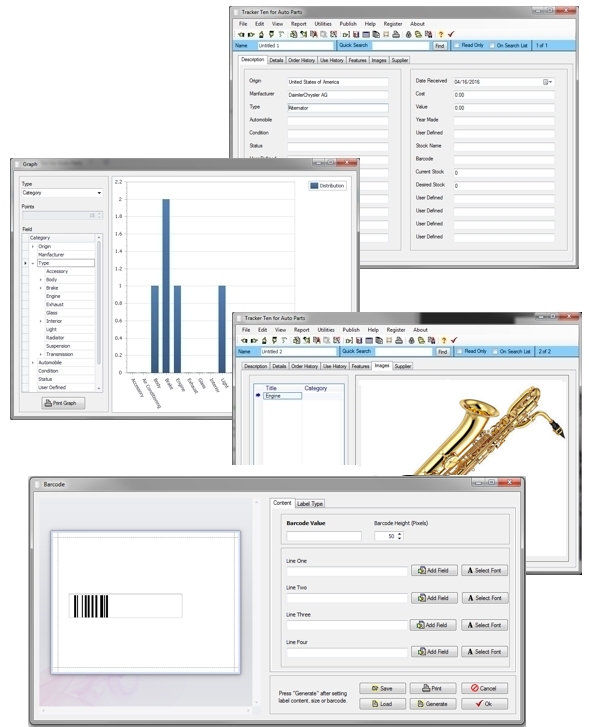
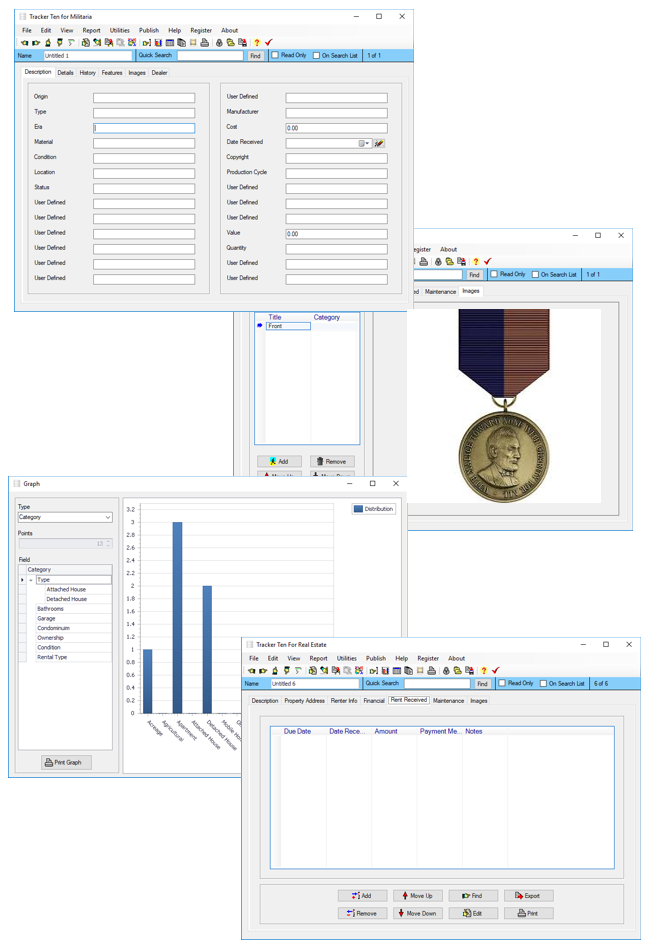
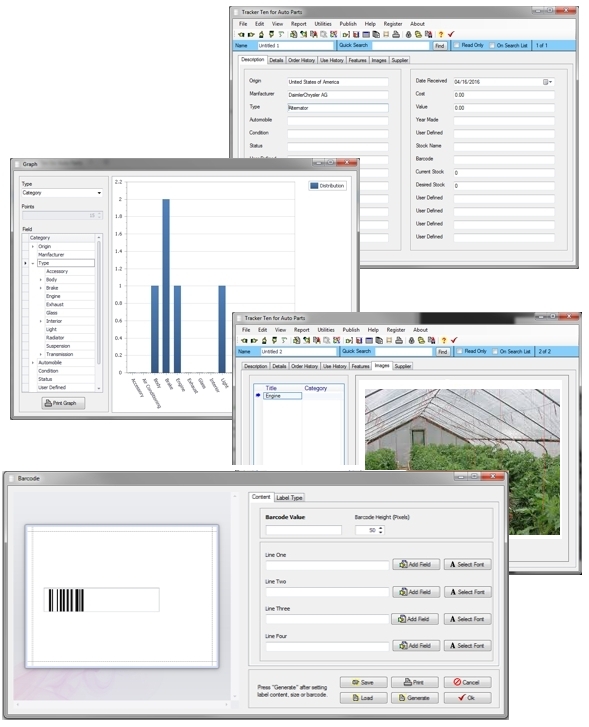
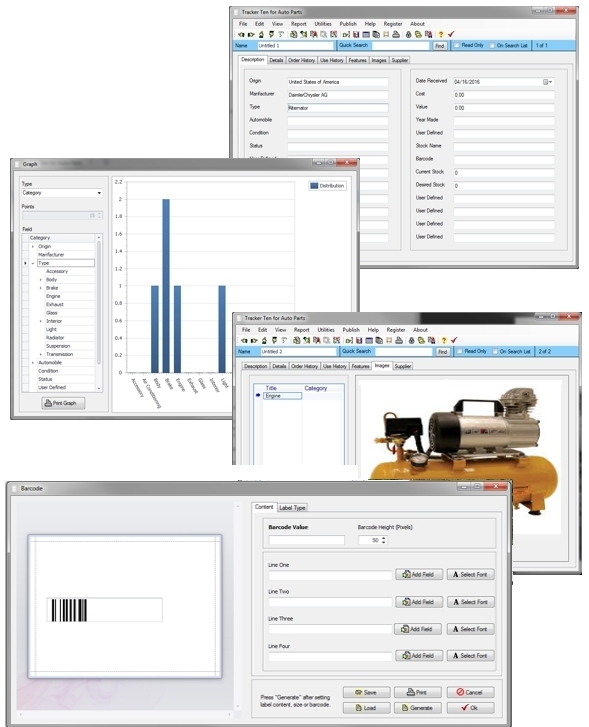
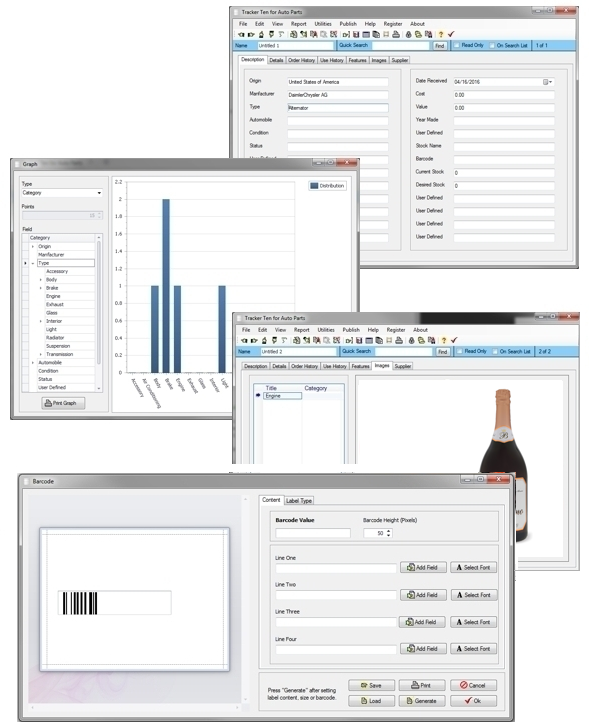
Our Windows desktop Tracker Ten software allows users to perform simple data mining tasks through integrated reporting, filtering, and chart-based visualization tools. These features make it easier for individuals and small businesses to extract meaningful insights without needing advanced technical expertise.
Why is Data Mining Important for a Small Business Owner?
Data mining transforms raw data into actionable insights, which can be crucial for decision-making and business strategy. When patterns are identified in historical data, they provide predictive power and allow business owners to anticipate trends, reduce waste, and optimize operations.
For instance, using Tracker Ten for Equipment, you can generate reports that show maintenance costs over time. If you notice that service costs rise significantly after a five-year period, this insight can guide decisions about equipment replacement schedules, ensuring efficiency and reducing unexpected costs.
Similarly, with Tracker Ten for Customers, you can track customer purchasing behavior. By analyzing patterns such as frequently purchased products or services, you can identify opportunities to create service bundles, targeted promotions, or loyalty programs that enhance customer satisfaction and revenue. Data mining thus becomes a strategic tool that helps small business owners make data-driven decisions that improve profitability and customer engagement.
Even simple observations—like recognizing which products sell faster during specific times of the year—are forms of data mining that can significantly influence inventory planning, staffing, and marketing campaigns. With proper tools, these insights can be systematically extracted, visualized, and acted upon.
Types of Data Mining
There are five main types of data mining techniques: classification, anomaly detection, regression analysis, association, and clustering. While the names may sound technical, each method has straightforward applications.
1. Classification: Classification assigns data into predefined categories. For example, in Tracker Ten for Libraries, books can be classified as fiction or non-fiction. Analyzing circulation history might reveal that non-fiction books are borrowed more frequently, guiding you to stock more of these titles. Classification is widely used in customer segmentation, credit scoring, and risk assessment.
2. Anomaly Detection: This technique identifies unusual or unexpected data points. Banks, for example, use anomaly detection to flag suspicious transactions for potential fraud. In a business context, Tracker Ten for Equipment could reveal unusually high service costs for equipment from a particular manufacturer, helping you avoid future purchases from that vendor. Anomaly detection is also valuable in quality control and system monitoring.
3. Regression Analysis: Regression explores relationships between different data fields. For example, inflation rates often correlate with interest rates. In a business scenario, you might discover that higher-priced products incur lower service costs, highlighting the long-term value of investing in premium equipment. Regression analysis is commonly used in forecasting, pricing strategy, and predictive maintenance.
4. Association: Association identifies patterns where the occurrence of one event correlates with another. For example, in Tracker Ten for Medical Equipment, reliable X-ray machines might consistently include certain features. Recognizing these associations helps you make informed future purchases. Association is also used in market basket analysis and cross-selling strategies.
5. Clustering: Clustering groups similar items together based on shared characteristics. In Tracker Ten for People, volunteers might be clustered by age group to assign appropriate tasks. For customers, clustering could identify groups more likely to buy specific products, such as new parents purchasing diapers. Clustering enhances targeted marketing, resource allocation, and service personalization.
Each data mining technique can uncover unique insights, enabling better decision-making and operational efficiency. By understanding these basic types, even small business owners can leverage data mining to optimize processes and improve customer satisfaction.
Ensuring Data Mining Effectiveness
Effective data mining depends on clean, reliable, and representative data. Data cleaning involves removing duplicates, correcting errors, standardizing formats, and validating information. Poor-quality data can produce misleading results and undermine decision-making.
Additionally, insights must be tested against real-world outcomes. For example, a spike in sales on a specific day may be influenced by an external marketing campaign rather than a recurring trend. Validating findings ensures that derived insights are actionable and relevant.
Best practices to ensure data mining effectiveness include:
Data Validation: Regularly audit your datasets to ensure accuracy and completeness.
Sample Testing: Test data mining models on subsets of data to verify reliability.
Monitoring Outcomes: Track whether predictions or insights actually lead to the expected improvements.
Continuous Improvement: Update and refine data mining techniques as more data becomes available.
Integration with Business Processes: Align insights with operational workflows to maximize impact.
By adhering to these principles, data mining becomes a powerful tool that can reliably guide decisions and strategies.
Data Mining and Visualization
Visualizing data is essential for understanding patterns, detecting anomalies, and making informed decisions. Charts, graphs, and dashboards help convert raw data into visual insights that are easy to interpret. Tracker Ten products feature integrated charting tools that allow users to generate line graphs, bar charts, scatter plots, and pie charts to visually analyze trends and relationships.

For example, tracking sales over multiple months using a line graph can reveal seasonal trends, while bar charts may illustrate the most frequently purchased products. Visualizing anomalies with scatter plots can identify outliers that require further investigation. By combining visualization with data mining, even non-technical users can uncover valuable insights efficiently.
Applications of Data Mining in Small Business
Data mining has numerous practical applications for small businesses. These include inventory management, customer relationship management, sales forecasting, marketing strategy, and operational efficiency.
Examples include:
Inventory Optimization: Identifying trends in product sales helps maintain optimal stock levels, reducing overstocking and stockouts.
Customer Insights: Analyzing purchase behavior can uncover opportunities for personalized promotions and loyalty programs.
Sales Forecasting: Predicting future demand using historical sales data enables better planning and resource allocation.
Marketing Strategy: Recognizing product associations allows businesses to create effective upselling and cross-selling strategies.
Operational Efficiency: Identifying bottlenecks and recurring maintenance issues improves workflow and reduces downtime.
By applying data mining techniques to everyday business operations, small businesses can make smarter, data-driven decisions that enhance competitiveness and profitability.
Getting Started with Data Mining on Windows Desktop
Small business owners can get started with data mining without needing complex IT infrastructure. Key steps include:
Centralize Your Data: Use Tracker Ten databases to consolidate information from sales, customers, inventory, and equipment.
Clean Your Data: Remove duplicates, correct errors, and standardize formats.
Select Appropriate Tools: Use Tracker Ten’s reporting, filtering, and charting features to perform analyses.
Analyze Patterns: Apply classification, regression, association, clustering, or anomaly detection techniques to uncover insights.
Visualize Results: Convert numeric outputs into charts, graphs, and dashboards for easy interpretation.
Act on Insights: Implement operational or strategic changes based on data mining results.
Monitor and Refine: Continuously track outcomes, refine techniques, and update datasets for ongoing improvement.
By following these steps, small business owners can leverage their Windows desktop applications to extract actionable insights and drive informed business decisions.
Conclusion
Data mining is no longer limited to large organizations. With user-friendly Windows desktop applications such as Tracker Ten, small business owners and individual users can harness the power of data mining to make informed decisions, optimize operations, and improve customer experiences. By combining clean, centralized data with intuitive analysis tools and visualization, users can uncover patterns, detect anomalies, and develop actionable insights that drive growth and efficiency.
Whether tracking customer behavior, equipment maintenance, or inventory trends, data mining provides a structured method to transform raw data into meaningful knowledge. Integrating data mining into daily business operations enables smarter decision-making, reduces costs, enhances productivity, and ultimately increases profitability. Small businesses that adopt these practices are well-positioned to gain a competitive edge in an increasingly data-driven world.
Explore Tracker Ten to implement a powerful, user-friendly data mining solution directly on your Windows desktop. Start transforming your data into actionable insights today.
Looking for windows database software? Try Tracker Ten
- PREVIOUS Open Data Formats Sunday, December 8, 2024
- NextManaging Personal Protective Equipment Thursday, November 28, 2024