Database
Managing Classroom Equipment

Effectively managing audio visual and classroom equipment is a constant challenge for schools of all sizes. From elementary classrooms with shared projectors to high schools and colleges with hundreds or thousands of devices spread across multiple buildings, keeping track of equipment location, availability, condition, and maintenance history can quickly become overwhelming. Lost items, forgotten loans, unexpected repair costs, and underutilized assets all drain limited education budgets and staff time. Tracker Ten for Classroom Equipment offers a practical, centralized solution that allows schools to take full control of their audio visual and classroom technology in a structured, efficient, and scalable way.
At its core, Tracker Ten for Classroom Equipment is a full-featured database system designed specifically to track audio visual equipment, electronics, computers, presentation tools, and related accessories. In a school environment, this means administrators and IT staff can store detailed records for everything from LCD projectors and televisions to cameras, camcorders, computers, and small accessories like cables and remote controls. Each item can have its own record containing identifying information, specifications, purchase details, and current status. Instead of relying on spreadsheets, paper logs, or fragmented systems, schools gain a single source of truth for all classroom equipment.
One of the most immediate benefits of using Tracker Ten in a school setting is improved visibility of assets. Audio visual equipment often moves between classrooms, departments, and buildings. Teachers may borrow equipment for special lessons, assemblies, or events, and items may be temporarily stored in different locations. With Tracker Ten, each piece of equipment can be assigned a location, such as a specific classroom, storage room, or department office. When equipment is moved, the database can be updated to reflect the new location, ensuring staff always know where assets are supposed to be. This reduces time wasted searching for equipment and minimizes disputes over responsibility.
Loan tracking is another area where Tracker Ten provides significant value. Schools frequently lend equipment to teachers, students, or staff for short-term use. For example, a teacher may sign out a projector for a week, or a media studies class may borrow cameras for a project. Tracker Ten allows schools to maintain a complete loan history for each item, recording who borrowed it, when it was checked out, and when it is due back. This creates accountability without adding unnecessary administrative burden. Over time, loan histories can also reveal patterns of usage, helping schools understand which equipment is in high demand and which items are rarely used.
Click here to get a free demo of Tracker Ten for Classroom Equipment.
Service and maintenance tracking is especially important for audio visual and electronic equipment, which can be costly to repair or replace. Tracker Ten enables schools to maintain a detailed service cost history for each item. Whenever a device is repaired, serviced, or inspected, the details can be recorded in the database, including dates, costs, and the nature of the work performed. This information helps administrators make informed decisions about whether to continue repairing older equipment or plan for replacement. It also supports budget planning by providing accurate data on maintenance expenses over time.
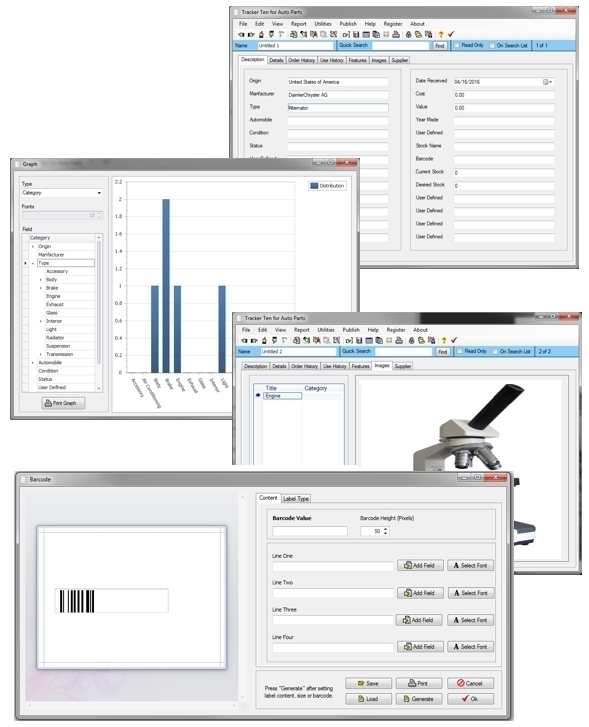
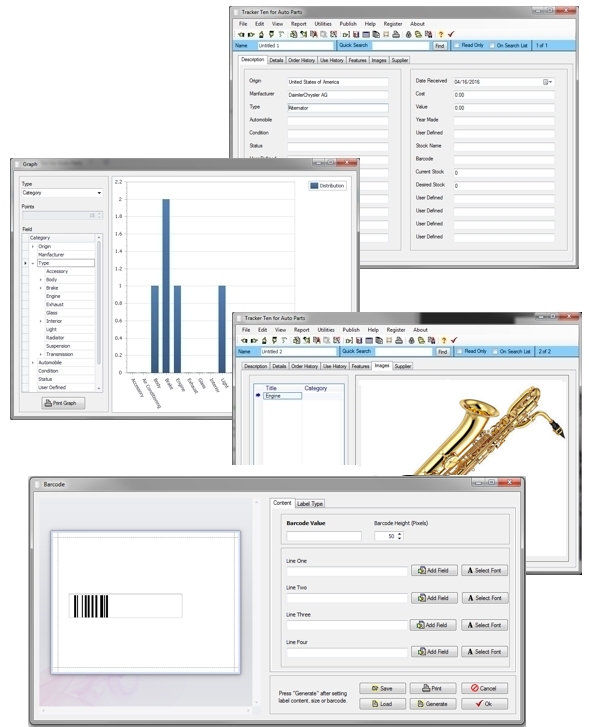
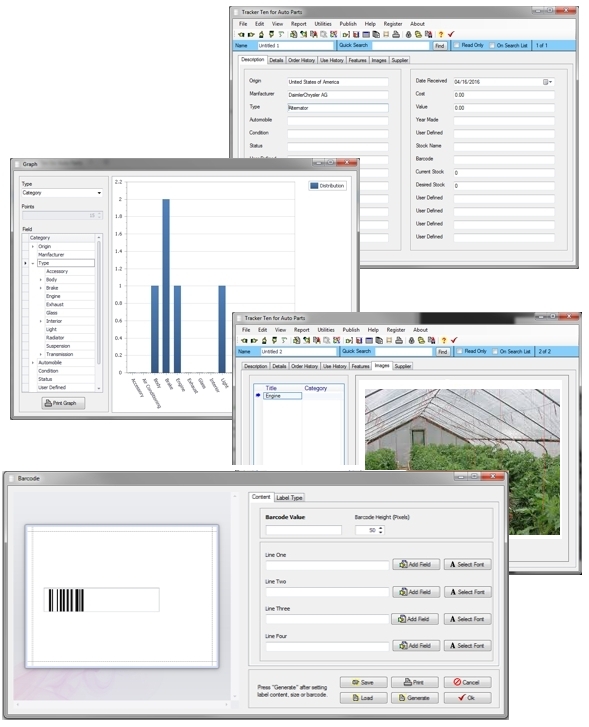
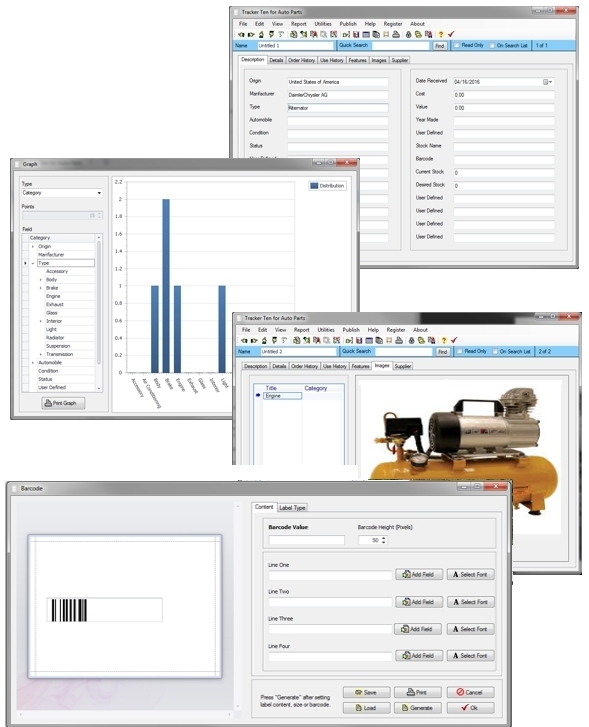
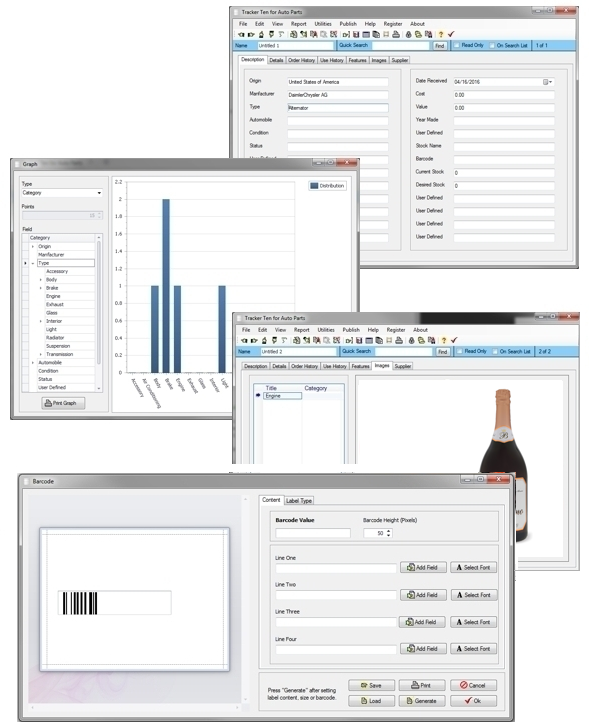
Barcode support is another powerful feature that makes Tracker Ten particularly well-suited for busy school environments. The software supports most barcode readers and can automatically generate and print barcodes for equipment. Once barcodes are attached to devices, staff can quickly scan items to pull up their records in the database. This is especially useful during inventory checks, equipment audits, or when processing loans and returns. Instead of manually searching for items by name or serial number, staff can simply scan a barcode to instantly access the correct record, reducing errors and saving time.
The ability to jump directly to items in the database using a barcode reader also improves accuracy during day-to-day operations. For example, when equipment is returned from a classroom or student loan, staff can scan the barcode to confirm the item’s identity and update its status. This helps prevent mix-ups between similar devices, such as multiple identical projectors or cameras. Over time, barcode-based tracking creates a more reliable and professional equipment management process.
Tracker Ten’s powerful search engine further enhances usability. Schools often need to locate equipment quickly based on specific criteria, such as type, location, condition, or availability. With advanced search capabilities, staff can filter and find items in seconds, even in large databases. For example, an administrator could quickly identify all available LCD projectors in a particular building or find all cameras that are currently out on loan. This level of control supports better planning and ensures equipment is used efficiently across the school.
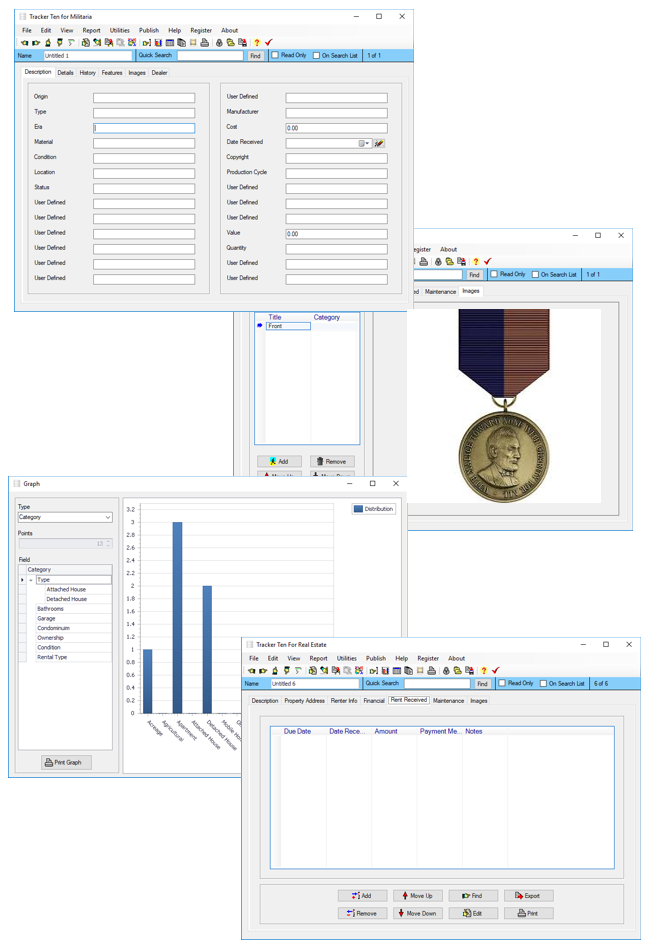
Advanced reporting and graph generation are particularly valuable for school administrators and decision-makers. Tracker Ten can generate detailed reports on equipment inventory, usage, loan activity, and service costs. These reports can be used for internal reviews, budget proposals, and long-term planning. Graphs and visual summaries make it easier to communicate trends and insights to school leadership, boards, or funding bodies. For instance, a report showing frequent repairs on certain devices can justify replacement funding, while usage reports can demonstrate the value of investing in additional equipment for popular programs.
Data export capabilities allow schools to share information from Tracker Ten with other systems or stakeholders. Exported data can be used in spreadsheets, accounting software, or reporting tools as needed. This flexibility is important in educational environments where different departments may rely on different systems. By exporting accurate, up-to-date data, schools can avoid duplication of effort and maintain consistency across administrative processes.
Field customization is another feature that allows Tracker Ten to adapt to the unique needs of each school. Different institutions may want to track different types of information, such as funding source, warranty expiration, assigned department, or curriculum area. Tracker Ten allows custom fields to be added so the database reflects the school’s specific requirements. This ensures the system remains relevant and useful over time, even as technology and educational needs evolve.
Optional web publishing can further extend the usefulness of Tracker Ten. In a school setting, this feature can be used to provide controlled access to equipment information through a web interface. For example, teachers might be able to view available equipment or submit requests without needing full access to the database. This can streamline communication between teaching staff and equipment managers while maintaining appropriate security and oversight.
From an operational perspective, implementing Tracker Ten helps schools move from reactive to proactive equipment management. Instead of responding to lost items, unexpected failures, or last-minute shortages, staff can plan ahead using accurate data. Inventory audits become faster and more reliable, maintenance schedules can be planned based on real usage and service history, and purchasing decisions can be supported by evidence rather than guesswork.
Financially, better tracking leads to better use of limited resources. By knowing exactly what equipment is owned, where it is located, and how often it is used, schools can avoid unnecessary purchases and extend the life of existing assets. Service cost histories help identify devices that are no longer cost-effective to maintain, while usage data ensures new investments are aligned with actual classroom needs.
In a broader educational context, reliable access to audio visual and classroom equipment supports teaching and learning. When teachers can depend on equipment being available, functional, and easy to borrow, they are more likely to incorporate technology into their lessons. This enhances student engagement and helps schools make the most of their technology investments. Tracker Ten plays a behind-the-scenes role in making this possible by ensuring equipment is managed efficiently and responsibly.
In conclusion, Tracker Ten for Classroom Equipment provides a comprehensive, practical solution for tracking audio visual and classroom equipment in a school environment. By combining detailed asset records, loan and service history tracking, barcode support, advanced reporting, and customization options, the software addresses the real-world challenges schools face in managing technology. The result is greater accountability, improved efficiency, better financial planning, and stronger support for teaching and learning. For schools looking to modernize and simplify their equipment management processes, Tracker Ten offers a powerful and adaptable tool that can grow alongside their needs.
Looking for windows database software? Try Tracker Ten
- PREVIOUS Collecting Pez dispensers Monday, April 14, 2025
- NextTracking Data Ownership and Sovereignty in a Database Thursday, April 3, 2025