Software
Restaurant Food Inventory Database Software
Managing food inventory is one of the most complex and critical responsibilities in any restaurant. Ingredients arrive daily from multiple suppliers, storage conditions vary, usage rates change with seasons and menu updates, and waste can quietly erode profitability if it is not carefully controlled. A comprehensive database solution like Tracker Ten for Food can play a central role in bringing order, visibility, and efficiency to this process. Designed to track all types of food items through an intuitive Windows interface, the software can be adapted to fit the real-world workflows of a restaurant kitchen, storeroom, and management office, helping operators maintain tighter control over costs, quality, and compliance.
At its core, Tracker Ten for Food functions as a centralized inventory system that brings together every food item a restaurant uses into a single, searchable database. Fresh produce, meats, seafood, dairy, dry goods, frozen items, beverages, and specialty ingredients can all be entered and categorized in a way that mirrors how the restaurant actually operates. Instead of relying on handwritten logs, spreadsheets scattered across different computers, or the memory of staff, the restaurant gains a living record of what is on hand, where it is stored, and how it is being used. This centralization alone can dramatically reduce confusion and errors, especially in busy kitchens where multiple employees may be accessing inventory at the same time.
The customizable nature of the software allows restaurants to tailor it to their specific needs rather than forcing their processes to fit a rigid system. Sample fields such as brand, category, location, package type, organic status, and perishable status can be used as provided or modified to reflect the restaurant’s terminology and storage practices. For example, a restaurant with multiple storage areas can define precise locations such as walk-in cooler, reach-in freezer, dry storage room, bar refrigerator, or off-site storage. By assigning each item a specific location, staff can quickly determine where ingredients are stored and managers can see at a glance how inventory is distributed throughout the operation.
Perishability tracking is particularly valuable in a restaurant environment, where freshness directly impacts food safety and customer satisfaction. Fields for last use, current stock, and desired stock make it possible to monitor how quickly items are being consumed and how long they have been in storage. Managers can use this information to identify items that are at risk of expiring and adjust usage or ordering accordingly. Over time, patterns emerge that help the restaurant fine-tune purchasing schedules so that ingredients arrive when they are needed and are used before they spoil, reducing waste without increasing the risk of running out during service.
Cost control is another area where Tracker Ten for Food can have a significant impact. By tracking total cost, size, servings, and stock levels for each item, the software provides a clear picture of how much money is tied up in inventory at any given moment. This visibility helps managers make informed decisions about ordering, menu pricing, and portion control. For example, if the database reveals that a particular ingredient has a high cost and low turnover, the restaurant might decide to adjust menu offerings or negotiate better pricing with suppliers. Because all data is stored consistently, it becomes much easier to compare costs over time and identify trends that might otherwise go unnoticed.
The powerful search engine built into the software enhances day-to-day usability. In a fast-paced restaurant setting, staff and managers need information quickly. Whether searching by brand, category, barcode, or stock status, users can locate specific items in seconds. This capability is especially useful during inventory counts, audits, or inspections, when accuracy and speed are essential. Instead of flipping through pages of notes or scrolling through long spreadsheets, users can filter and search the database to find exactly what they need.
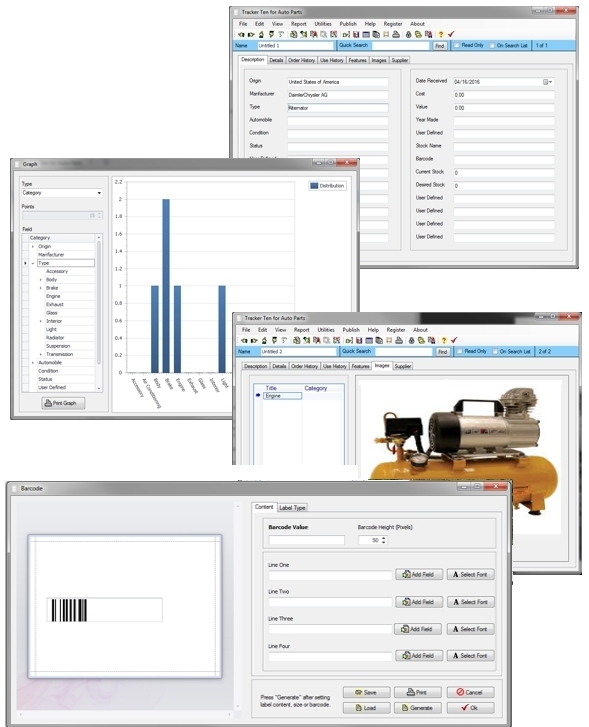
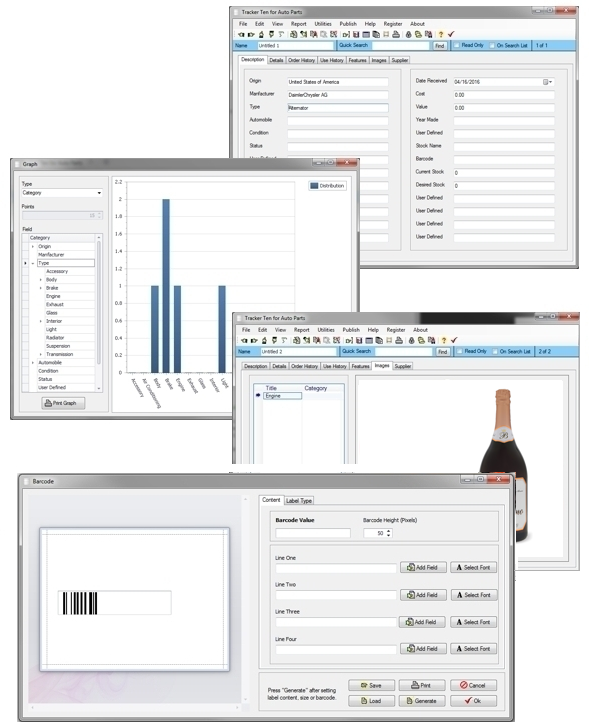
Reporting is another strength of Tracker Ten for Food that aligns well with restaurant operations. Versatile reporting options allow managers to generate detailed inventory reports, usage summaries, cost analyses, and stock status overviews. Reports can incorporate full-color images, making them easier to read and more informative, particularly for visual verification of items. These reports can be used in management meetings, shared with owners or accountants, or reviewed when planning menus and promotions. Because reports are generated directly from the live database, they reflect the most current information available.
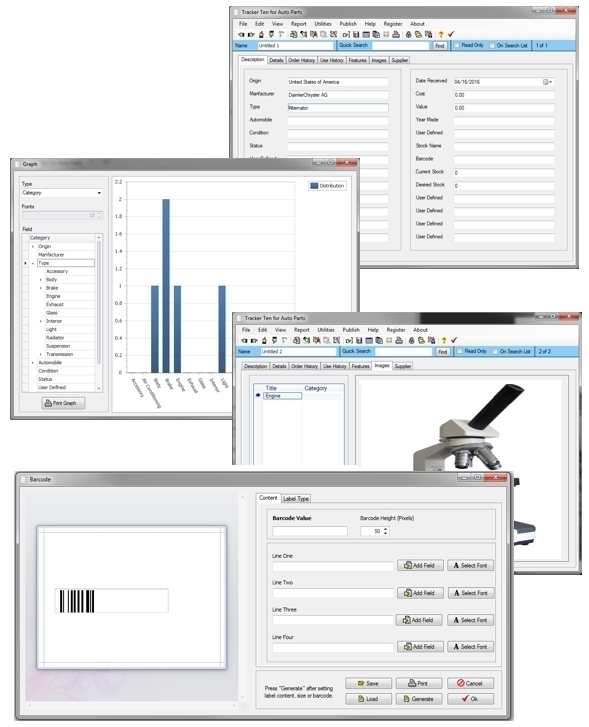
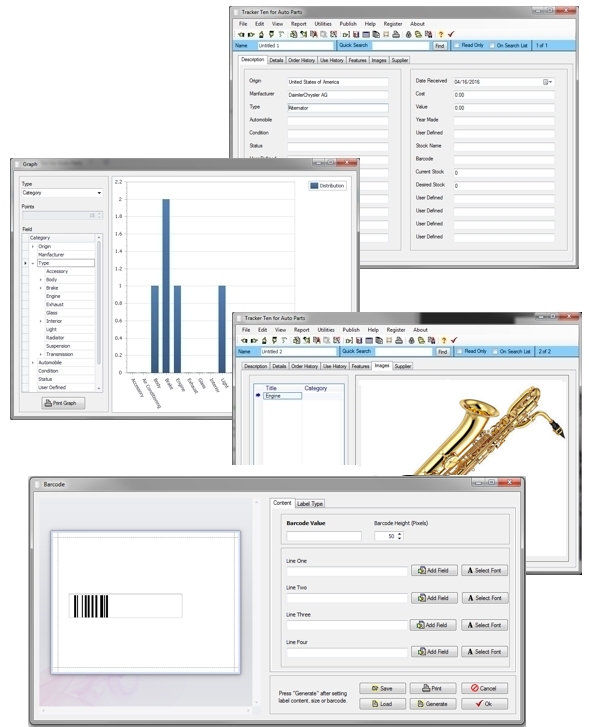
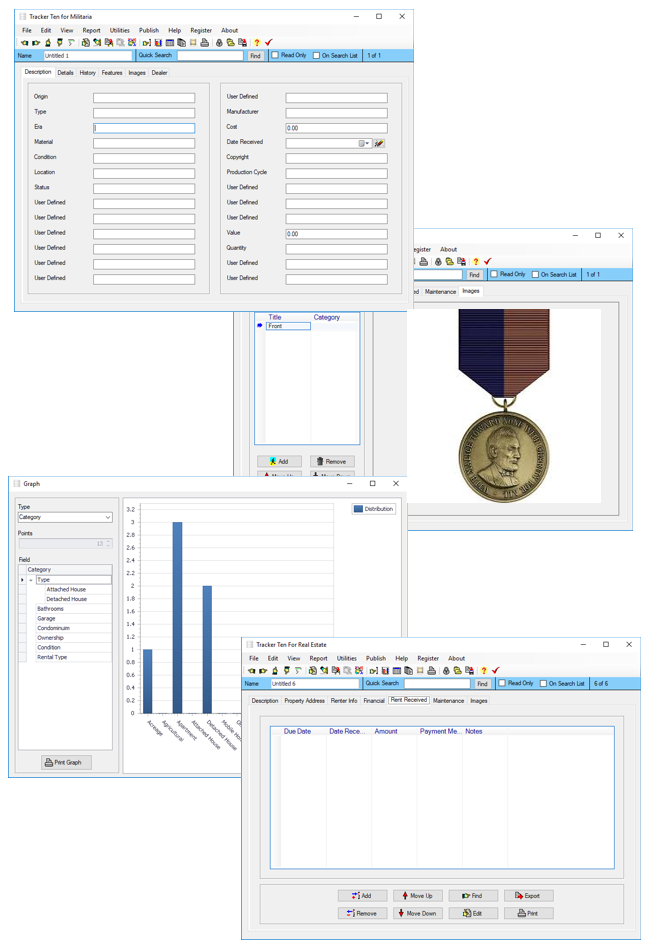
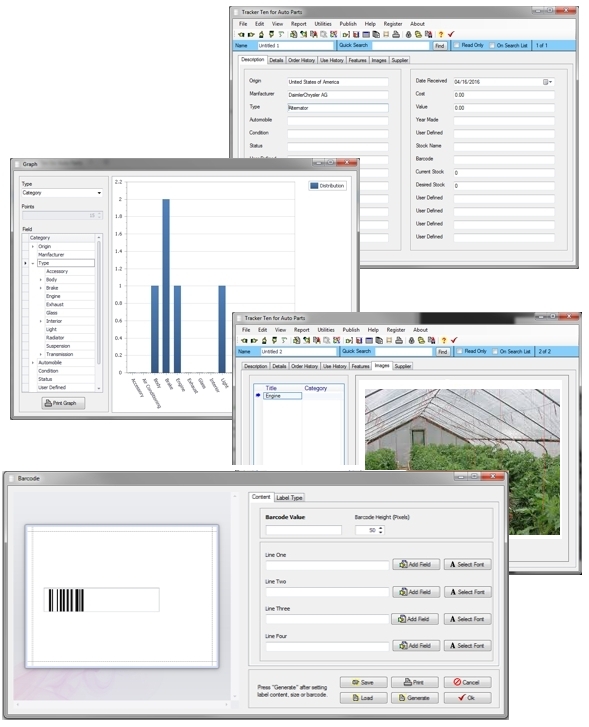
Data visualization through graphing adds another layer of insight. By converting raw inventory data into visual graphs, the software helps managers quickly understand trends in usage, costs, and stock levels. A graph showing declining inventory for a key ingredient can prompt timely reordering, while a graph highlighting consistently overstocked items can signal an opportunity to reduce purchases. Visual data is often easier to interpret than rows of numbers, making it a valuable tool for decision-making in a busy restaurant environment.
Ease of data entry is critical for any system that will be used daily by restaurant staff. Tracker Ten for Food is designed to be extremely user-friendly, minimizing the learning curve and reducing resistance to adoption. Rich text format notes allow users to add detailed comments about items, such as supplier notes, handling instructions, or substitution options. Multiple image support enables restaurants to attach photos of ingredients, packaging, or labels, which can be especially helpful for training new staff or verifying items during deliveries.
Barcode generation and scanning capabilities are particularly powerful features for restaurants that handle large volumes of inventory. By assigning barcodes to items and scanning them during receiving, storage, or usage, the restaurant can significantly speed up inventory processes while reducing manual entry errors. When a delivery arrives, staff can scan items directly into the system, automatically updating stock levels and recording receipt dates. During prep or restocking, scanning items out of inventory can update usage data in real time, providing a more accurate picture of consumption patterns.
The ability to import and export data using comma-delimited formats further enhances the software’s flexibility. Restaurants often rely on multiple systems for accounting, payroll, purchasing, and reporting. By exporting inventory data to formats compatible with Microsoft Excel and other applications, managers can integrate Tracker Ten for Food into their existing workflows without duplication of effort. Importing data also simplifies the initial setup process or bulk updates, allowing restaurants to bring in supplier lists or historical inventory records quickly.
Multiple data views and unlimited file support make the software suitable for restaurants of all sizes, from small independent eateries to multi-location operations. Different users can view the same data in ways that suit their roles, whether they are line cooks checking ingredient availability, managers reviewing stock levels, or owners analyzing costs. The system can grow alongside the business, accommodating expanding menus, additional storage locations, or increased inventory complexity without requiring a complete overhaul.
Beyond daily operations, Tracker Ten for Food can support compliance and accountability. Detailed records of inventory, usage, and storage locations can be invaluable during health inspections or internal audits. Having clear documentation of food handling and stock rotation practices demonstrates professionalism and helps ensure that safety standards are consistently met. Over time, the database becomes a historical record that can be referenced to resolve discrepancies, investigate losses, or evaluate the impact of operational changes.
In a restaurant environment where margins are tight and efficiency is essential, the ability to see and manage inventory clearly can make a meaningful difference. Tracker Ten for Food provides the structure and tools needed to transform food inventory from a constant challenge into a manageable, data-driven process. By combining ease of use with powerful features like search, reporting, barcode scanning, and customization, the software adapts to the realities of restaurant operations rather than forcing operators to adapt to it.
Ultimately, using Tracker Ten for Food to track restaurant inventory is about more than counting items on shelves. It is about gaining insight into how ingredients flow through the business, how costs accumulate, and how decisions made in purchasing and menu planning affect the bottom line. With accurate, accessible data at their fingertips, restaurant managers can focus less on reacting to problems and more on proactively improving efficiency, reducing waste, and delivering consistent quality to their customers.
Looking for windows database software? Try Tracker Ten
- PREVIOUS Integrating with the Library of Congress Book API Database Using Python Wednesday, May 28, 2025
- NextKeeping Track of your Toy Car Collection Friday, May 16, 2025