Software
Sales Tracking Database Software for Sales People

Tracker Ten for Sales is a Windows-based database application that lets you record, organize, search, and report on sales transactions and customer information in a structured way, and though it doesn’t include the more advanced automation and commission-calculation features found in dedicated MLM or enterprise sales systems, it can absolutely be adapted to help track direct sales activities — including those of network marketers, direct-to-consumer sellers, and multi-level marketing (MLM) distributors — when used as a central sales tracking database.
At its essence, Tracker Ten for Sales is a customizable data management tool tailored toward keeping sales and customer information together in one place. According to the official listing, it includes sample fields like sale status, sale price, cost price, profit, dates, barcode support, and customer data, and allows users to define additional fields specific to their business needs.
For direct sellers — including those operating in MLM environments, which depend on both individual sales results and the performance of distributed teams — the ability to consistently and reliably record, organize, and retrieve transactional data is fundamental. Unlike advanced MLM platforms that automatically compute commissions across tiers, manage genealogy, integrate replicated e-commerce portals, and handle complex incentive plans, the Tracker Ten for Sales database provides a flexible, manual system that supports fundamental sales tracking and reporting without imposing a rigid structure.
In practical use, direct sellers can begin by designing the database’s structure around the key elements of their sales process. At the most basic level, this means capturing details of each sale — product or service sold, date of transaction, sale price, and any associated sales identifiers — and linking that sales record to a specific seller or distributor. Because Tracker Ten supports custom field creation and user-defined data views, you can tailor fields to represent things like sales channel (online vs in-person), product category, and order source.
Each sale record can also include rich text notes, helping sellers document contextual details such as promotional offers used, customer preferences, or reasons for sale success. These narrative fields, combined with date and numeric fields for transaction amounts, make it possible to reconstruct sales histories or evaluate performance trends over time.
To track customers across multiple transactions, direct sellers can include a customer identifier or reference field so that repeated purchases by the same individual or company are associated rather than duplicated. This approach turns the database into more than a flat list of transactions — it becomes a customer-centric sales history log, enabling users to see which customers are most active, which products they prefer, and how frequently they purchase.
For MLM and network sales specifically, the system can be adapted further by designing fields to capture distributor or team identifiers. Each sale record could have an associated seller ID — representing an individual salesperson or independent distributor — so that performance of each person or team within the broader organization can be tracked. While this doesn’t yield automated genealogy trees or commission calculations like specialized MLM software does, it provides a clear, searchable ledger of who sold what and when, which is vital for administrative transparency.
A direct seller using Tracker Ten might design the database to store not just transactional information but also status flags that reflect progress through their internal sales cycle. For example, sellers could create custom fields for "lead status," "follow-up required," or "sale finalized," and then use the software’s robust search tools to filter records based on these statuses. This way, they can generate lists of pending opportunities, recently closed sales, or high-value clients.
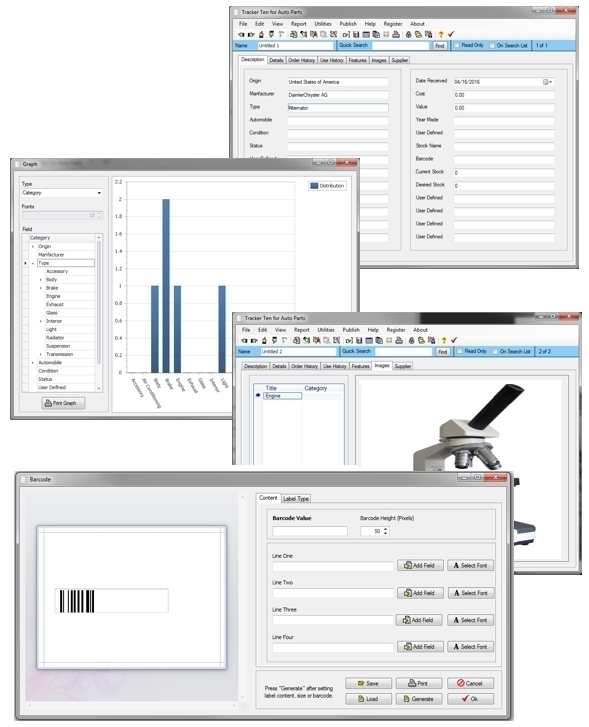
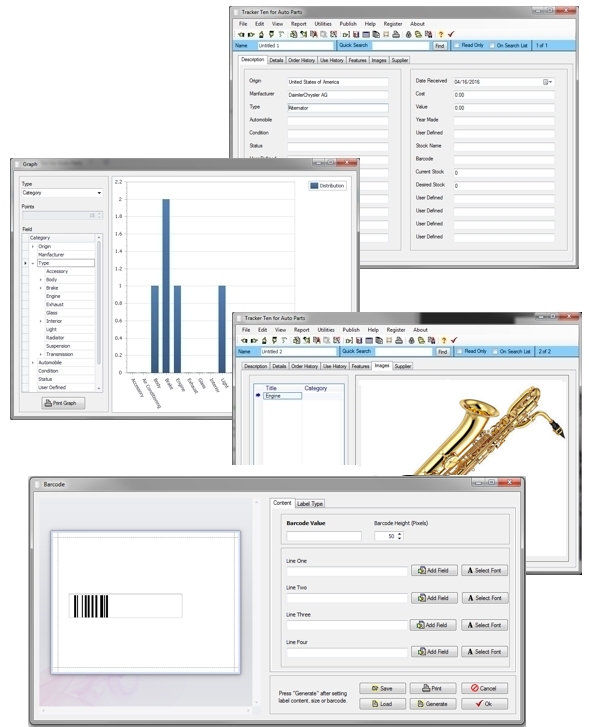
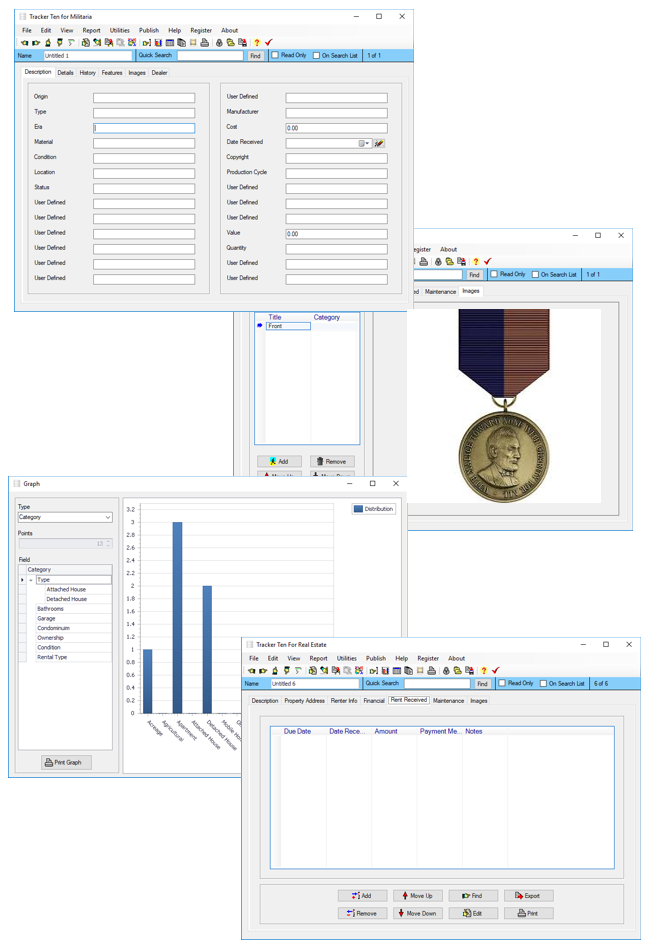
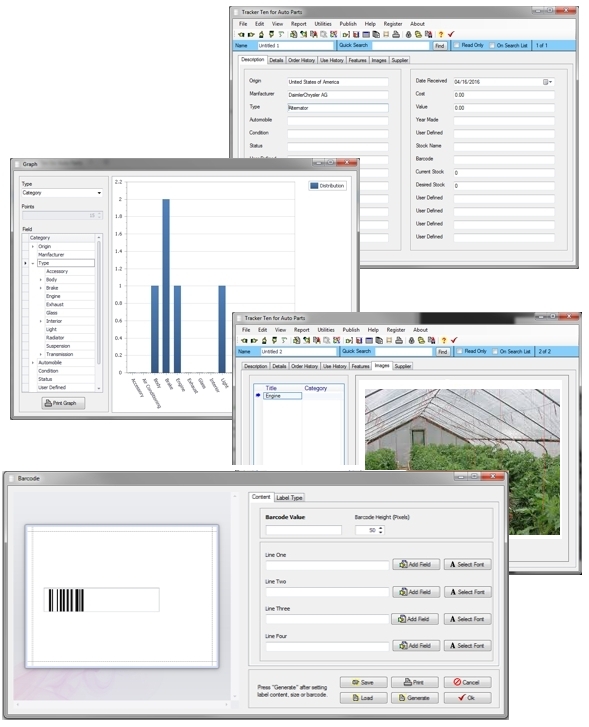
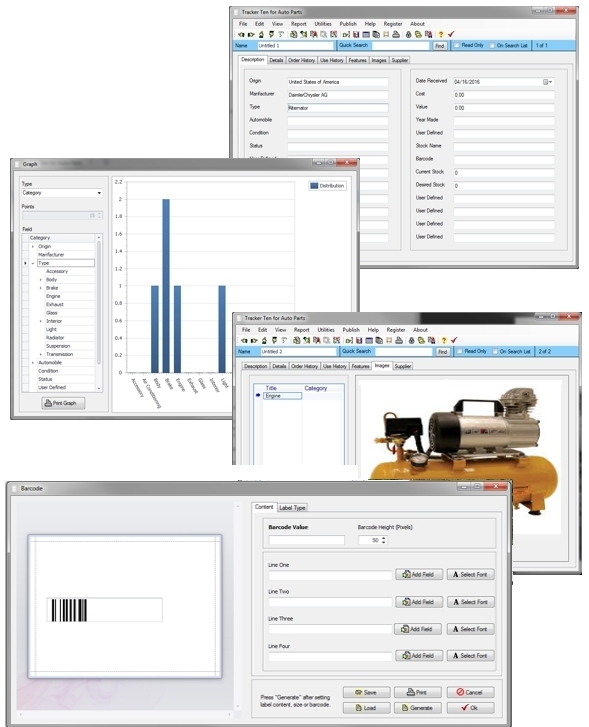
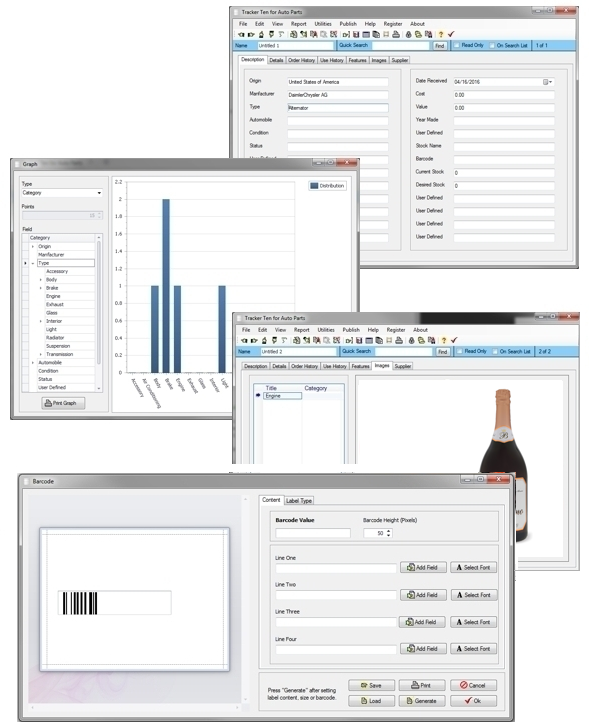
Reporting and visualization tools in Tracker Ten are particularly valuable in a direct sales context. Sellers can generate flexible, color reports and graphs that summarize sales over specific periods, show product performance breakdowns, or illustrate revenue trends. These outputs can be exported as comma-delimited files for further analysis or shared with other tools like spreadsheets. The ability to visualize sales performance gives sellers often overlooked insights into patterns and trends, such as seasonal peaks or underperforming product lines.
Direct salespeople also benefit from Tracker Ten’s powerful search engine, which allows them to filter records based on any combination of fields. For example, they can search for all sales above a certain threshold, all sales in a given region, or all sales by a particular salesperson, and then quickly generate a customized report or list from those results. This kind of dynamic querying is crucial when tracking performance metrics or validating that distributors are meeting specific targets.
One of the most useful features for sales tracking is the date filtering and number filtering capability, which lets users run queries like "show all sales in the last quarter" or "list all transactions where the profit margin exceeded a set value." In the context of direct selling and MLM, this helps individuals and teams monitor cumulative performance over specific incentive periods or commissions cycles.
While Tracker Ten is fundamentally a desktop application and does not inherently sync across multiple devices or provide real-time mobile access, its simplicity can be an advantage for individual sellers or small teams who don’t require cloud infrastructure. Local backups and exporting data to spreadsheets provide a lightweight alternative to heavier, cloud-based CRM systems and can reduce dependency on internet access for fundamental sales tracking.
Moreover, because Tracker Ten allows for customization of fields, categories, and view layouts, it can evolve as a direct selling business grows. A seller might start with basic product and customer fields and later introduce additional fields for things like sales incentives, regional codes, or product bundles. This modular approach lets the database grow organically along with the organization’s reporting sophistication.
The software’s reporting features also support profit tracking, with automatic calculations based on cost and sale price fields. For direct sellers who operate with variable cost structures — perhaps due to discounts, rebates, or product bundles — this ability to capture profit data alongside raw sales data provides an internal view of financial performance over time.
For those interested in beyond-transaction insights, Tracker Ten’s graphing tools can illustrate broader patterns: which products consistently perform well, which time periods see peak sales activities, and how individual sellers compare with each other. These visual representations make it easier to spot anomalies or opportunities for strategic adjustments.
Using Tracker Ten for Sales as a foundational database doesn’t replace specialized network marketing or MLM software with built-in commission engines and replicated e-commerce sites, but it grounds your sales tracking in clean, organized data that can feed more complex processes if needed. Its strength lies in being a flexible, easy-to-customize system where direct sellers can record and retrieve transaction details with precision.
In summary, for direct-to-consumer salespeople and MLM distributors who need a simple yet structured way to capture sales, customer interactions, and performance data, Tracker Ten for Sales provides an adaptable database environment. By defining sales records, associating them with individuals, and making use of the powerful querying and reporting tools, sellers can maintain a clear historical record of their business activity. While it doesn’t automate every aspect of a direct sales compensation plan, the fundamental capability to manage and analyze sales data in one place makes it a viable option for solo sellers and small teams seeking greater clarity and control over their sales outcomes.
Looking for windows database software? Try Tracker Ten
- PREVIOUS Stamp Collecting Database Software Thursday, July 25, 2024
- NextQuantum Computing and Databases: A Beginner’s Guide Thursday, July 11, 2024