Database
Standalone Database Application

A standalone database is designed to operate on a single computer without requiring any network connections or external servers. These databases are ideal for individuals, small businesses, or departments that need reliable, high-performance data management without the complexity and cost of distributed or cloud-based systems. Standalone databases offer multiple advantages, including cost efficiency, ease of setup, improved security, and full control over the system and data. By storing all data locally, users can avoid bandwidth limitations, reduce latency, and ensure that critical business information is always accessible.
Standalone database systems are particularly useful for applications where data privacy and integrity are critical. For example, personal finance tracking, local inventory management, customer relationship databases, and sensitive research data often benefit from standalone solutions. These systems can be scaled to meet specific storage and performance requirements simply by upgrading hardware, such as adding hard drive capacity or additional RAM. Additionally, standalone databases allow for easier migration to newer systems, as all data is contained in a single location.
Compared to distributed databases or cloud-based solutions, standalone systems avoid recurring costs such as monthly cloud storage fees or subscription-based licensing. They also eliminate the need to manage complex network configurations, server maintenance, and external backups, reducing the overall administrative burden.
Creating a Standalone Database Without Coding
Traditionally, setting up a standalone database often required significant technical knowledge. Commercial database systems like Microsoft SQL Server, MySQL, Oracle Database, or open-source NoSQL solutions such as MongoDB offer robust capabilities but require substantial setup and maintenance. This includes installing drivers, configuring connection pools, defining schemas, and writing queries to interact with the database. For users without programming experience, this can be daunting.
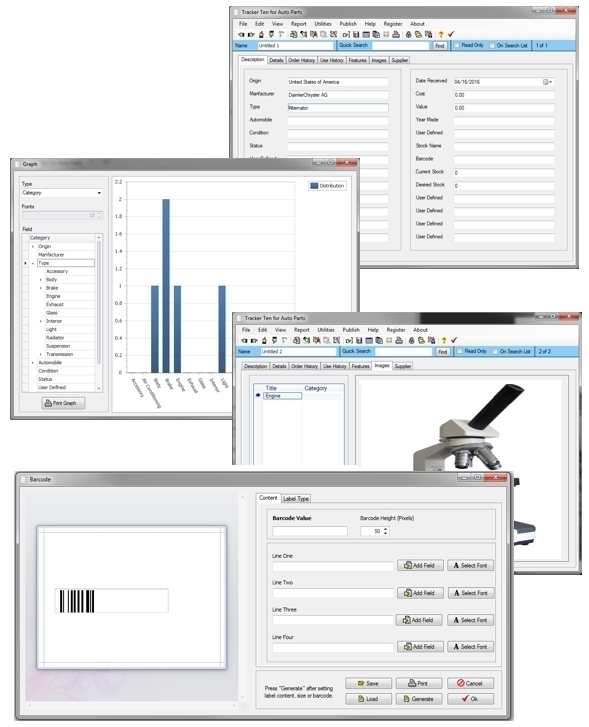
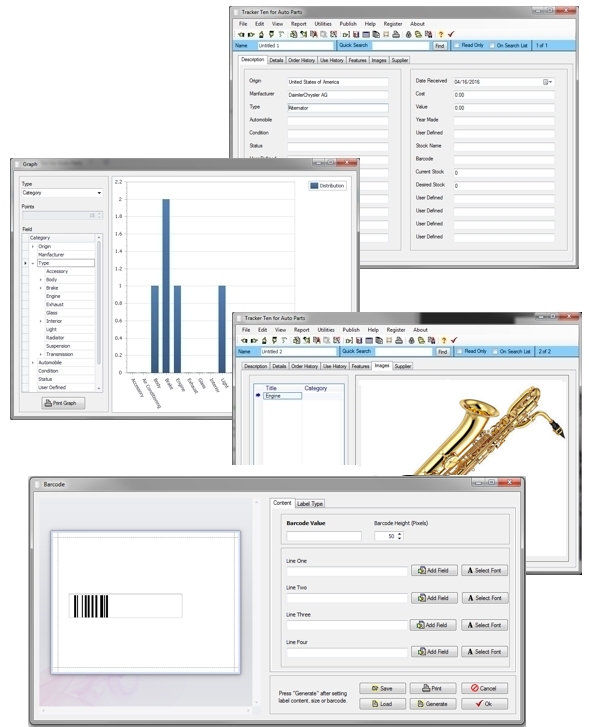
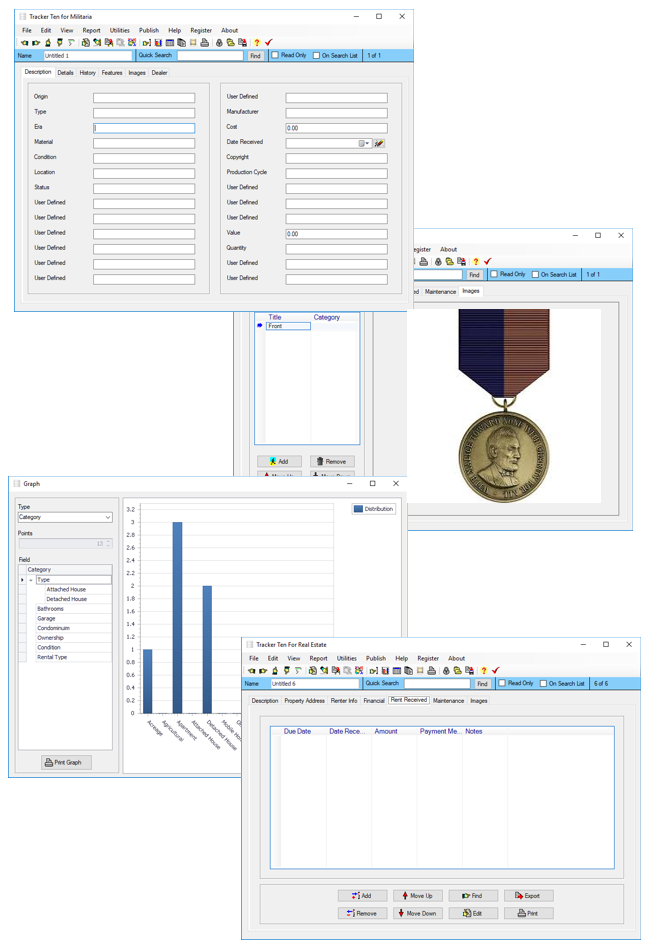
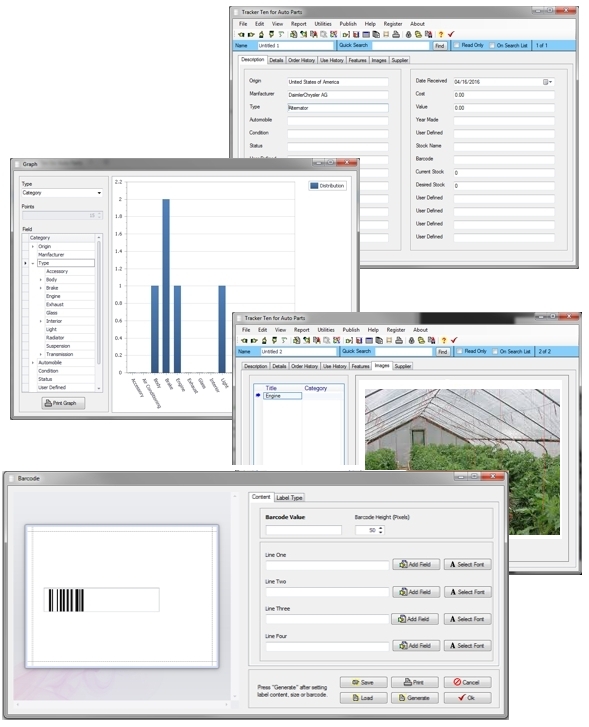
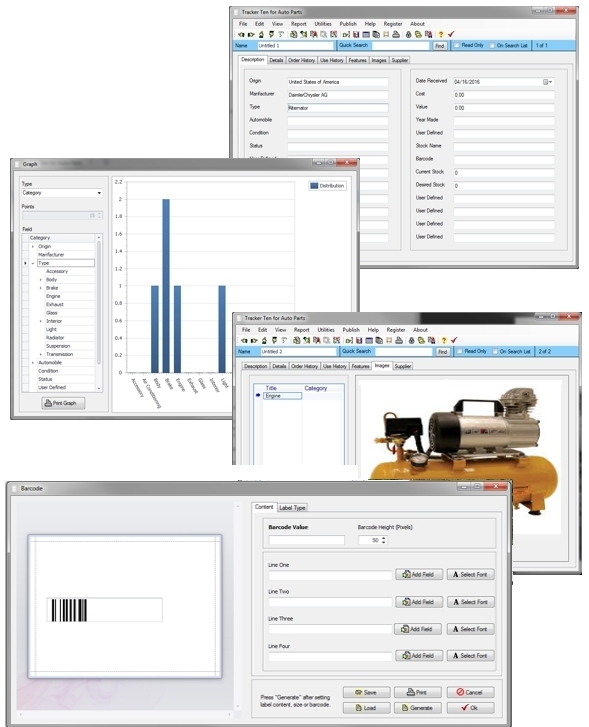
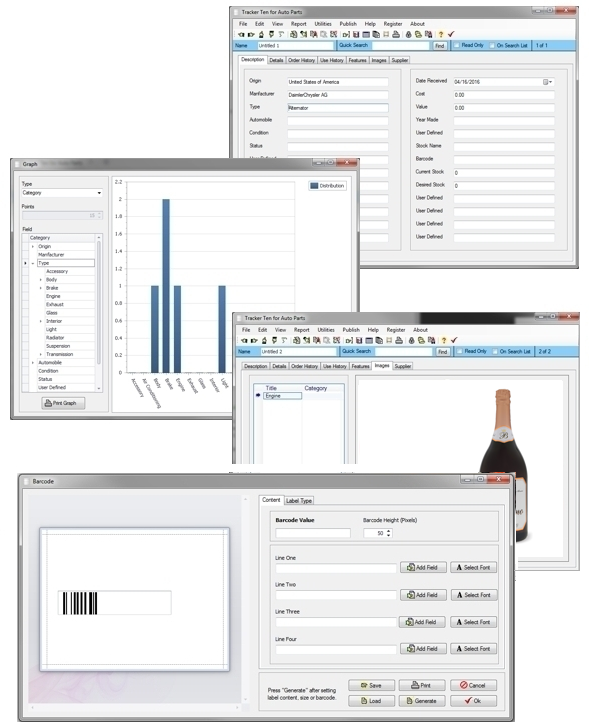
Fortunately, modern standalone database applications provide a no-coding approach to creating and managing databases. Off-the-shelf solutions like Tracker Ten simplify database creation, allowing users to focus on organizing and using their data rather than configuring technical infrastructure. Tracker Ten features a user-friendly WinForms interface built in C#, designed to be intuitive and require no prior database knowledge.
Tracker Ten is a file-based system, enabling users to create multiple independent database files, each capable of containing its own schema and custom fields. This flexibility allows different projects, departments, or applications to operate in isolated environments, ensuring that one database file’s data does not interfere with another. Installation is straightforward, requiring only a single installer and no additional software or complex configuration.
For specialized needs, Tracker Ten offers custom versions that can be tailored to specific business or personal requirements. Users can modify field names, data types, and layouts to match the exact workflow, ensuring maximum efficiency and usability. This approach dramatically reduces the time and effort typically required to set up a standalone database system.
Air Gap Your Database for Increased Security
Air gapping is a cybersecurity strategy that enhances the security of a standalone database. An air-gapped computer is completely disconnected from the internet and any external networks, preventing remote attacks, unauthorized access, and malware infection. This approach is particularly valuable for highly sensitive information such as financial records, intellectual property, or research data.
Implementing an air-gapped standalone database provides several security benefits:
Protection from remote attacks: With no network connection, hackers cannot access the database remotely.
Reduced malware risk: Viruses and ransomware typically spread via internet or network connections, which are blocked by air-gapping.
Controlled data transfer: Data can only be imported or exported via physical media such as USB drives, CD-ROMs, or external hard drives, reducing the chance of accidental leaks.
Compliance and regulatory benefits: Certain industries, such as defense or healthcare, require physical separation of critical data systems for regulatory compliance.
While air-gapping increases security, it also requires disciplined procedures for backing up and updating data. Users must ensure that physical media are scanned for viruses and securely stored. Additionally, air-gapped systems should have clear protocols for authorized personnel to access and transfer data safely.
Stand Alone Database Migration Methods
Even standalone databases often need to interact with other systems or migrate data to new platforms. Data migration is the process of transferring data between different databases, applications, or formats, and it is critical for maintaining data integrity and continuity.
Database migration involves several important considerations:
Schema awareness: The schema defines the structure of the database, including tables, fields, data types, and relationships. Migration tools may transfer schema automatically, or users may need to map source fields to target fields manually.
Snapshot timing: Migration typically captures a snapshot of data at a specific point in time. Ongoing changes during the migration process can cause discrepancies if not handled carefully.
Offline requirements: Importing or exporting data may require taking the source or destination database offline to prevent changes during the migration.
Data integrity: Verification processes are necessary to ensure that migrated data is complete, accurate, and consistent.
Tracker Ten provides a visual drag-and-drop interface for mapping input data columns to fields, making import and export tasks easier for non-technical users. Users can transfer data from other formats or systems into Tracker Ten or export Tracker Ten data to external databases. Backup procedures are essential prior to any migration to allow rollback in case of errors.
Stand Alone Database Instance with Custom Fields
One of the major advantages of a standalone database is full control over schema customization. Unlike distributed or multi-tenant systems, standalone databases allow users to define fields, data types, and relationships according to their specific needs. This is particularly valuable for specialized applications such as:
Inventory tracking with custom attributes like serial numbers, batch codes, and supplier information.
Customer relationship management with tailored contact fields, purchase history, and loyalty programs.
Research databases with fields for experiment parameters, sample identifiers, and measurement results.
Tracker Ten allows users to rename fields by simply double-clicking the label, adjust data formats, and create multiple database files, each with its own configuration. This flexibility supports diverse workflows and ensures that databases can adapt as requirements change over time.
Single Database Microservices
In modern software architectures, microservices are widely used to break down large applications into smaller, specialized components. Each microservice can operate independently, performing a specific function. Often, these microservices require their own databases to maintain autonomy and data consistency. Standalone databases are a natural fit for microservices, offering the following benefits:
Isolation: Each microservice database is independent, reducing the risk of data conflicts or accidental access by other services.
Performance: Localized standalone databases eliminate network latency and bandwidth limitations for individual microservices.
Security: Sensitive microservice data can remain isolated from other systems, reducing exposure to unauthorized access.
Simplicity: Developers can deploy, update, and maintain microservice databases without affecting other components of the system.
Standalone databases for microservices also facilitate easier scaling and replication strategies. Individual databases can be replicated or backed up independently, ensuring continuity and minimizing downtime for critical operations.
Data Backup and Recovery for Standalone Databases
Proper backup and recovery procedures are essential for standalone database systems. Since the entire database resides on a single machine, data loss due to hardware failure, corruption, or accidental deletion can be catastrophic. Key backup strategies include:
Full backups: Periodically create complete copies of the database, including all tables, schemas, and configuration files.
Incremental backups: Capture only changes made since the last full backup, reducing storage requirements and backup time.
Offsite storage: Store backup copies on external drives, cloud storage, or secure physical locations to protect against local disasters.
Regular testing: Periodically restore backups to ensure data integrity and verify that recovery procedures are effective.
Tracker Ten simplifies backup processes by saving database files and associated resources in a single directory. Users can easily copy these files to external storage for secure backup and quick recovery in case of a system failure.
Performance Optimization for Standalone Databases
Standalone databases often outperform distributed systems for localized applications due to reduced network latency and simplified architecture. Performance optimization strategies include:
Hardware upgrades: Adding more RAM, faster processors, or SSD storage can dramatically improve database performance.
Indexing: Creating indexes on frequently queried fields reduces search times and improves report generation speed.
Data normalization: Structuring data efficiently minimizes redundancy and improves query performance.
Archiving: Moving older, less frequently accessed data to separate files or storage media can reduce active database size and speed up operations.
By combining hardware upgrades, efficient database design, and proper indexing, standalone databases can handle large datasets with impressive speed and reliability, rivaling distributed systems for many local applications.
Use Cases for Standalone Database Applications
Standalone databases are highly versatile and can be applied in a variety of contexts:
Small business inventory: Track products, suppliers, and sales locally without investing in cloud services.
Personal collections: Catalog items such as books, art, or collectibles with images, notes, and metadata.
Research data: Manage laboratory results, experiments, and field studies with secure local storage.
Accounting and finance: Maintain sensitive financial records, invoices, and transaction logs in a secure offline environment.
Microservice databases: Provide independent, high-performance storage for specialized application modules.
Standalone databases offer an ideal balance of performance, security, and ease-of-use for applications where centralized or cloud-based systems may be unnecessary or impractical.
Conclusion
Standalone database applications provide a simple, secure, and cost-effective solution for managing data on a single computer. They offer full control over customization, performance, and security, without the complexity of distributed or cloud-based systems. By leveraging standalone databases, users can achieve high performance, low maintenance, and reliable data storage for a wide range of applications.
Tools like Tracker Ten demonstrate the power and flexibility of standalone databases, enabling users to manage multiple independent files, customize fields, perform data migrations, and secure data through air-gapping. Whether for personal, business, or research purposes, standalone databases remain a valuable and practical choice for data management in today’s digital landscape.
Looking for windows database software? Try Tracker Ten
- PREVIOUS Church Member Tracking Wednesday, January 4, 2023
- NextWhat is a Multi-Model Database Sunday, January 4, 2026