Database
Tool and Hardware Tracking Database Software
Tracking tools accurately is a constant challenge for businesses, organizations, and individuals who rely on physical equipment to get work done. Tools are frequently shared, moved between locations, loaned out, serviced, and replaced. Without a reliable tracking system, it becomes easy to lose track of what tools exist, where they are located, who is using them, and what condition they are in. Tracker Ten for Tools is designed to address these challenges by providing a centralized, flexible database solution for managing tools, hardware, and related assets in a structured and efficient way.
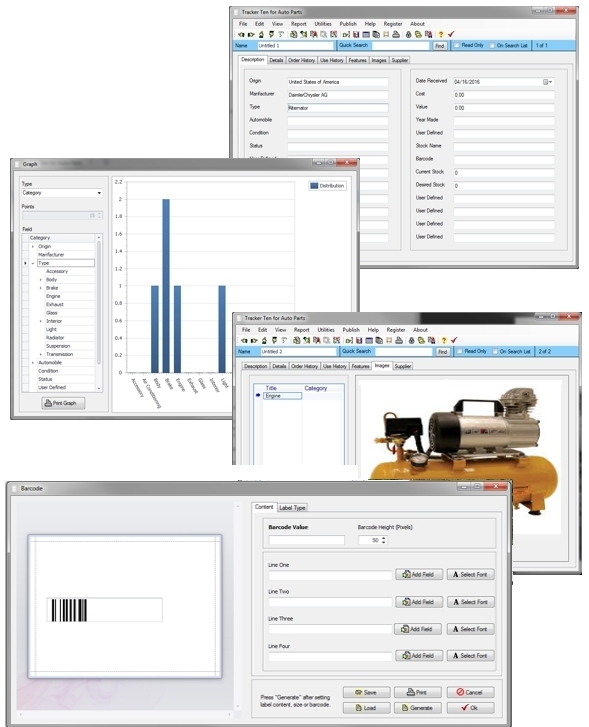
At its core, Tracker Ten for Tools functions as a comprehensive inventory system. Each tool can be recorded as a unique item within the database, with detailed information captured through more than 50 customizable fields. This allows organizations to tailor the system to their specific needs, whether they are tracking hand tools, power tools, specialized equipment, or hardware components. Basic details such as tool name, model number, serial number, and category can be combined with more advanced data such as purchase date, cost, warranty information, and assigned location.
Customization is one of the software’s strongest advantages when it comes to tool tracking. Different industries and organizations track different attributes depending on how tools are used. A construction company may focus on job-site assignments and maintenance schedules, while a school or training center may emphasize loan tracking and condition checks. With customizable fields, Tracker Ten adapts to these varied requirements rather than forcing users into a one-size-fits-all structure. This flexibility ensures that the database reflects real-world workflows.
Loan tracking is a particularly valuable feature for organizations where tools are frequently borrowed or shared. Tracker Ten allows each tool to be checked out to an individual, department, or project, with loan dates and expected return dates recorded. This creates accountability and reduces the likelihood of tools being misplaced or forgotten. When tools are returned, the database can be updated to reflect their availability, providing an accurate, real-time picture of inventory status.
For larger organizations or those with many users, loan tracking also helps identify usage patterns. Over time, it becomes clear which tools are in high demand and which are rarely used. This information can guide purchasing decisions, helping managers avoid unnecessary purchases while ensuring that critical tools are always available when needed. It also supports better planning for peak periods when tool demand may be higher.
Maintenance tracking is another key aspect of effective tool management. Tools require regular inspection, servicing, and calibration to remain safe and functional. Tracker Ten supports maintenance tracking by allowing service history, maintenance schedules, and condition notes to be recorded for each item. This helps organizations stay ahead of required maintenance rather than reacting to breakdowns or safety incidents. Regularly updated maintenance records also demonstrate due diligence, which can be important for compliance and liability purposes.
Service tracking within the software allows users to document repairs, replacements, and upgrades. When a tool is serviced, details such as the date, type of service, cost, and service provider can be recorded. Over time, this creates a complete service history that helps determine whether a tool is worth keeping, repairing, or replacing. Tools that require frequent repairs can be identified and evaluated for retirement, reducing downtime and long-term costs.
Insurance inventory tracking is another important use case for Tracker Ten for Tools. Many organizations need detailed records of their tools and equipment for insurance purposes, especially in the event of theft, fire, or other losses. By maintaining an up-to-date inventory with descriptions, images, purchase values, and serial numbers, organizations can simplify insurance claims and ensure accurate coverage. Having this information readily available can significantly reduce stress and delays during an already difficult situation.
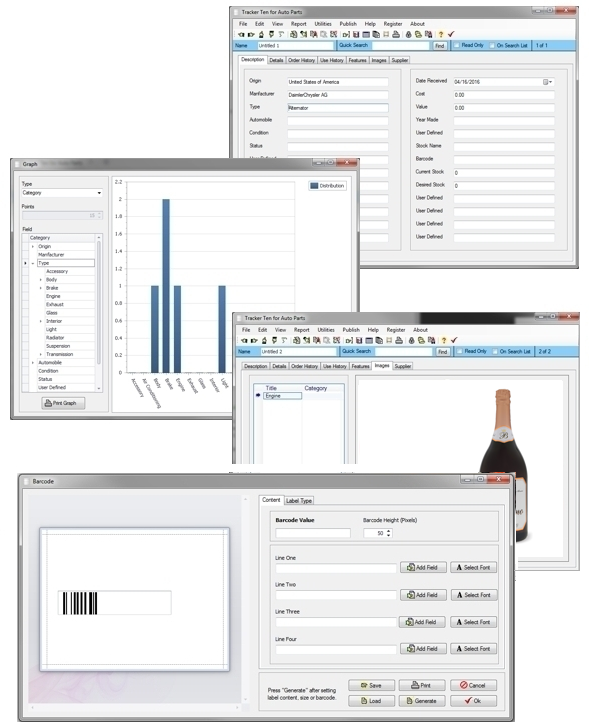
The software’s support for multiple images per item adds significant value to tool tracking. Visual records make it easier to identify tools, verify condition, and resolve disputes. Images can capture identifying marks, serial numbers, or signs of wear, providing clear documentation that text alone cannot convey. For loaned tools, before-and-after images can help confirm that items are returned in acceptable condition.
Rich text format notes areas allow users to add detailed comments and observations to each tool record. This is useful for recording special handling instructions, safety notes, or usage tips. Unlike simple text fields, rich text notes can include formatting that improves readability and clarity. Over time, these notes become a knowledge base that helps users handle tools properly and consistently.
Supplier tracking connects tools to their vendors or manufacturers. This information is valuable for reordering, warranty claims, and service arrangements. When a tool needs replacement parts or repair, having supplier details readily available saves time and reduces guesswork. Supplier tracking also supports analysis of purchasing patterns, helping organizations evaluate vendor performance and negotiate better terms.
Search and filtering capabilities are essential when managing a large tool inventory, and Tracker Ten provides powerful tools in this area. Users can quickly locate tools based on a wide range of criteria, such as category, location, condition, loan status, or maintenance due date. This speed and precision make daily operations more efficient, especially in environments where time is critical and tools must be located quickly.
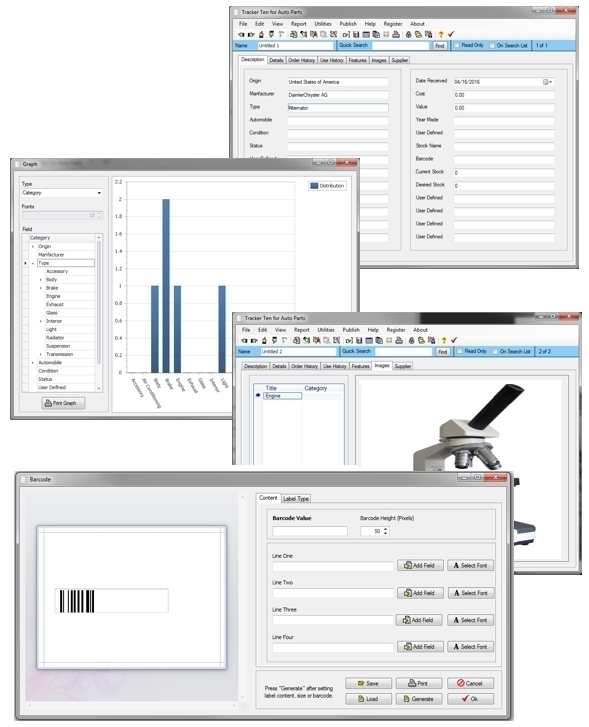
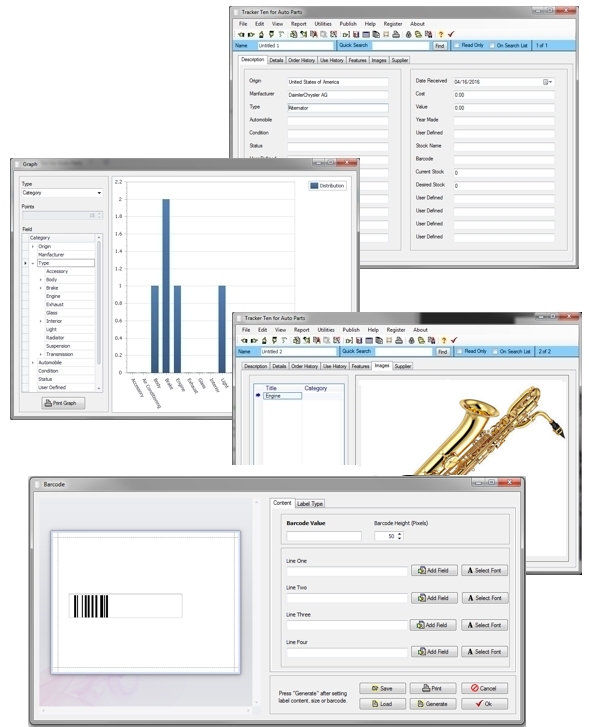
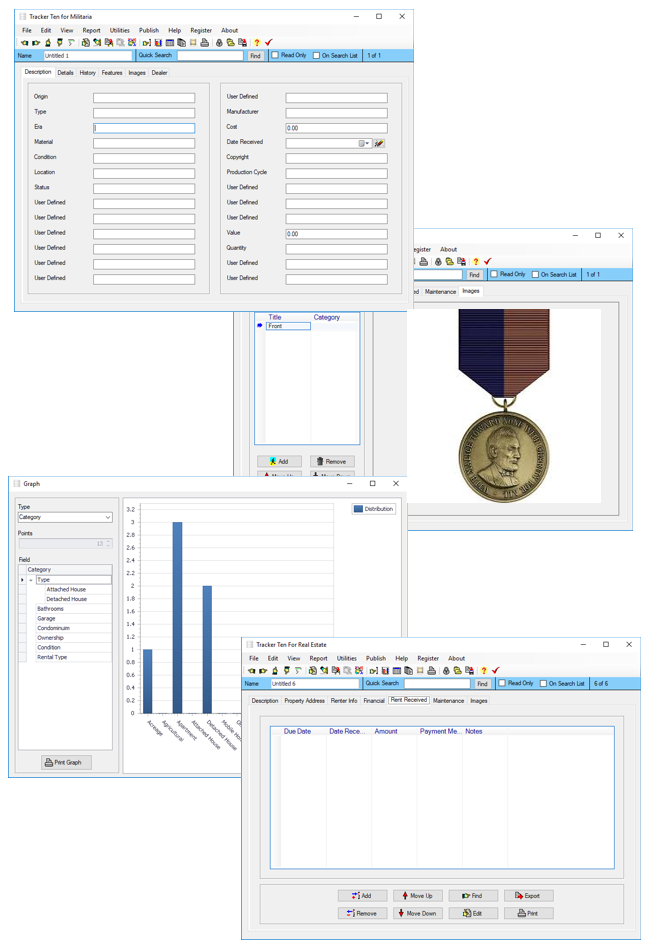
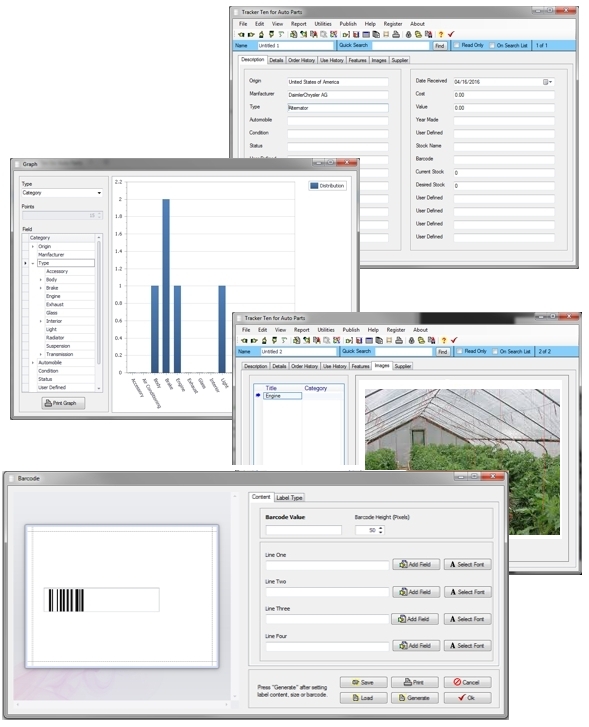
Reports and graphs transform raw inventory data into actionable insights. Tracker Ten can generate reports that summarize tool usage, maintenance costs, loan activity, and inventory value. These reports help managers understand how assets are being used and where improvements can be made. Graphs provide visual representations of trends, making it easier to spot patterns such as increasing maintenance costs or declining availability in certain categories.
Data export to comma-delimited format adds another layer of flexibility. Exported data can be used in spreadsheets, accounting systems, or other software applications for further analysis or reporting. This is particularly useful for audits, budgeting, and long-term planning. The ability to move data in and out of the system ensures that Tracker Ten fits into broader organizational workflows rather than existing in isolation.
Barcode generation and scanning is a major time saver for organizations with large inventories. By assigning barcodes to tools, users can quickly scan items to check them in or out, update records, or perform inventory counts. This reduces manual data entry and minimizes errors. Barcode scanning also speeds up audits and spot checks, allowing staff to verify inventory accuracy efficiently.
For mobile or distributed teams, barcode scanning supports consistent tracking even when tools move frequently between locations. A quick scan confirms a tool’s identity and status, ensuring that records remain accurate despite constant movement. This capability is especially valuable in construction, maintenance, manufacturing, and event management environments.
Over time, the data collected in Tracker Ten for Tools becomes a strategic resource. Managers can analyze trends to optimize purchasing, reduce losses, and extend the lifespan of tools through better maintenance. Clear records support accountability and transparency, reducing disputes and misunderstandings. For organizations focused on efficiency and cost control, these insights can lead to measurable improvements.
Tracker Ten also supports scalability. As tool inventories grow, the system can accommodate additional items, fields, and records without becoming unwieldy. This makes it suitable for small workshops as well as large organizations with extensive tool collections. The ability to customize and expand the database ensures that it continues to meet evolving needs.
In daily use, Tracker Ten for Tools simplifies what is often a complex and frustrating task. By centralizing information, automating routine processes, and providing powerful search and reporting capabilities, it helps organizations stay organized and in control of their assets. Tools are easier to find, easier to maintain, and easier to account for.
Ultimately, effective tool tracking is about protecting investments, supporting productivity, and reducing waste. Tools represent significant financial and operational value, and losing track of them can have real consequences. Tracker Ten for Tools provides a practical, adaptable solution that turns tool tracking from a reactive chore into a proactive management process. By bringing clarity and structure to tool inventories, the software helps organizations focus on their work with confidence, knowing that their tools are accounted for and ready when needed.
Looking for windows database software? Try Tracker Ten
- PREVIOUS File Extensions in Windows Sunday, June 25, 2023
- NextEquipment Maintenance Tracking Monday, June 12, 2023