Database
Tracking Plants for your Greenhouse or Garden
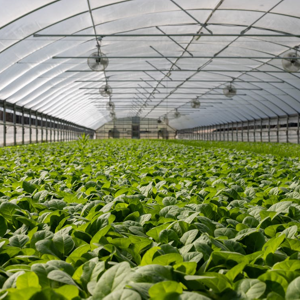
Tracker Ten for Plants is a comprehensive database solution designed to help greenhouses, nurseries, gardens, parks, and research facilities efficiently manage plant collections of any size. Plant tracking is often far more complex than it first appears, especially when dealing with multiple species, varying care requirements, seasonal growth patterns, and different locations. Whether the goal is commercial production, research, conservation, or personal gardening, accurate and organized plant records are essential. Tracker Ten for Plants provides a structured yet flexible way to capture, manage, and analyze plant information, turning scattered notes into a powerful management system.
One of the core strengths of Tracker Ten for Plants is its support for both common and scientific plant classifications. This dual classification system is particularly valuable for professional environments such as nurseries, botanical gardens, and research labs, where accurate taxonomy matters. By storing scientific names alongside common names, users reduce confusion caused by regional naming differences and ensure clarity when sharing data with suppliers, researchers, or regulatory bodies. For home gardeners and smaller greenhouses, this feature also encourages better plant identification and learning, helping users deepen their understanding of their collections.
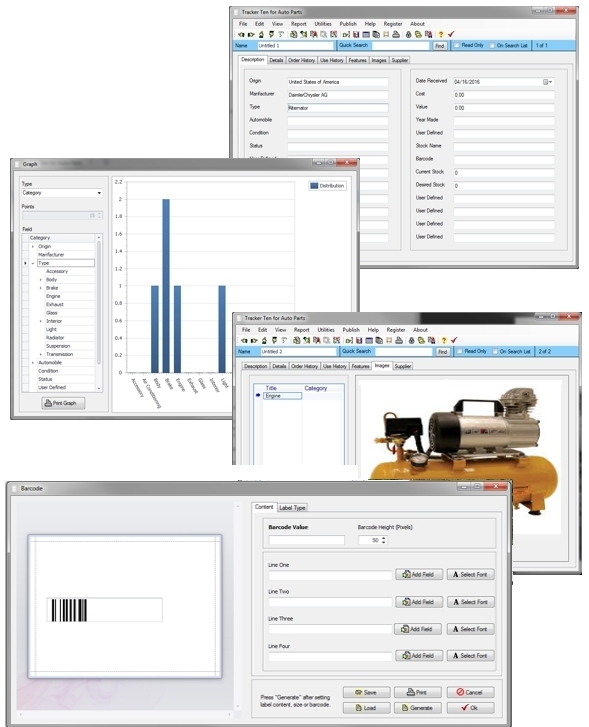
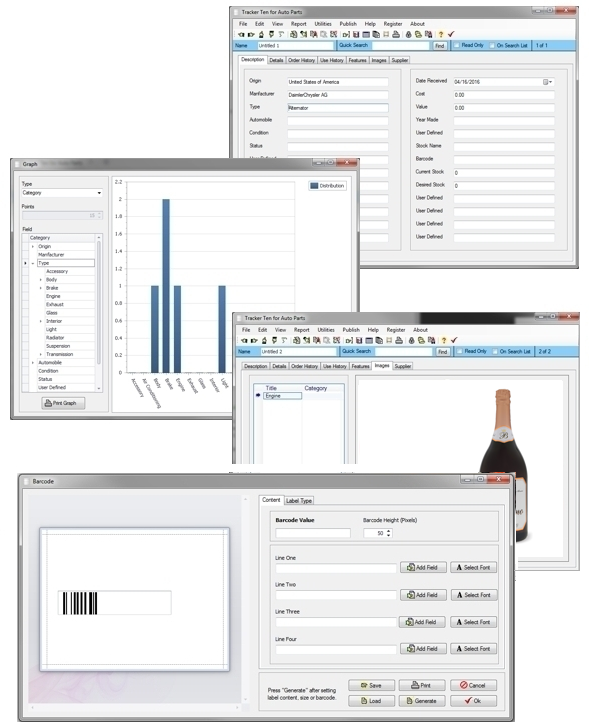
The software includes over 50 customizable fields, making it adaptable to a wide variety of plant tracking needs. These fields can be configured to store information such as plant family, cultivar, planting date, propagation method, pot size, soil type, sunlight requirements, watering schedules, and temperature tolerance. Because different organizations track different attributes, this level of customization allows Tracker Ten for Plants to fit seamlessly into existing workflows. A commercial greenhouse might focus on sale price and batch numbers, while a research lab might prioritize experimental variables and observation data.
Care instructions are another critical aspect of plant management that Tracker Ten handles effectively. Using rich text format notes areas, users can document detailed care guidelines for each plant or plant group. Rich text formatting allows for clear organization of information, such as headings for watering, fertilization, pruning, and pest management. This is especially useful in environments where multiple staff members care for plants, as it ensures consistency regardless of who is performing the task. Clear care instructions also reduce the risk of plant loss due to misunderstandings or incomplete information.
Growth history tracking is a standout feature that adds long-term value to plant records. Tracker Ten for Plants allows users to document changes over time, such as growth milestones, flowering periods, pruning events, repotting, and health issues. This historical data is invaluable for identifying patterns and improving future outcomes. For example, greenhouse managers can analyze which conditions produced the healthiest plants or the fastest growth. Researchers can correlate environmental factors with plant responses, while home gardeners can learn what works best in their specific environment.
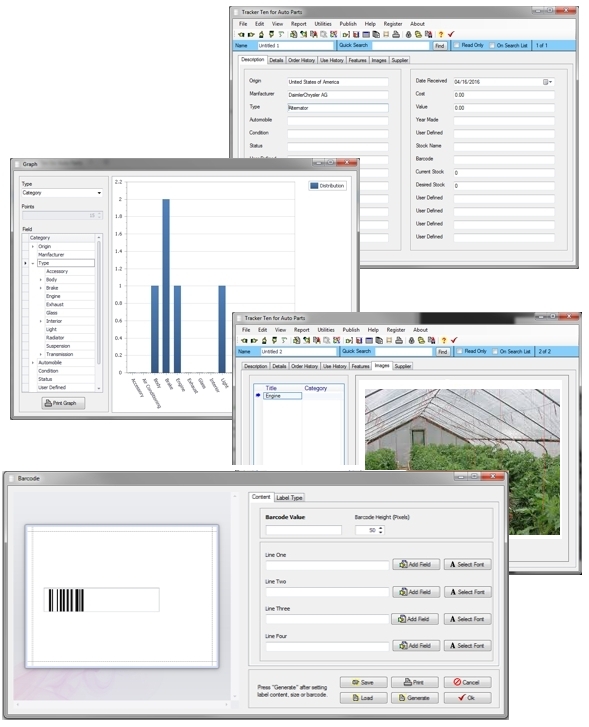
Multiple image support enhances growth tracking by providing a visual record of each plant’s development. Users can attach photos taken at different stages, making it easy to compare growth over time or document issues such as disease, pests, or nutrient deficiencies. In commercial settings, images can also be used for quality control or marketing purposes. For research and education, visual records support better documentation and communication of findings.
Supplier tracking is another important component, particularly for nurseries and greenhouses that purchase seeds, cuttings, or young plants from multiple sources. Tracker Ten for Plants allows users to associate suppliers with individual plant records, making it easy to trace plant origins. This information can be critical for quality assurance, compliance, and accountability. If issues arise, such as disease outbreaks or poor performance, supplier data helps identify potential causes and supports better purchasing decisions in the future.
Item location tracking helps users manage plants across multiple areas, such as greenhouses, outdoor beds, benches, or research plots. Knowing exactly where each plant is located saves time and reduces errors, especially in large or complex facilities. Location data can be updated as plants are moved, repotted, or transferred, ensuring records remain accurate. This feature is particularly useful for seasonal operations where plants frequently change location based on weather, growth stage, or sales readiness.
Barcode generation and scanning offer significant efficiency gains for larger organizations. By assigning barcodes to plant containers, trays, or beds, staff can quickly access and update plant records using scanners rather than manual searches. This reduces data entry errors and speeds up routine tasks such as inventory checks, maintenance logging, or movement tracking. In high-volume environments, barcode support can save substantial time while improving data accuracy.
The feature checklist included in Tracker Ten for Plants allows users to track specific plant characteristics or conditions using standardized selections. This can be used to note traits such as drought tolerance, disease resistance, or ornamental features. Checklists are especially useful for filtering and searching, as they provide consistent data points across records. For example, a nursery could quickly find all shade-tolerant plants or all species suitable for a particular climate zone.
Powerful search and filter functions make it easy to work with large plant databases. Users can search by name, classification, location, supplier, or any custom field, allowing them to quickly find specific plants or groups of plants. Filters can be combined to narrow results further, such as finding all plants from a certain supplier that require high sunlight and are currently in a specific greenhouse. This capability supports both daily operations and strategic planning.
Reporting and graph generation transform plant data into actionable insights. Tracker Ten for Plants allows users to generate a variety of reports, such as plant inventories, growth summaries, supplier performance, or valuation reports. Graphs can visualize trends over time, such as growth rates, survival rates, or distribution of plant types. These visual tools are especially helpful for decision-making, presentations, or grant and compliance reporting in research and public sector environments.
The ability to export data in comma-delimited format adds flexibility and ensures that plant records are not locked into a single system. Exported data can be used in spreadsheet applications, statistical software, or shared with external partners. This is particularly valuable for research labs and organizations that need to collaborate or perform advanced analysis beyond the built-in tools.
Customization is a recurring theme in Tracker Ten for Plants, extending beyond fields to the overall structure of the database. If the software does not fully meet a user’s needs, additional customization options are available. This makes it possible to tailor the system for specialized applications, such as rare plant conservation, breeding programs, or regulatory compliance tracking. The ability to request custom changes ensures that the software can evolve alongside the organization’s requirements.
The "try before you buy" demo option further supports confident adoption. By allowing users to test the full functionality of the software with a limited number of records, Tracker Ten for Plants gives potential users the opportunity to evaluate its suitability in a real-world context. This reduces risk and helps organizations make informed decisions before committing to a purchase.
In conclusion, Tracker Ten for Plants is a powerful and flexible solution for tracking and managing plants in a wide range of environments. Its support for scientific and common classifications, extensive customization, rich documentation, image support, supplier and growth history tracking, and efficient tools like barcode scanning make it well suited to both small and large operations. By centralizing plant information and making it easy to search, analyze, and report on, the software helps users improve plant care, optimize operations, and gain deeper insights into their collections. Whether used in a commercial greenhouse, a research lab, or a home garden, Tracker Ten for Plants provides the structure and tools needed to manage plants with confidence and precision.
Looking for windows database software? Try Tracker Ten
- PREVIOUS Managing Sports Equipment For Your Team Monday, September 8, 2025
- NextCoin Collecting Database Software Saturday, August 23, 2025