Database
ACID Database Transactions

You often hear the term "ACID" when discussing database transactions. This term, which dates back to 1983, is an acronym that represents four essential components that should be part of every database transaction: Atomicity, Consistency, Isolation, and Durability. While these terms might initially seem technical or complex, they are actually quite straightforward when broken down into practical examples. Understanding these principles is crucial for anyone working with databases, whether for personal projects, business applications, or large-scale enterprise systems.
The reason ACID principles are so important is that they help ensure the integrity of the data stored in a database, even in the event of unexpected errors, system crashes, or other failures. For example, if a power outage occurs while updating a database, following ACID principles ensures that the database remains in a reliable and consistent state. These principles are particularly vital in industries where data accuracy is critical, such as banking, ecommerce, healthcare, and transportation systems like air traffic control. A single inconsistency in these domains could have serious consequences.
In today’s world, data has become one of the most valuable resources. In fact, in 2017, The Economist described data as being more valuable than oil, highlighting its strategic importance in modern society. Given this, it is essential that data is stored reliably and that corruption is prevented. ACID principles provide a framework for achieving this reliability. Most modern relational database systems, including SQL Server, MongoDB, PostgreSQL, and MySQL, follow ACID principles whether they are deployed on desktop systems, local networks, or cloud-based environments such as Microsoft Azure and Amazon Web Services (AWS). This widespread adoption underscores the critical role that ACID compliance plays in database design.
Database Atomicity
Atomicity is the "A" in ACID and refers to the all-or-nothing nature of database transactions. A single transaction may involve multiple operations, but atomicity ensures that either all operations are successfully completed, or none are. This is essential for preventing partial updates that could leave a database in an inconsistent state.
Consider a simple banking example: transferring money from one account to another. The transaction involves debiting one account and crediting another. Atomicity ensures that both operations occur together. If the credit operation fails after the debit has been processed, the entire transaction is rolled back, leaving both accounts unchanged. Without atomicity, a system could debit money from one account but fail to credit the other, leading to financial discrepancies and potential legal issues.
Atomicity is not only about correctness but also about user trust. In e-commerce platforms, for example, atomicity ensures that inventory counts, payment processing, and shipping information are all updated together. If a system failed to maintain atomicity, a customer might be charged for a product that appears in the inventory as sold but is actually unavailable, leading to frustration and loss of trust.
Database Consistency
Consistency, represented by the "C" in ACID, ensures that a database remains in a valid state before and after a transaction. In practice, this means that any data entered into the database adheres to predefined rules, constraints, and business logic. Consistency guarantees that the database remains accurate and reliable over time.
For example, if your database stores addresses, consistency rules would prevent invalid combinations, such as listing Los Angeles as a city in Texas. Similarly, in a payroll system, consistency ensures that employees are not paid more than their authorized salaries or that tax deductions are correctly applied. Businesses can define their own rules to maintain data integrity, including referential integrity, unique constraints, and format checks.
Consistency also prevents the database from being left in a partially updated state. Returning to the banking example, if money is transferred between accounts, a consistent database ensures that the debit and credit operations are synchronized. If only the debit is processed and the credit is skipped due to an error, the database automatically rolls back the changes to preserve consistency.
Another aspect of consistency is referential integrity. If one database record points to another, the referenced record must exist. This prevents orphaned records and maintains the logical relationships between different parts of the database. Consistency is thus crucial not only for correctness but also for maintaining trust in the system’s data.
Database Isolation
Isolation, the "I" in ACID, controls when and how changes made by one transaction are visible to other transactions. In multi-user databases, isolation is critical to prevent conflicts and ensure accurate results when multiple transactions occur simultaneously. Isolation mechanisms, such as locking and versioning, help prevent "race conditions," where concurrent transactions interfere with each other.
In a banking scenario, isolation prevents issues when multiple transactions occur at the same time. For instance, if a customer initiates a bill payment while simultaneously transferring funds, isolation ensures that both transactions are processed independently. Without isolation, both operations could attempt to debit the account simultaneously, potentially overdrawing the account or causing incorrect balances.
Isolation is equally important in e-commerce environments. When multiple customers attempt to purchase the same item, isolation ensures that inventory is correctly updated and that no item is sold twice. Some database systems provide different levels of isolation, allowing read operations to be performed concurrently while write operations are executed in isolation. Choosing the appropriate isolation level can optimize performance while maintaining data integrity.
Beyond banking and e-commerce, isolation plays a role in any scenario with concurrent users, such as collaborative document editing, ticket booking systems, or supply chain management software. Without proper isolation, conflicting changes could compromise the accuracy and reliability of the database.
Data Durability
Durability, represented by the "D" in ACID, ensures that once a transaction is committed, the changes are permanent. Even in the event of hardware failure, power outages, or software crashes, durable data remains intact. Durability is typically achieved by saving changes to non-volatile storage, such as hard drives, SSDs, or cloud storage solutions.
For example, in banking, once a transfer is confirmed, the data representing that transfer must be permanently recorded. Without durability, a system crash could erase the record, leading to inconsistencies and financial loss. Classic in-memory databases, which store data temporarily in RAM, cannot guarantee durability unless changes are also saved to stable storage.
Durability also plays a role in compliance and auditing. Many industries are required to retain accurate records of transactions for regulatory purposes. Ensuring durability helps businesses meet legal obligations and maintain trust with customers and stakeholders.
ACID Principles Table
| ACID Principle | Description | Example |
|---|---|---|
| Atomicity | Ensures all steps of a transaction succeed or none do. | Bank transfer: debit and credit both succeed or neither happens. |
| Consistency | Maintains data integrity according to rules and constraints. | Address validation: Los Angeles cannot be in Texas. |
| Isolation | Prevents concurrent transactions from interfering with each other. | Two users buying the same item at the same time do not oversell stock. |
| Durability | Committed changes are permanent, even after crashes. | Once a payment is processed, the record remains in the database. |
ACID Diagram
Below is a simple visual representation of ACID principles in a single transaction:
Transaction Start → [Atomicity: All-or-Nothing] → [Consistency: Valid Data] → [Isolation: Concurrent Safe] → [Durability: Permanent Save] → Transaction Complete
ACID in NoSQL Databases
NoSQL databases, by contrast, often do not fully implement ACID principles. NoSQL systems are designed for scalability, speed, and flexibility, often storing data as independent documents rather than structured relational tables. Implementing full ACID compliance in NoSQL can increase overhead, which may not be necessary for applications that prioritize horizontal scaling and fast writes.
In NoSQL databases, transactions often involve single documents, which are modified in a single step. This reduces the complexity of multi-step transactions and lessens the need for traditional ACID guarantees. While some NoSQL systems provide limited ACID support, many rely on eventual consistency and distributed consensus models to manage data integrity across large clusters.
For applications where strict consistency is critical, such as financial systems, relational databases with ACID compliance are still preferred. NoSQL databases, on the other hand, are well-suited for applications like content management, social media feeds, and analytics platforms where flexibility and scalability outweigh strict transactional guarantees.
ACID Principles in Tracker Ten
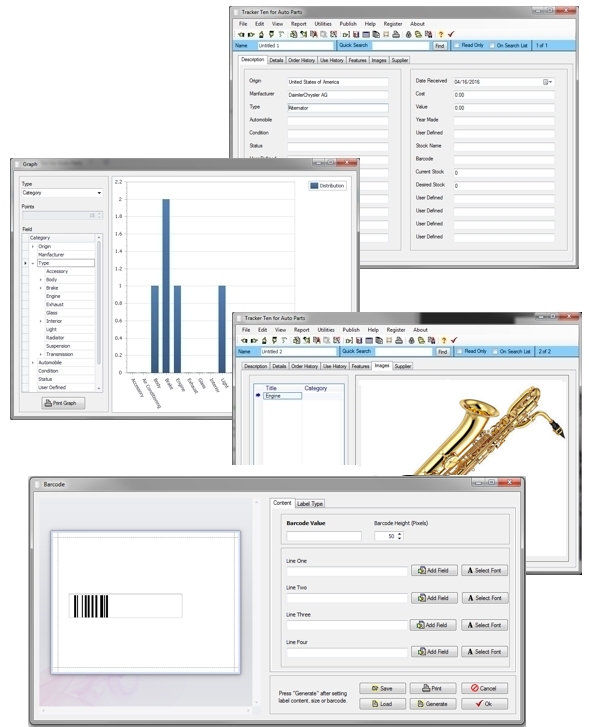
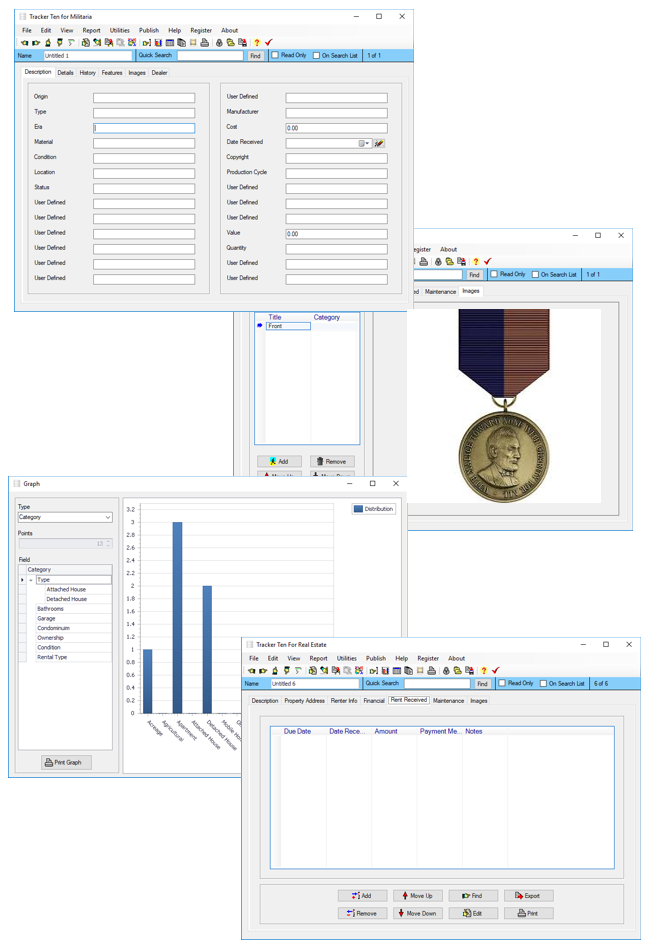
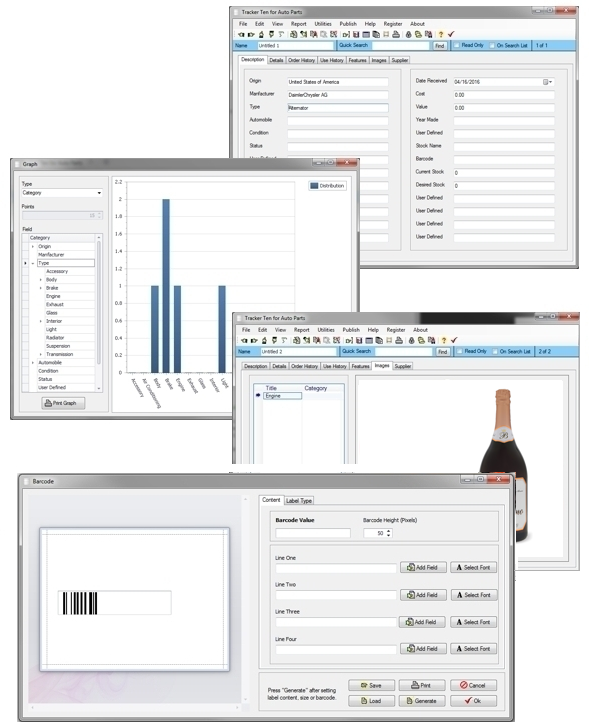
Our own desktop Tracker Ten database system automatically supports ACID transactions. When you make changes to a Tracker Ten record, all information is saved atomically, ensuring that either all changes are committed or none are. Consistency checks ensure that all entered data adheres to rules and business logic, preventing invalid or incomplete records. Durability is guaranteed by saving changes to disk, providing permanent storage even if the system experiences a failure.
Tracker Ten also implements isolation mechanisms to ensure that multiple users can interact with the database without interfering with each other’s work. This is especially useful in collaborative environments where multiple people need to access and update shared records simultaneously. By following ACID principles, Tracker Ten ensures that data remains reliable, accurate, and secure at all times.
Overall, ACID principles form the foundation of reliable database management. Whether you are developing small desktop applications, large enterprise systems, or cloud-based solutions, understanding and implementing these principles ensures that your data remains trustworthy, consistent, and durable under all conditions. As data continues to grow in value and importance, ACID compliance is not just a technical requirement—it is a fundamental standard for data integrity and operational reliability.
Looking for windows database software? Try Tracker Ten
- PREVIOUS Tracking Jewelry Monday, September 4, 2023
- NextStoring Images in a Database vs File System Tuesday, August 29, 2023