Database
Tracking Jewelry
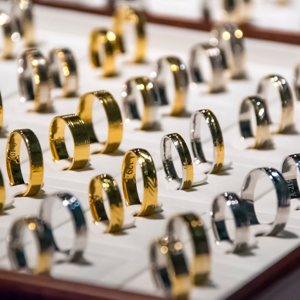
Keeping accurate, detailed records of jewelry is important for many different reasons. For a homeowner, a well-documented jewelry collection can make the difference between a smooth insurance claim and a stressful, uncertain process after a loss. For a pawn shop or small jewelry store, precise tracking is essential for inventory control, valuation, compliance, and customer trust. Tracker Ten for Jewelry is designed to meet these needs by providing a flexible, full-featured database system that allows users to document, organize, and manage jewelry collections with accuracy and confidence. Whether used at home or in a commercial setting, the software offers tools that go far beyond simple lists or spreadsheets.
At the heart of Tracker Ten for Jewelry is its ability to store comprehensive records for each item. Jewelry is not a uniform product; each piece has unique characteristics that affect its value and identification. The software allows users to track gold, silver, diamonds, gemstones, watches, and other valuable items, with customizable data fields that can be adapted to any collection. For example, a single record can include metal type, purity, weight, gemstone type, carat weight, cut, clarity, color, maker, serial numbers, and appraisal details. This level of detail is essential for insurance documentation and professional inventory management.
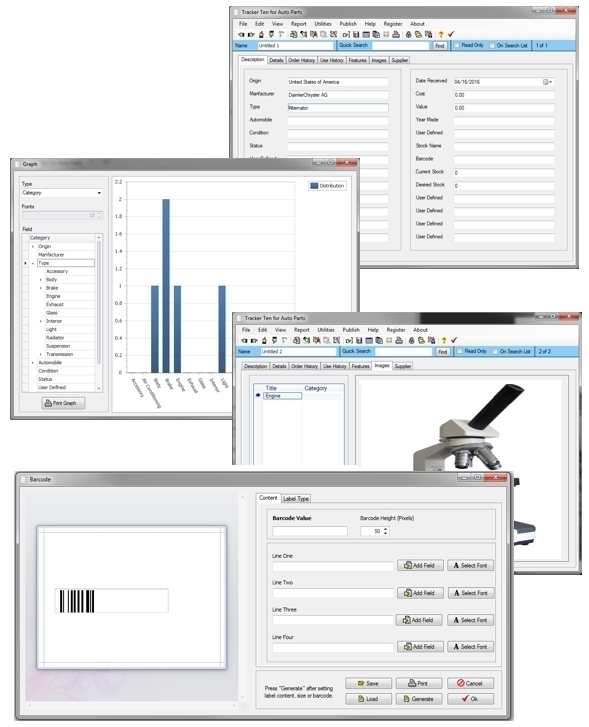
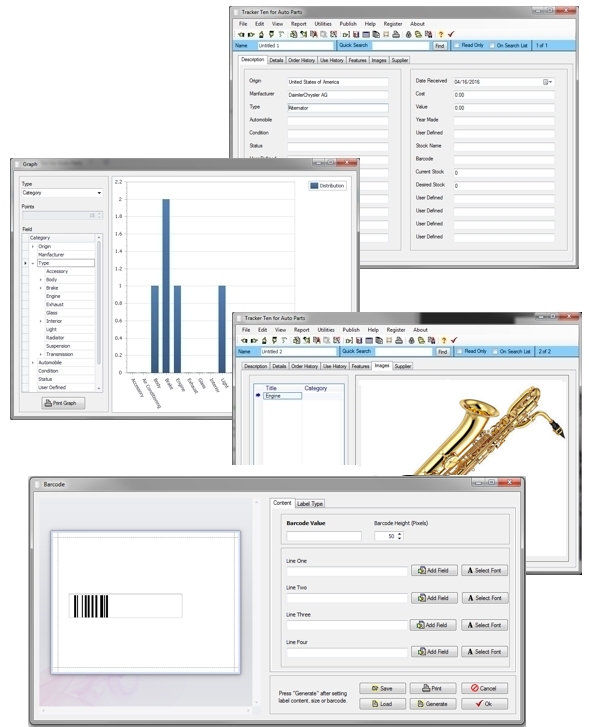
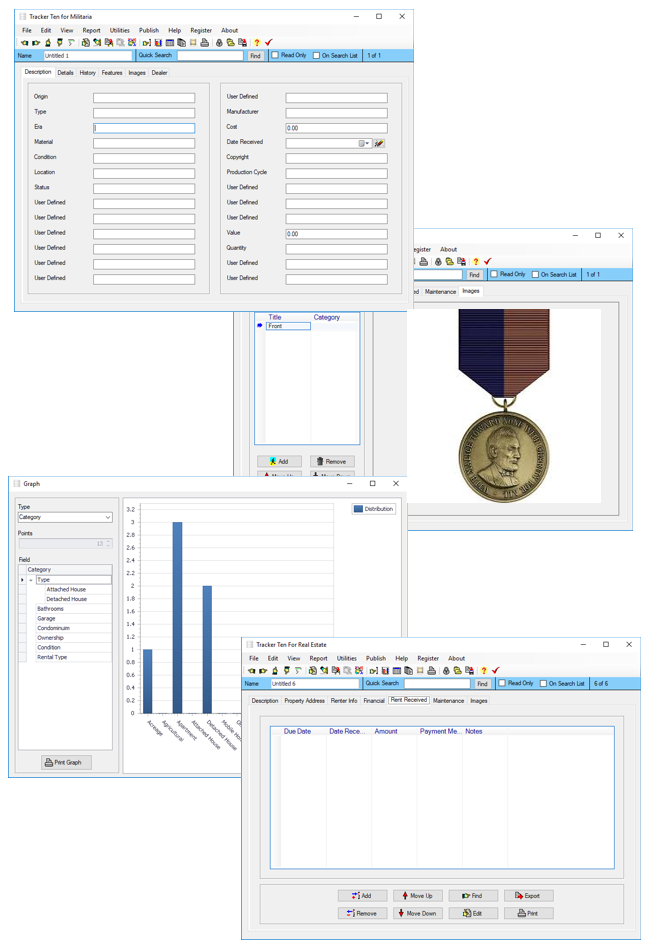
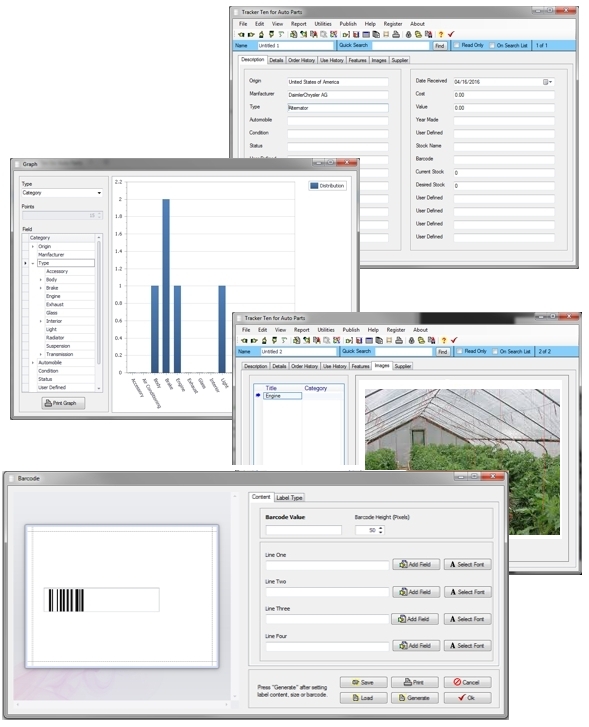
For home insurance purposes, one of the biggest challenges is proving ownership and value. Tracker Ten for Jewelry addresses this by combining structured data with images, history, and reporting. Each item can have multiple images attached, allowing owners to store clear photographs from different angles, close-ups of hallmarks or serial numbers, and photos taken at different points in time. In the event of theft, loss, or damage, these images provide strong visual evidence that supports insurance claims and speeds up the settlement process.
Cost and value tracking is another key feature for insurance and business users alike. Tracker Ten allows users to record purchase price, appraised value, and current estimated value based on numbers they enter themselves. Over time, this makes it easy to see how a collection has changed in value, which is especially useful for items made from precious metals or gemstones that fluctuate with market conditions. For homeowners, this information can help ensure that insurance coverage limits remain adequate. For pawn shops and jewelry stores, it supports pricing decisions, loan calculations, and resale strategies.
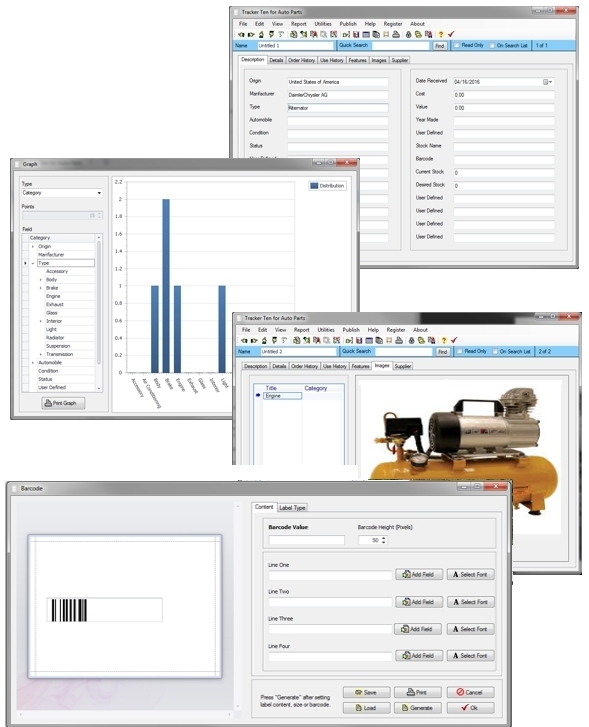
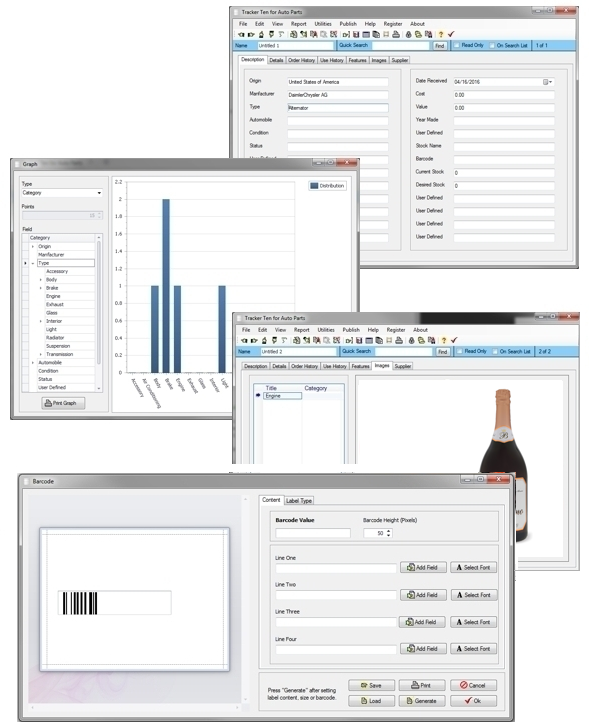
Advanced reporting is one of the most powerful aspects of Tracker Ten for Jewelry. With just a few clicks, users can generate professional, full-color reports that summarize their entire collection or selected subsets. For home insurance, these reports can be printed or exported and shared with an insurance company as formal documentation. Reports can include item descriptions, values, and embedded images, creating a clear and organized catalog that is far more convincing than a handwritten list or basic spreadsheet. For businesses, reports can be used for inventory audits, valuation summaries, or internal reviews.
Graph generation adds another layer of insight, particularly for commercial users. Graphs can visually represent the composition of a collection or inventory, such as the proportion of gold versus silver items, or the distribution of value across different categories. A pawn shop might use graphs to understand where most of its capital is tied up, while a small jewelry store could analyze trends in stock value or turnover. Visual data makes it easier to spot patterns and make informed decisions.
Item history tracking is especially valuable in business environments, but it can also benefit private collectors. Tracker Ten can record changes to an item over time, such as repairs, re-appraisals, ownership transfers, or sales. In a pawn shop, this history helps document when an item was acquired, loaned, redeemed, or sold, supporting accountability and compliance. For home use, item history can document upgrades, resizing, or appraisal updates, all of which strengthen insurance records.
The software’s rich text format notes provide space for detailed descriptions and observations that do not fit neatly into standard fields. Jewelry often has stories attached to it, such as provenance, inheritance details, or special characteristics noted by an appraiser. Rich text notes allow users to record this information clearly and in context. For insurance claims or resale, these notes can provide valuable background that supports valuation and identification.
A powerful search engine makes it easy to find specific items quickly, even in large collections or inventories. Users can search by metal type, gemstone, value range, purchase date, or any custom field they define. This is particularly useful in a retail or pawn environment, where staff may need to locate items rapidly while assisting customers. For homeowners, fast searching simplifies reviews, updates, and reporting.
Barcode scanning and printing further streamline jewelry tracking, especially for shops. Tracker Ten can generate and print barcodes using standard label printers, allowing each item to be tagged and identified instantly. Scanning a barcode pulls up the full record, reducing errors and speeding up transactions. This feature supports accurate inventory counts and simplifies day-to-day operations. Even private collectors can benefit from barcodes when managing larger collections stored across multiple locations or safes.
Data export and optional web publishing add flexibility for users who need to share or back up their information. Data can be exported for use in other systems, reports, or secure offsite storage. Optional web publishing allows selected information to be presented online, which can be useful for small jewelry stores showcasing inventory or for private owners sharing documentation with insurers or appraisers in a controlled way.
For a pawn shop or small jewelry store, Tracker Ten for Jewelry provides a balance between professional functionality and ease of use. Unlike large enterprise retail systems, it does not require extensive IT support or complex setup. Its customizable design allows each business to adapt the database to local regulations, business practices, and inventory types. This makes it an ideal solution for small operations that need reliable tracking without excessive overhead.
From a home insurance perspective, the value of organization cannot be overstated. Many people only realize the importance of proper documentation after a loss occurs. Tracker Ten for Jewelry encourages proactive record keeping, helping homeowners maintain up-to-date inventories with images, values, and histories. This preparation reduces stress and uncertainty and can significantly improve the outcome of insurance claims.
In conclusion, Tracker Ten for Jewelry is a versatile and robust tool for tracking jewelry collections in both personal and commercial contexts. Its ability to combine detailed data, images, history tracking, advanced reporting, and flexible customization makes it well suited for home insurance documentation, pawn shop operations, and small jewelry stores. By replacing informal records and spreadsheets with a structured database, users gain clarity, control, and confidence in managing valuable assets. Whether the goal is protecting a personal collection or running a small jewelry business efficiently, Tracker Ten for Jewelry provides the tools needed to organize, document, and understand jewelry assets with precision and professionalism.
Looking for windows database software? Try Tracker Ten
- PREVIOUS Sorting Data Wednesday, September 6, 2023
- NextACID Database Transactions Wednesday, August 30, 2023