Database
All About Database Partitioning
Database partitioning is the process of taking a larger table and splitting it into smaller parts or chunks. Most enterprise-level database systems, including Oracle, MySQL, PostgreSQL, Cassandra, and Microsoft SQL, support partitioning. Since smaller sets of information are easier to manage, partitioning can improve query response times, simplify database maintenance, and optimize overall system performance. Partitions can be stored on different files, hard disk drives, or even on separate physical or cloud servers. If partitioning is implemented correctly, end users may not even notice that the data has been partitioned in the backend.
Partitioning can be especially beneficial for very large databases where a single table may contain millions or billions of rows. Working with such massive tables without partitioning can lead to slow queries, long maintenance operations, and high storage requirements. Partitioning breaks down these large tables into more manageable sections, reducing the computational overhead for queries and other database operations. This is not only beneficial for performance but also for disaster recovery and backup operations, as smaller partitions are easier and faster to back up and restore.
The procedure for creating partitions will vary depending on the database system you are using. For example, in Microsoft SQL Server Management Studio, partitions can be created using partition functions and partition schemes, which work alongside tables and indexes. Oracle provides a variety of partitioning strategies, such as range, list, hash, and composite partitioning. PostgreSQL supports table inheritance and declarative partitioning. Each system offers its own methods for defining partition keys, partition ranges, and partition maintenance, but the underlying concept remains the same: breaking a large table into smaller, more manageable pieces.
It is important to note that database partitioning is distinct from database replication, clustering, or indexing. Database replication involves copying an entire database across different servers (master-slave or multi-master configurations). Clustering involves distributing the database across multiple servers to increase availability and fault tolerance. Indexes, on the other hand, are simply pointers that make searching within tables faster. Partitioning differs from all of these, as each partition can have its own indexes, transaction logs, and even customized storage parameters. Despite being separate tables under the hood, partitions can often be queried as if they were a single unified table, thanks to the database’s partitioning logic.

Horizontal vs Vertical Partitioning
There are two primary approaches to partitioning data: horizontal and vertical. Each method serves different purposes and is suitable for different scenarios. Understanding the differences is crucial for designing an effective partitioning strategy.
Horizontal partitioning involves splitting a table into multiple tables where each table contains a subset of rows. These subsets are usually determined based on a partition key, such as date ranges, geographic regions, or customer IDs. Each horizontal partition has the same table structure (same columns) but contains only a portion of the overall data. This method is particularly effective for very large tables that grow over time, as it reduces the volume of data each query needs to process.
Vertical partitioning, on the other hand, involves splitting a table by columns instead of rows. Different fields or groups of fields are stored in separate tables. Vertical tables have different structures, as they store different types of information. For example, frequently queried columns might be stored in one table, while less frequently accessed or large textual data might be moved to another. This approach can reduce I/O overhead and improve performance when queries only need a subset of the table’s columns.
Many large-scale systems use a combination of horizontal and vertical partitioning, depending on the access patterns, query load, and storage constraints of the database. Combining both approaches can provide flexibility and improved performance for complex workloads.
Data Sharding and Data Partitioning
Data sharding is a specific type of horizontal partitioning where data is distributed across multiple computers or servers. Sharding is commonly used in cloud environments and large-scale distributed systems to increase scalability and manageability. While traditional partitioning often keeps partitions on the same server, sharding spreads data across multiple nodes, each responsible for a subset of the overall data.
Sharding is particularly useful when a single server cannot handle the memory, storage, or processing requirements of a large dataset. By distributing the data across multiple nodes, the system can scale horizontally. Each shard operates independently, so queries can be processed in parallel, significantly improving performance for high-traffic applications. Sharding also aids in load balancing by evenly distributing database operations across multiple servers.
It is important to design a sharding strategy carefully. Poorly chosen shard keys can result in uneven data distribution, causing some nodes to be overloaded while others remain underutilized. Sharding is most effective when used in conjunction with horizontal partitioning, as both techniques focus on dividing data into manageable, evenly distributed subsets.
When to Use Database Partitioning?
Partitioning adds complexity to a system and may require significant changes to the database architecture, so it should only be used when necessary. Before implementing partitioning, it is essential to identify the specific performance bottlenecks in your system. Profiling queries, monitoring slow transactions, and analyzing storage patterns can help determine whether partitioning will offer tangible benefits.
Database partitioning can be particularly beneficial in the following scenarios:
- Slow database queries caused by scanning large tables
- Long-running maintenance tasks, such as backups or index rebuilds
- High frequency of deadlocks or locking contention in transactional systems
- Applications expected to grow significantly in data volume over time
- Systems requiring parallel processing or load balancing across multiple servers
Implementing partitioning early in the system design can make future scaling more manageable. Retrofitting partitioning into an existing database is possible but often more complex, as it may require migrating large volumes of data, redefining queries, and adjusting application logic.
Advantages of Partitioning
Database partitioning offers several advantages, including operational flexibility, improved performance, and scalability. Partitioning allows database administrators to schedule maintenance tasks, such as backup, restore, and reporting, on individual partitions rather than the entire table. This can distribute operational load more evenly across the system and reduce downtime or bottlenecks during peak usage periods.
Partitioning can also improve query performance by allowing the database engine to scan only the relevant partitions instead of the entire table. For example, if data is partitioned by date, queries for a specific month or year can access only the relevant partition, significantly reducing processing time. Furthermore, partitioning can enhance data availability and reliability, as issues in one partition (such as corruption or disk failure) do not necessarily affect the other partitions.
Adding Data to Partitioned Tables
There are several strategies for inserting data into partitioned tables, each with its own benefits and trade-offs:
- Round Robin: Data is inserted sequentially across partitions. This approach ensures balanced partitioning but assumes all partitions have available space.
- List Partitioning: Data is assigned to partitions based on a specific identifier or category. For example, orders could be stored in partitions based on the region of the customer.
- Range Insertion: Data is allocated based on ranges of a specific field, such as alphabetic ranges, dates, or geographic regions. This method works well if data is evenly distributed.
- Hash/Expression Based: Data is assigned to partitions using a mathematical function, such as modulus. This approach can be fine-tuned to ensure even distribution of data.
- Hybrid Partitioning: Combines two or more techniques, allowing flexibility to address complex data distribution patterns.
How to Search Database Partitions
Modern database systems that support partitioning automatically handle queries across partitions. For optimal performance, it is important to design queries that leverage partition keys or indexed columns. When a query includes the partition key in its filter conditions, the database engine can quickly identify which partitions to scan, significantly improving response times.
For example, if data is partitioned alphabetically by last name, a query searching for "Smith" will only search the partition corresponding to the letter "S." Without partitioning, the same query might need to scan the entire table, leading to slower performance. Intelligent query planners in relational databases handle this process seamlessly, ensuring that users experience fast and accurate results.
Comparison Table: Partitioning Techniques
| Aspect | Horizontal Partitioning | Vertical Partitioning | Sharding |
|---|---|---|---|
| Data Split | Rows of the table | Columns of the table | Rows across multiple servers |
| Table Structure | Same structure in each partition | Different structure per partition | Same structure in each shard |
| Query Performance | Improved for row-based filters | Improved for column-specific queries | Improved with distributed load and parallel queries |
| Use Case | Large tables with uniform columns | Tables with many columns, some frequently accessed | Very large datasets requiring horizontal scaling |
| Complexity | Moderate | High | High, requires networked servers |
| Scalability | Good within a single server | Limited by server storage | Excellent across multiple servers |
Tracker Ten Software
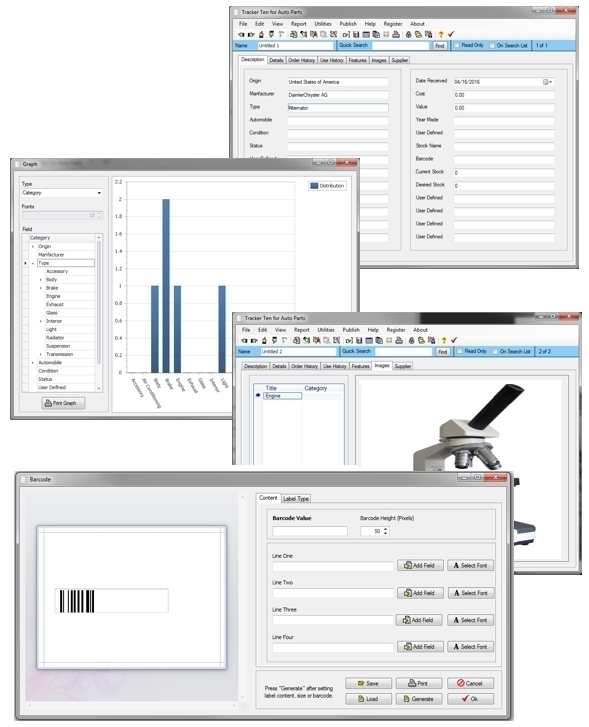
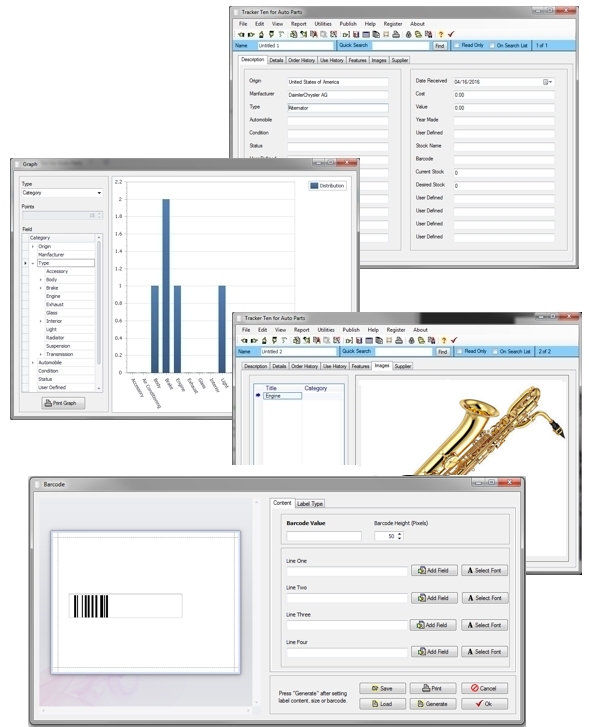
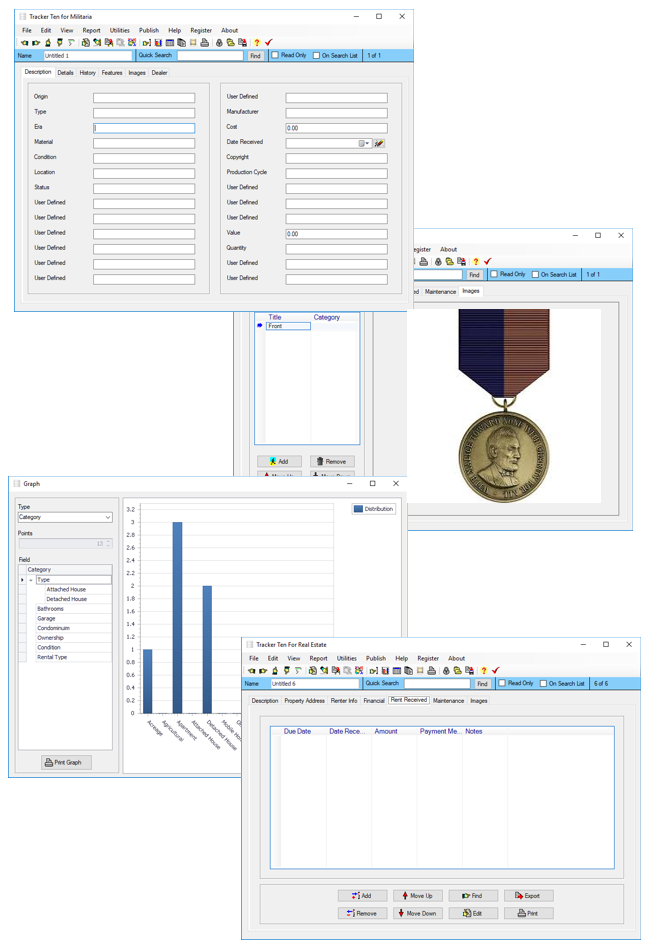
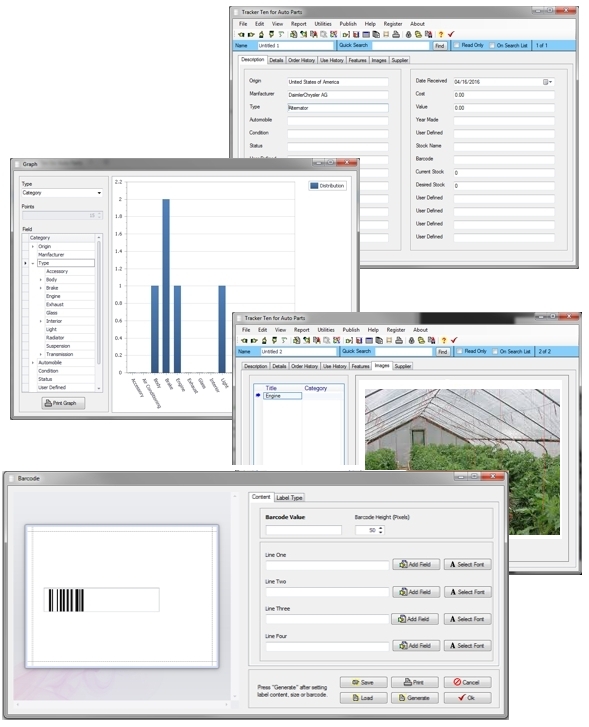
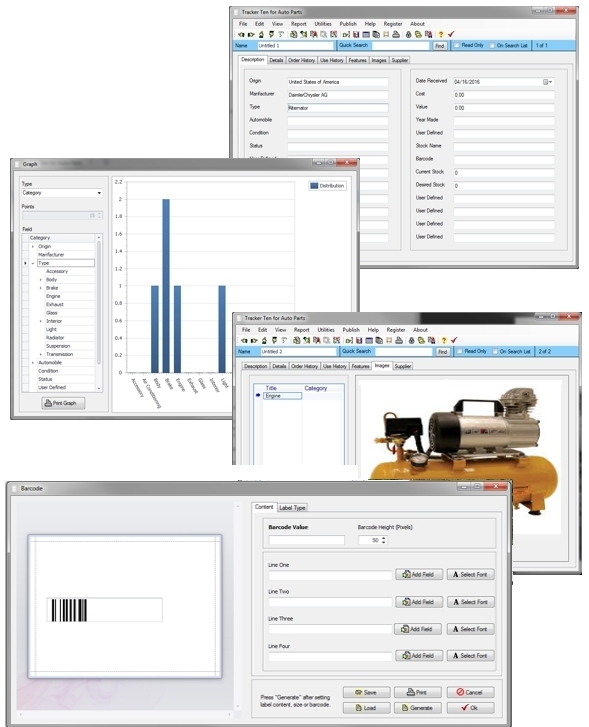
While our Tracker Ten Windows desktop database software does not support automatic partitioning, it is a file-based system. This means that data can be manually split into separate files, effectively creating partition-like structures. Custom utilities can also be developed to query multiple files simultaneously, providing some of the operational benefits of partitioning. For more information, please contact us to discuss custom solutions and optimizations.
In conclusion, database partitioning is a powerful technique for managing large datasets, improving performance, and ensuring system scalability. By understanding the types of partitioning, choosing appropriate strategies for data insertion, and designing queries to take advantage of partitions, database administrators can create systems that are both efficient and resilient. Whether you are managing a small application or a large enterprise system, partitioning can help keep your data organized, accessible, and performant as your business grows.
Looking for windows database software? Try Tracker Ten
- PREVIOUS Tracking Machinery for Your Business Friday, November 22, 2024
- NextManaging Equipment for a Fitness Studio Wednesday, November 13, 2024