Database
Craft Supply Tracking Database Software

Tracker Ten for Crafts can be a powerful organizational tool for anyone who works with arts and crafts supplies, from casual home hobbyists to educators and small business owners. Craft supplies have a unique tendency to multiply over time. Fabric remnants, yarn skeins, beads, paints, papers, tools, and specialty materials often accumulate across drawers, bins, shelves, and storage rooms. Without a structured system, it becomes difficult to know what is already on hand, where it is stored, and whether it is suitable for a particular project. Tracker Ten for Crafts is designed to bring order to this complexity by providing a flexible, easy-to-use system for tracking, organizing, and understanding craft supplies in detail.
At the heart of Tracker Ten for Crafts is its ability to function as a centralized inventory database. Instead of relying on memory or scattered notes, users can record every supply item in one place. Each entry can represent a single item, a batch of materials, or a consumable supply, depending on how the user chooses to organize their data. This centralized approach ensures that information about materials, quantities, and locations is always accessible, reducing the frustration that often comes with searching for the right supply at the right time.
The program’s sample fields are particularly well suited to the needs of craft enthusiasts. Fields such as origin, category, material, color, and manufacturer allow users to describe supplies in meaningful ways. For example, fabric can be categorized by type and color, yarn by fiber content and weight, and beads by material and size. This level of detail makes it easier to select the right materials for a project and avoid purchasing duplicates. Over time, the database becomes a detailed map of the user’s creative resources.
Quantity tracking is one of the most practical benefits of using Tracker Ten for Crafts. Craft supplies are often purchased in bulk or used incrementally, making it easy to lose track of how much remains. By recording quantities and updating them as supplies are used, users can maintain an accurate inventory. This not only saves money by preventing unnecessary purchases, but also ensures that projects are not interrupted by unexpected shortages. For small businesses and schools, accurate quantity tracking is essential for budgeting and planning.
Location tracking further enhances organization. Craft supplies are often stored across multiple rooms, containers, or even buildings. Tracker Ten for Crafts allows users to record where each item is stored, whether it is in a specific drawer, storage bin, classroom, or workshop. When a project is underway and time is limited, being able to quickly look up the location of a particular material can make a significant difference in efficiency and enjoyment.
Customization is one of the software’s strongest features, making it adaptable to a wide range of crafting styles and environments. Every crafter has unique needs, and Tracker Ten for Crafts allows most fields to be customized or supplemented with user-defined fields. A quilter might add fields for fabric width and pattern scale, while a jewelry maker might track bead size and hole diameter. This flexibility ensures that the software grows alongside the user’s skills and interests rather than becoming restrictive over time.
The powerful search engine built into Tracker Ten for Crafts transforms how users interact with their supplies. Instead of rummaging through storage or scrolling through long lists, users can instantly search for materials based on color, category, material type, or any other recorded attribute. This makes planning projects more enjoyable and less stressful. For educators and business owners, fast search capabilities also support lesson planning and order fulfillment by ensuring that needed supplies can be located quickly.
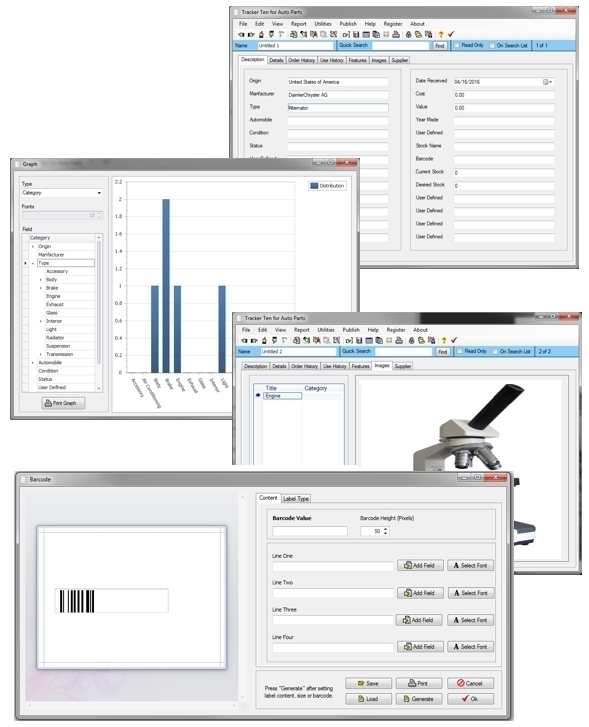
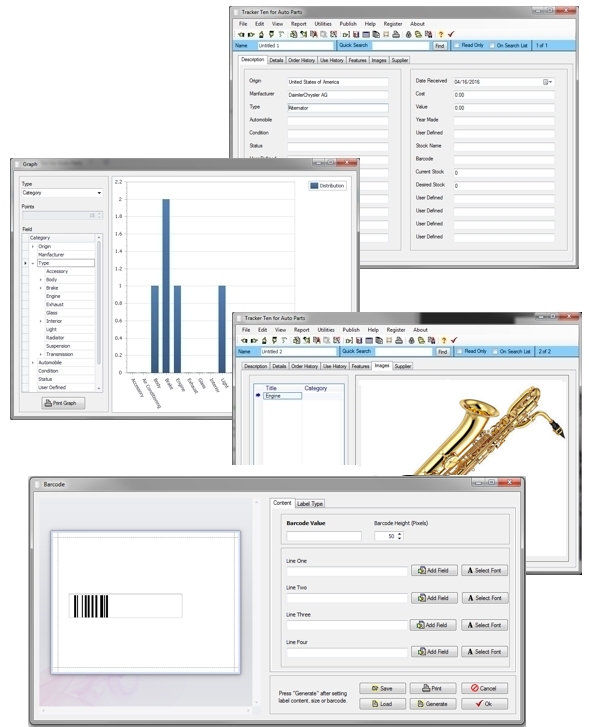
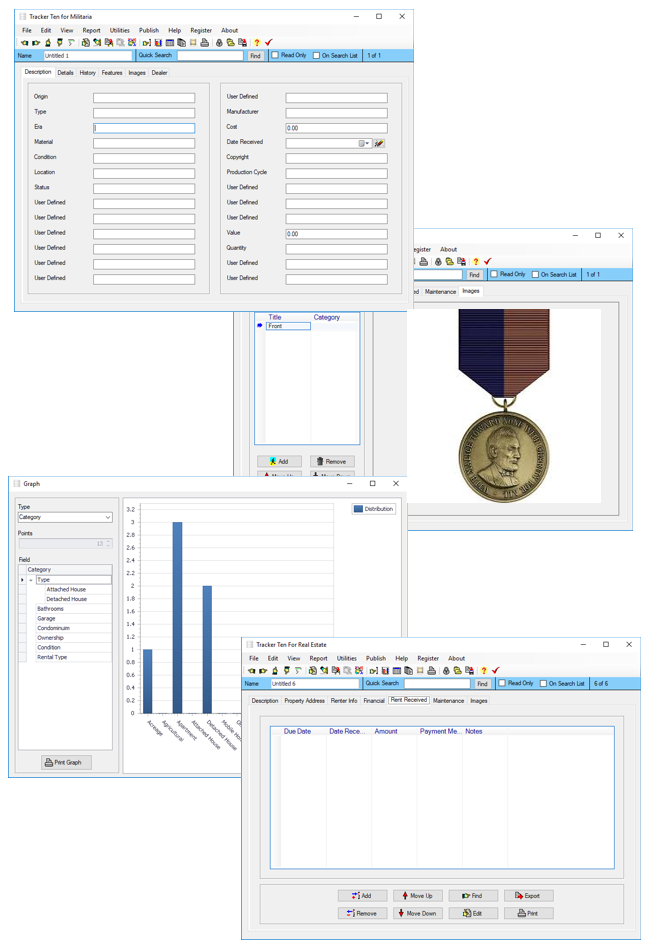
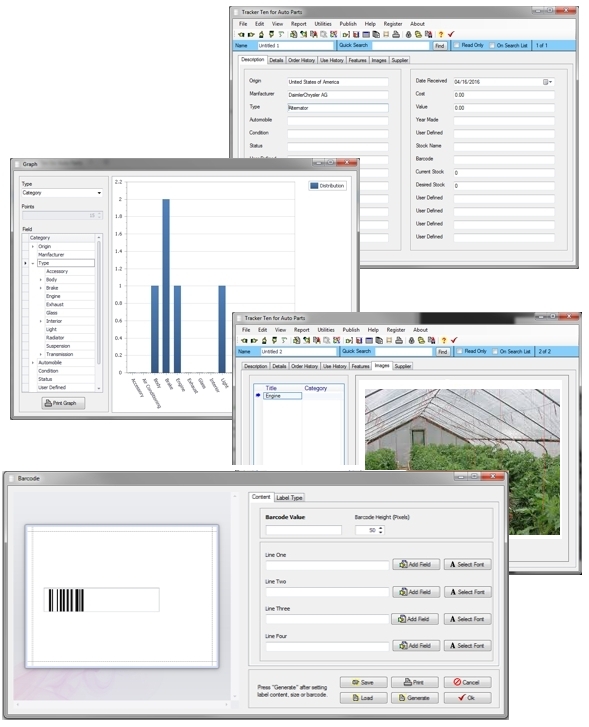
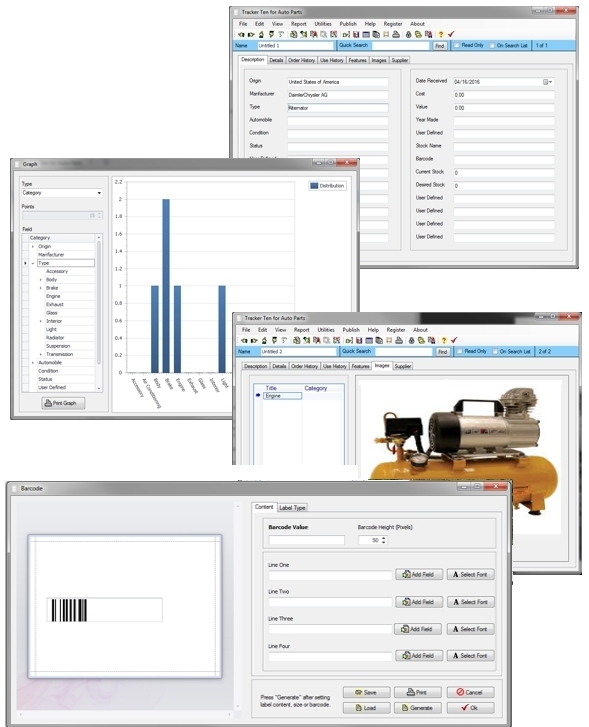
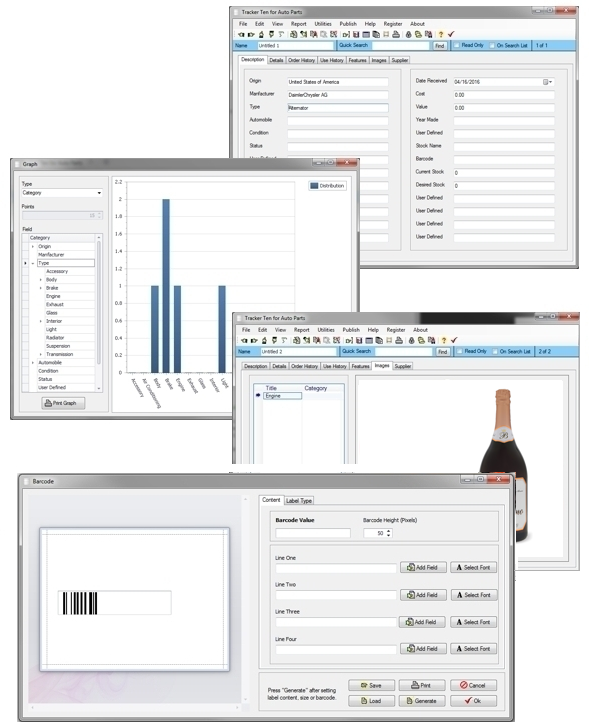
Visual organization is another major advantage. Tracker Ten for Crafts supports multiple image attachments per item, allowing users to photograph fabrics, papers, yarns, or finished tools. Seeing colors, textures, and patterns on screen makes it easier to match materials and plan cohesive projects. Comparing images side by side can help users decide which supplies work best together, reducing waste and improving creative outcomes. Over time, the image library becomes a visual catalog of the user’s entire supply collection.
Reporting and data visualization features add a strategic layer to craft supply management. Tracker Ten for Crafts can generate reports that include full-color images, making them useful for presentations, planning sessions, or documentation. Reports can focus on inventory value, quantities by category, or materials associated with specific projects. Data graphing allows users to see trends, such as which types of supplies are used most frequently or which categories represent the largest investment. These insights can inform purchasing decisions and budget planning.
One of the most creative uses of Tracker Ten for Crafts is project tracking. Supplies can be associated with specific projects, allowing users to record which materials were used and in what quantities. This makes it possible to calculate the total cost of a project, which is especially valuable for small businesses selling handmade items. Knowing the true cost of materials helps ensure accurate pricing and sustainable profitability. For hobbyists, project tracking also creates a record of creative work that can be revisited and refined over time.
The ability to create shopping lists directly from the inventory is another practical benefit. When supplies fall below a certain quantity or are completely used up, users can quickly identify what needs to be replenished. Shopping lists can be generated based on planned projects, ensuring that all necessary materials are acquired in advance. This reduces last-minute trips to the store and helps users stay focused on the creative process.
Rich text format notes provide space for detailed instructions, tips, and reminders. Certain materials may require special handling, storage conditions, or usage techniques. By recording these details directly in the item’s record, users ensure that important information is not forgotten. This is particularly useful in shared environments such as schools or studios, where multiple people may use the same supplies.
Tracker Ten for Crafts also supports comma delimited import and data export, making it easy to transition from other systems. Many crafters begin by tracking supplies in spreadsheets or notebooks. With Tracker Ten, existing data can be imported quickly, preserving past work while gaining access to more advanced features. Data export ensures that information can be backed up or shared as needed, providing peace of mind and flexibility.
For tools and higher-value equipment, Tracker Ten for Crafts serves as an effective insurance record. Tools such as sewing machines, cutting tools, looms, or specialty presses can be recorded with cost, value, and images. In the event of loss or damage, having detailed records readily available can simplify insurance claims and recovery.
Ease of use is a defining characteristic of Tracker Ten for Crafts. The software is designed to be approachable, making data entry and daily use straightforward. This is critical because an inventory system is only effective if it is kept current. When recording new supplies or updating quantities is quick and intuitive, users are more likely to maintain accurate records.
In practice, Tracker Ten for Crafts helps transform a collection of scattered materials into an organized, accessible, and valuable resource. It reduces waste, saves money, supports creativity, and brings clarity to the crafting process. Whether used at home, in a classroom, or in a small business, it provides a structured yet flexible way to manage supplies and projects with confidence.
Looking for windows database software? Try Tracker Ten
- PREVIOUS Database Performance Metrics that Matter Tuesday, January 21, 2025
- NextData Intelligence Thursday, December 26, 2024