Database
Database Authentication Methods
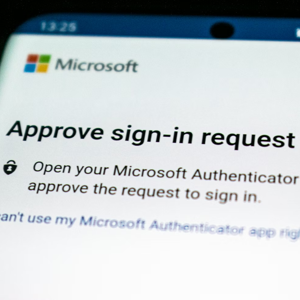
Choosing the right authentication method for your database depends on several factors, including security needs, ease of use, cost, and the type of users who will access the system. The following table summarizes the pros, cons, and common use cases for each method:
- Password-Based Authentication
Pros:- Easy to implement and understand.
- Familiar to most users.
- Works on virtually all systems without specialized hardware.
- Prone to attacks if passwords are weak.
- Users often reuse passwords across multiple systems.
- Password management can become cumbersome.
- Small personal databases or applications with low sensitivity data.
- Systems where convenience outweighs high security needs.
- Certificate-Based Authentication
Pros:- Provides strong security through digital certificates.
- Supports two-way verification between client and server.
- Automated and often seamless once installed.
- Requires installation and management of certificates.
- May involve higher setup costs and technical expertise.
- Certificates can expire and require renewal.
- Corporate environments where devices need trusted access.
- Government systems, military databases, and enterprise applications.
- Applications requiring mutual authentication for high-security data.
- Token-Based Authentication
Pros:- Highly secure, especially for remote access.
- Flexible for users in multiple locations.
- Self-contained and stateless, reducing server-side load.
- Hardware tokens can be lost or damaged.
- Software tokens require installation and can be bypassed if devices are compromised.
- Requires additional infrastructure for generating and managing tokens.
- Banking applications, corporate VPNs, cloud database access.
- Scenarios where temporary access codes are needed for short-term access.
- Highly regulated industries with strict access control requirements.
- Biometric Authentication
Pros:- Highly secure due to uniqueness of biometric data.
- Convenient, as users do not need to remember passwords or carry tokens.
- Supports continuous verification in advanced systems.
- Requires specialized hardware.
- Potential privacy concerns about biometric data storage.
- False positives or negatives may occur.
- High-security environments like labs, hospitals, and government offices.
- Enterprise databases where user convenience is critical.
- Systems with continuous monitoring requirements.
- Multi-Factor Authentication (MFA)
Pros:- Combines multiple authentication methods for enhanced security.
- Mitigates risk if one factor is compromised.
- Supports flexible combinations tailored to specific security needs.
- More complex to set up and manage.
- Users may require training to understand MFA procedures.
- Can slow down the login process compared to single-factor methods.
- Corporate and enterprise-level databases handling sensitive information.
- Financial institutions, healthcare systems, and government databases.
- Any application where maximum security is critical.
Practical Recommendations for Database Security
When designing database authentication, consider the following practical tips:
- For small-scale personal databases, password-based authentication with strong passwords may be sufficient.
- For corporate or enterprise systems, token-based or certificate-based authentication adds robust protection.
- MFA is highly recommended for any system where sensitive data is stored, including financial, healthcare, or proprietary business databases.
- Always combine authentication with proper authorization, logging, and monitoring.
- Regularly update and patch all authentication software to prevent exploits and vulnerabilities.
- Consider user experience: complex authentication may increase security but reduce usability. Balancing security and convenience is key.
Case Study: Implementing MFA in a Business Database
Consider a mid-size financial services company that manages sensitive client data. Initially, the database relied solely on password authentication. After several attempted unauthorized logins, the company decided to implement MFA using a combination of password and hardware tokens.
Implementation steps included:
- Issuing hardware tokens to all authorized staff.
- Configuring the database to require both password and token input.
- Training staff to use MFA devices and recover lost tokens.
- Monitoring access logs for suspicious activity.
- Establishing policies for token replacement and deactivation of compromised credentials.
Result: The company achieved a 90% reduction in unauthorized login attempts, improved compliance with financial regulations, and maintained productivity as the MFA process was straightforward for trained users.
Future of Database Authentication
The future of database authentication is moving toward passwordless solutions, adaptive security, and continuous authentication:
- Passwordless Systems: Users authenticate using biometrics or secure device tokens, reducing reliance on passwords.
- Adaptive Authentication: Security dynamically adjusts based on risk factors such as login location, device, and behavior patterns.
- Continuous Authentication: User identity is verified throughout the session using behavioral biometrics, enhancing security for long-duration database interactions.
- Decentralized Identity: Emerging blockchain-based identity systems provide secure, tamper-proof authentication without centralized servers.
These advancements will allow database administrators to achieve higher security while reducing friction for end users.
Conclusion
Choosing the right database authentication method is essential for protecting sensitive data. Understanding the strengths, weaknesses, and use cases for password, certificate, token, biometric, and multi-factor authentication allows organizations to implement effective security strategies. Combining authentication with proper authorization, audit logging, and monitoring ensures that databases remain both secure and functional.
By following best practices and adopting modern authentication technologies, you can safeguard your data against unauthorized access while maintaining ease of use for legitimate users. Whether using simple password protection for personal projects or advanced MFA for enterprise systems, careful planning and implementation are the keys to database security.
Looking for windows database software? Try Tracker Ten
- PREVIOUS Integrating with NASA APIs to Get Images and Other Data Using Python Monday, June 17, 2024
- NextKeeping Track Of Your Art Collection Sunday, June 9, 2024