General
File Extensions in Windows
Microsoft Windows has relied on file extensions for decades as a simple but powerful way to identify file types and associate them with the programs that can open them. Understanding how file extensions work, how Windows interprets them, and how applications use custom extensions is essential for anyone managing data files, software tools, or custom database applications. This is especially relevant when working with specialized software such as Tracker Ten, which uses the .dat file extension for its database files. While .dat is a generic extension, its meaning and behavior depend entirely on how Windows and the associated application interpret it.
At a basic level, a file extension is the suffix that appears after the final dot in a filename, such as .txt, .docx, or .jpg. In Windows, the extension is not merely descriptive; it is a key used by the operating system to determine which application should open the file by default. When a user double-clicks a file, Windows looks up the extension in its file association registry and launches the program registered to handle that file type. This mechanism allows Windows to remain flexible, supporting thousands of file formats without embedding file-handling logic directly into the operating system.
Internally, Windows stores file associations in the registry. Each extension is mapped to a file type identifier, which in turn points to a specific application and set of behaviors. This mapping determines not only which program opens the file, but also the icon displayed in File Explorer, the context menu options, and how the file is handled by system features such as indexing and search. Users can change these associations through system settings, allowing them to choose which program opens a given file type by default.
One important point often misunderstood by users is that file extensions are not security mechanisms. Renaming a file from .exe to .txt does not change its underlying content or behavior. Windows may treat it differently based on the extension, but the actual data structure inside the file remains unchanged. This distinction is especially relevant when dealing with data files, where the extension is a convention rather than a strict definition. Applications rely on the extension as a signal, but they ultimately interpret the file based on their own internal logic.
Some file extensions are standardized and widely recognized, such as .pdf or .xlsx. Others are generic or ambiguous. The .dat extension falls into this latter category. In Windows, .dat simply means "data" and does not imply any specific format. A .dat file could contain text, binary data, images, structured records, or a mixture of all of these. The meaning of a .dat file is defined entirely by the application that creates and uses it.
Because .dat is so generic, Windows does not assign it a default application in most cases. Double-clicking a .dat file often results in a prompt asking which program should be used to open it. This behavior is intentional and appropriate, as opening a .dat file with the wrong program may display meaningless output or risk modifying the file incorrectly. For specialized software, this ambiguity is often desirable, as it prevents accidental tampering by unrelated applications.
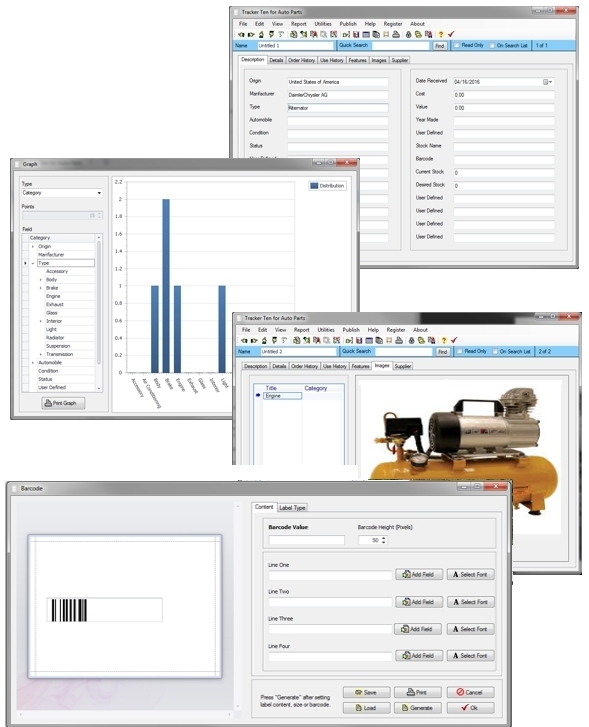
Tracker Ten uses the .dat file extension for its database files as a clear example of application-defined file usage. In this context, a .dat file is not a loose or unstructured data dump. It is a structured database file designed specifically for Tracker Ten’s internal data engine. The extension signals to both the user and the operating system that the file contains application-managed data rather than a document meant to be edited directly.
When Tracker Ten is installed, it typically registers itself with Windows as the default application for its specific .dat database files. This means that double-clicking a Tracker Ten database file will launch the program and load the data automatically. From the user’s perspective, the .dat file becomes synonymous with a Tracker Ten database, even though the extension itself remains generic in the broader Windows ecosystem.
Using .dat as a database extension offers several practical advantages. First, it avoids conflicts with other common database extensions such as .mdb, .accdb, or .db, which may already be associated with other software. Second, it discourages users from attempting to open or edit the file directly with third-party tools. This helps protect data integrity, as Tracker Ten expects the file structure to remain consistent with its internal schema. Opening or modifying the file outside the program could easily corrupt the database.
From a Windows file association standpoint, Tracker Ten’s use of .dat reinforces the importance of context. Windows does not inherently know that a .dat file is a Tracker Ten database. That knowledge comes from the association created during installation and the user’s interaction with the file. If the association is removed or changed, the file remains intact, but the convenience of automatic launching is lost. This separation between file content and file association is a core design principle of Windows.
File extensions also play a role in backup, security, and data management workflows. Administrators often rely on extensions to define which files should be included in backups, scanned by antivirus software, or synchronized between systems. By using a consistent .dat extension for its databases, Tracker Ten makes it easy to identify and manage its data files. At the same time, because the extension is generic, it avoids drawing unnecessary attention from tools that may apply special handling to well-known database formats.
It is also worth noting that Windows allows multiple programs to register interest in the same extension. This is another reason why using .dat can be advantageous. Tracker Ten can safely claim ownership of its database files without interfering with other applications that also use .dat for unrelated purposes. Each application understands its own files based on internal structure, not solely on the extension.
In practical terms, users should treat Tracker Ten .dat files as application assets rather than general-purpose data. They should be opened, backed up, moved, and restored using standard file system tools, but always accessed through Tracker Ten itself. This approach ensures that Windows file associations work as intended and that the database remains consistent and reliable.
In conclusion, Windows file extensions are a lightweight but powerful mechanism for identifying file types and associating them with applications. They provide convenience and organization without enforcing strict rules about file content. The .dat extension exemplifies this flexibility, serving as a generic container for application-defined data. Tracker Ten’s use of .dat for its database files demonstrates how a well-designed program can leverage Windows file associations while maintaining control over its data format. By understanding how extensions work and how applications like Tracker Ten use them, users can manage their files more confidently and avoid common mistakes that lead to data loss or corruption.
Looking for windows database software? Try Tracker Ten
- PREVIOUS Collecting Movie Memorabilia Friday, July 7, 2023
- NextTool and Hardware Tracking Database Software Thursday, June 15, 2023