Database
Managing Musical Instruments For Your School, Band or Store

Managing musical instruments is a complex task that extends far beyond simply knowing how many items are on hand. Instruments are valuable, fragile, frequently loaned, and often shared among many users. Schools must track which student has which instrument, bands must manage assignments and maintenance schedules, pawn shops need accurate inventory and valuation records, and music stores must balance sales, rentals, and repairs. In all of these environments, poor record keeping can lead to lost instruments, missed maintenance, insurance disputes, and unnecessary expenses. Tracker Ten for Instruments is designed to solve these problems by providing a centralized, flexible, and detailed database system for tracking musical instruments in a wide range of real-world scenarios.
At its core, Tracker Ten for Instruments functions as a comprehensive inventory management system. Each instrument in a collection can be entered as a unique record with detailed descriptive fields. These typically include instrument type, brand, model, serial number, finish, size, condition, and purchase details. For organizations managing dozens or even thousands of instruments, this structured approach immediately brings clarity. Instead of relying on paper lists or scattered spreadsheets, all information is stored in a single, searchable database that can be accessed quickly when needed.
For schools, instrument tracking is especially challenging because instruments are often owned by the school but used by students for long periods of time. Tracker Ten for Instruments allows schools to create clear ownership records while also tracking current assignments. Each instrument can be linked to a student record, including loan start dates, expected return dates, and condition notes. This makes it easy for band directors and administrators to see which student is responsible for each instrument at any given moment. When instruments are returned at the end of a term or school year, condition reports and images can be compared against previous records to identify damage or missing accessories.
Bands, both amateur and professional, benefit from similar capabilities. Many bands own shared instruments, backup equipment, and specialized items that are only used for certain performances. Tracker Ten for Instruments makes it easy to catalog these assets and track their movement between rehearsal spaces, storage facilities, and venues. Loan tracking ensures that instruments temporarily assigned to individual musicians are accounted for, reducing the risk of loss during tours or busy performance schedules. The database becomes a living inventory that reflects the current state of the band’s equipment rather than a static list that quickly becomes outdated.
Pawn shops and second-hand instrument dealers face a different but equally demanding set of requirements. Accurate inventory tracking is essential for valuation, resale, and legal compliance. Tracker Ten for Instruments allows pawn shops to record detailed acquisition information, including purchase price, date received, seller details, and condition at intake. Serial numbers and images play a crucial role here, helping to verify authenticity and protect against disputes. When instruments are sold, returned, or transferred, the database provides a clear historical record that supports both operational efficiency and regulatory requirements.
Music stores and instrument retailers can use Tracker Ten for Instruments to manage both inventory and maintenance workflows. New and used instruments can be tracked from the moment they arrive in the store through display, rental, sale, or repair. For stores offering instrument rentals, the loan tracking area becomes particularly valuable. Rental agreements, customer details, and return schedules can all be tied directly to individual instruments. This reduces confusion, improves customer service, and ensures that rental stock is rotated and maintained properly.
One of the standout features of Tracker Ten for Instruments is its maintenance tracking capability. Musical instruments require regular care, from routine cleaning and adjustments to major repairs. The software allows users to record maintenance history for each instrument, including service dates, work performed, costs, and service providers. Over time, this builds a complete maintenance profile that helps organizations make informed decisions. Schools can identify instruments that are becoming too costly to maintain, bands can schedule preventative care before tours, and stores can accurately represent the condition and service history of used instruments to buyers.
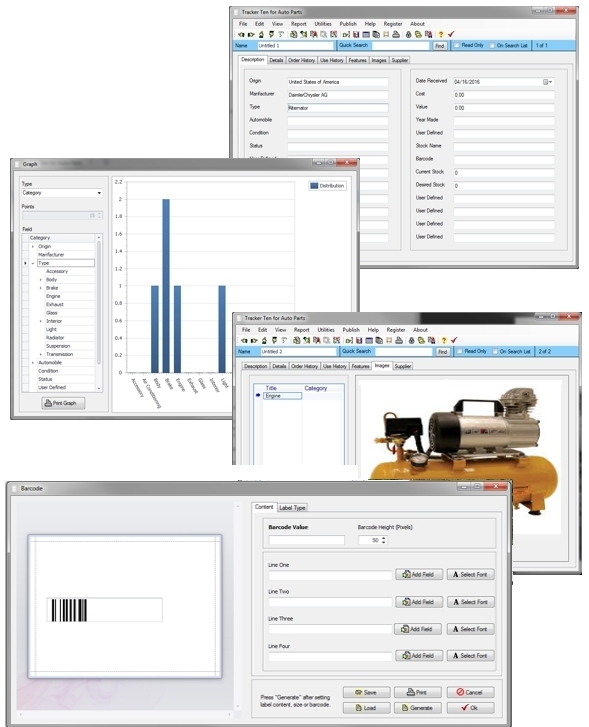
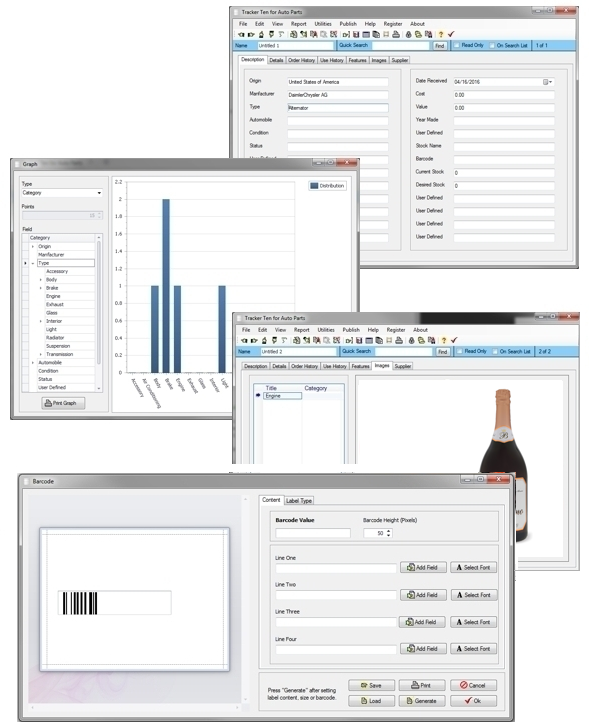
The ability to attach images and documents to instrument records adds another layer of value. Photos can capture condition at intake, after repairs, or before and after loans. This visual documentation is especially important for insurance purposes. In the event of theft, fire, or other loss, having detailed records with images greatly simplifies the claims process. Tracker Ten for Instruments supports full color reporting, allowing users to generate professional-looking inventory and insurance reports that clearly document ownership and value.
Advanced reporting and graph generation turn raw data into actionable insight. Users can generate reports showing total inventory value, instruments by category, maintenance costs over time, or loan activity by period. Graphs help visualize trends, such as increasing repair expenses or peak loan seasons. For administrators and business owners, these insights support better budgeting, purchasing, and policy decisions. Instead of guessing which instruments need replacement or which categories are most heavily used, decisions can be based on clear data.
Search functionality is another critical advantage. As collections grow, finding specific instruments quickly becomes essential. Tracker Ten for Instruments includes a powerful search engine that allows users to locate records by serial number, instrument type, brand, borrower, or any custom field. This is particularly useful in time-sensitive situations, such as identifying a missing instrument or responding to an insurance inquiry. What might take hours with manual records can be resolved in seconds with a well-organized database.
Customization ensures that the software adapts to different environments rather than forcing a one-size-fits-all approach. Schools, bands, pawn shops, and stores all have unique tracking needs, and Tracker Ten for Instruments supports custom fields, layouts, and reports. Users can tailor the database to reflect their terminology, workflows, and policies. This flexibility makes the software equally effective for a small school music program or a large commercial operation.
Optional web publishing extends the usefulness of the system even further. With this feature, selected data can be shared online in a controlled manner. A school might publish a list of available instruments, a band might share equipment inventories with members, or a store could present selected inventory information to customers or staff. This optional capability allows organizations to leverage their data without compromising security or control.
Data export features ensure that information stored in Tracker Ten for Instruments is never locked in. Records can be exported for use in accounting systems, spreadsheets, or external reporting tools. This interoperability is important for long-term data management and integration with other business or administrative processes.
In summary, Tracker Ten for Instruments provides a comprehensive solution for tracking musical instruments across a wide range of use cases. By combining detailed inventory records, loan tracking, maintenance history, advanced reporting, and full customization, the software addresses the real challenges faced by schools, bands, pawn shops, and music stores. It replaces fragmented record keeping with a centralized, reliable system that improves accountability, protects valuable assets, and supports informed decision making. For any organization responsible for managing musical instruments, Tracker Ten for Instruments offers a practical and scalable way to bring order, clarity, and confidence to the process.
Looking for windows database software? Try Tracker Ten
- PREVIOUS Air Gapped Database Saturday, August 17, 2024
- NextWhen to Archive Data Friday, July 26, 2024