Database
Quantum Computing and Databases: A Beginner’s Guide
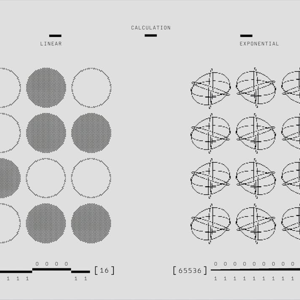
Quantum computing is one of the most exciting and rapidly developing fields in modern technology. While classical computers have served humanity for decades, quantum computing promises to revolutionize the way we process information. One area where quantum computing could have a significant impact is database management. This article explores the intersection of quantum computing and databases in an educational, easy-to-understand format for general readers.
1. Introduction to Quantum Computing
Quantum computing is a type of computing that uses principles from quantum mechanics to perform computations. Unlike classical computers that use bits, which are either 0 or 1, quantum computers use qubits, which can exist in multiple states at once thanks to superposition.
1.1 What is a Qubit?
A qubit is the basic unit of information in quantum computing. Unlike classical bits, qubits can represent 0, 1, or any quantum combination of both at the same time. This property allows quantum computers to process vast amounts of data simultaneously.
1.2 Key Principles of Quantum Computing
There are three fundamental principles that distinguish quantum computing from classical computing:
- Superposition: A qubit can be in multiple states at once, allowing parallel computation.
- Entanglement: Qubits can be linked so that the state of one affects the state of another, even over large distances.
- Quantum Interference: Quantum states can interfere with each other to amplify correct solutions and cancel out incorrect ones.
1.3 Quantum vs Classical Computing
Classical computers perform operations sequentially, whereas quantum computers can perform complex calculations across many possibilities simultaneously. This makes quantum computing especially powerful for tasks that involve large datasets or complex optimization problems.
2. Introduction to Databases
A database is an organized collection of data that can be accessed, managed, and updated efficiently. Databases are essential for businesses, research, and technology, enabling the storage and retrieval of information quickly and reliably.
2.1 Types of Databases
There are several types of databases, each with its own use cases:
- Relational Databases: Store data in tables with rows and columns (e.g., MySQL, PostgreSQL).
- NoSQL Databases: Store unstructured or semi-structured data (e.g., MongoDB, Cassandra).
- Graph Databases: Focus on relationships between data (e.g., Neo4j).
- Time-Series Databases: Store data over time (e.g., InfluxDB).
2.2 How Databases Work
Databases use a query language, such as SQL, to perform operations like:
- Inserting new data
- Updating existing data
- Deleting data
- Retrieving data based on specific criteria
Efficient database management ensures data integrity, security, and accessibility for users and applications.
3. The Need for Quantum Databases
As data grows exponentially, classical databases face limitations in speed, storage, and processing capabilities. Quantum computing offers potential solutions to these challenges:
3.1 Handling Large Datasets
Quantum computers can process massive amounts of data simultaneously due to superposition. This could allow quantum databases to perform searches and analyses far faster than classical databases.
3.2 Optimizing Complex Queries
Complex queries that take classical computers minutes or hours could be solved in seconds with quantum algorithms. This is particularly useful in finance, logistics, and scientific research.
3.3 Enhanced Security
Quantum computing enables quantum encryption methods like quantum key distribution (QKD), which could make database systems more secure against cyber threats.
4. Quantum Algorithms for Databases
Several quantum algorithms could revolutionize database operations. These algorithms leverage qubits, entanglement, and interference to perform tasks more efficiently than classical algorithms.
4.1 Grover’s Algorithm
Grover’s algorithm is designed for searching unsorted databases. While a classical computer takes O(N) steps to search a database of N items, Grover’s algorithm can do it in roughly O(√N) steps. This offers a quadratic speedup for search operations.
4.2 Shor’s Algorithm
Shor’s algorithm is known for factoring large numbers efficiently. While not directly a database search tool, it demonstrates how quantum computers can handle complex computations quickly, which could be applied to database encryption and security.
4.3 Quantum Machine Learning for Databases
Quantum computing can enhance machine learning on large datasets stored in databases. Quantum machine learning algorithms can analyze patterns and correlations much faster than classical approaches, enabling better predictions and insights.
5. Quantum Database Models
Researchers are exploring several models for quantum databases. These models aim to combine the benefits of quantum computing with the structure and reliability of classical databases.
5.1 Quantum Relational Databases
Quantum relational databases aim to store data in tables like classical relational databases but leverage quantum computing for faster queries. Quantum bits could allow simultaneous searches across multiple records, drastically reducing query times.
5.2 Quantum NoSQL Databases
Quantum NoSQL databases focus on storing unstructured data efficiently. Quantum principles can help in indexing and searching large, unstructured datasets such as social media content, logs, and multimedia files.
5.3 Hybrid Classical-Quantum Databases
Hybrid approaches combine classical and quantum computing. Data storage may remain classical for reliability, while computation and search operations use quantum algorithms. This approach is more feasible in the near term given the limitations of current quantum hardware.
6. Challenges in Quantum Databases
While quantum databases promise significant benefits, there are several challenges to overcome:
6.1 Hardware Limitations
Current quantum computers have limited qubits and are prone to errors. Building a fully functional quantum database requires more stable and scalable quantum hardware.
6.2 Error Correction
Quantum systems are highly sensitive to environmental noise. Effective quantum error correction is necessary to maintain data integrity, which is crucial for databases.
6.3 Integration with Existing Systems
Most organizations already use classical databases. Integrating quantum databases without disrupting existing infrastructure is a major challenge.
6.4 Cost
Quantum computing is still expensive. The cost of building and maintaining quantum databases may limit accessibility in the short term.
7. Future of Quantum Databases
The potential of quantum databases is immense. Here are some expected developments:
- Faster query processing for large-scale databases
- Advanced machine learning and predictive analytics
- Enhanced security with quantum encryption
- Hybrid database architectures combining classical and quantum systems
7.1 Quantum Cloud Services
Several tech companies are developing quantum cloud services that allow users to run quantum algorithms remotely. This could make quantum database capabilities accessible to more organizations without needing expensive hardware.
7.2 Real-World Applications
Quantum databases could revolutionize multiple industries:
- Healthcare: Analyze massive patient datasets to discover new treatments faster.
- Finance: Optimize trading strategies and detect fraud in real time.
- Logistics: Improve route planning and supply chain management.
- Research: Process large scientific datasets, from climate models to genomics.
8. Conclusion
Quantum computing has the potential to transform how we store, process, and analyze data. While still in its early stages, the development of quantum databases promises faster searches, improved security, and more powerful analytics. As quantum hardware matures and hybrid systems emerge, we may soon witness a revolution in database technology that could change the way businesses and researchers work with data.
For general readers, understanding the basics of quantum computing and its applications in databases provides a glimpse into the future of technology. While the technology is still emerging, the concepts of qubits, superposition, and quantum algorithms are paving the way for the next era of computing.