Database
Reasons to Use a Database

Databases are powerful tools that help individuals and organizations efficiently store, organize, and retrieve information. Anytime you need to manage large volumes of data, a database can dramatically increase productivity, save time, and reduce errors. While businesses and commercial organizations often rely on databases, their usefulness extends to hobbies, personal projects, and household management. From keeping track of physical items like books, collectibles, and tools, to managing students, research notes, stock portfolios, and digital assets, databases provide a structured and efficient solution for information management.
History of Databases
Databases predate the digital age. Before computers, people used various methods to organize and track information. Libraries relied on physical card catalogs to index and locate books, using systems like the Dewey Decimal Classification. Accountants and businesses kept detailed ledgers and filing cabinets to manage records. These analog systems laid the foundation for modern databases. Computerized databases essentially digitize these processes, storing information in structured formats on computers or servers, enabling fast access, sorting, and reporting.
The evolution of databases has seen multiple stages, from simple file-based storage to relational databases, object-oriented databases, and NoSQL databases. Each evolution aimed to improve performance, reliability, and scalability for managing ever-increasing amounts of information.
Why Use a Database to Capture Data?
Databases excel at capturing and storing large amounts of information efficiently. They allow users to add, modify, and delete data easily, as well as search, sort, and generate reports with minimal effort. For example, in an inventory system, databases enable Change Data Capture (CDC), which identifies modified information, such as stock levels. Without a database, manually monitoring such changes could be extremely time-consuming and error-prone.
Databases also provide structured organization, which supports automation. You can set rules and triggers to automatically handle specific actions, such as sending reorder notifications when stock falls below a threshold, calculating total sales for a given period, or updating related records in multiple tables simultaneously. This automation saves time, reduces human error, and improves operational efficiency.
Advantages of Using a Database
Using a database application offers numerous concrete advantages, including:
Data Organization: Databases reduce redundancy and organize information logically, making it easier to manage.
Improved Search and Query: Databases provide powerful query tools to locate data quickly, even in large datasets.
Cost Efficiency: By consolidating data, storage costs are reduced, and duplicate purchases or unnecessary expenses can be avoided.
Privacy and Security: Sensitive information can be stored securely with access controls and encryption.
Comprehensive Reporting: Databases allow you to generate detailed reports and gain insights into inventory, resource allocation, and other critical areas.
Real-Time Updates: Modern databases allow multiple users to access and modify information simultaneously, ensuring up-to-date data availability.
Why Use a Database Instead of Microsoft Excel?
While spreadsheets like Microsoft Excel or Google Sheets can handle smaller datasets, they become inefficient for larger volumes of data. Spreadsheets have size limitations, restricted querying capabilities, and limited reporting functionality. They also struggle to manage multimedia content such as images or documents efficiently.
Relational databases, in contrast, allow you to define relationships between tables. For example, instead of entering an artist’s name repeatedly beside each album in a music collection, you can store artist information in one table and link albums to the artist. This ensures consistency, reduces duplication, and maintains data integrity. Spreadsheets cannot enforce these relationships, which can result in errors and inconsistencies over time.
Why Use a Database Instead of Flat Files?
Some may consider storing each item in separate documents or flat files. While this approach works for small amounts of data, it quickly becomes cumbersome as data grows. Searching for information requires opening each file individually, and generating reports involves manually consolidating data, which is time-consuming and error-prone.
Databases solve these problems through structured storage, indexing, and querying. Indexes allow rapid retrieval of information, similar to a phone book that allows you to find a person’s number quickly by last name. Additionally, relational databases support complex queries, aggregations, and reporting without duplicating data, saving time and ensuring consistency.
No Coding Databases
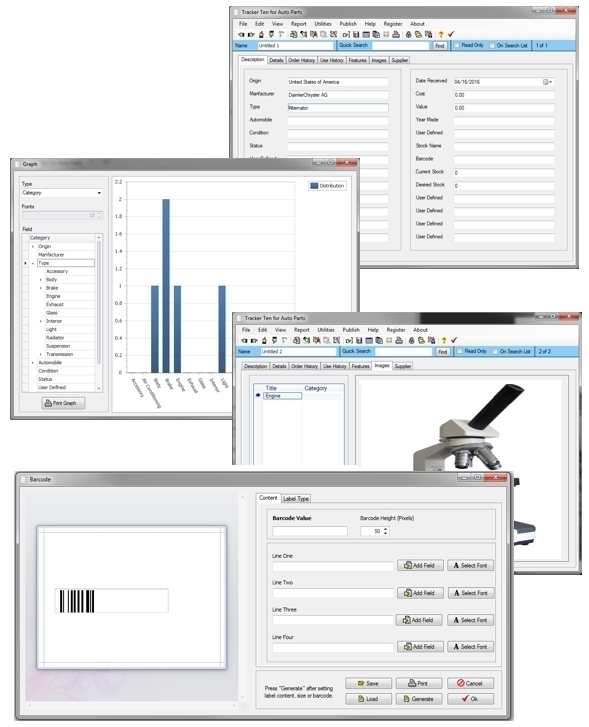
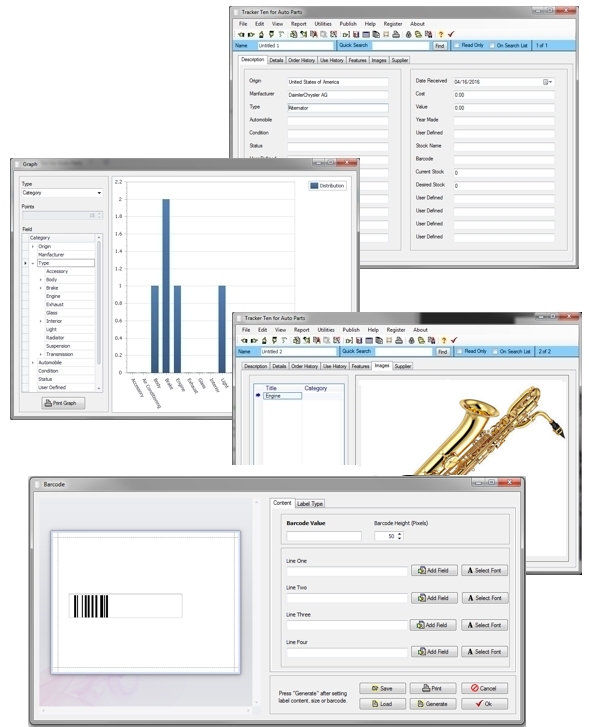
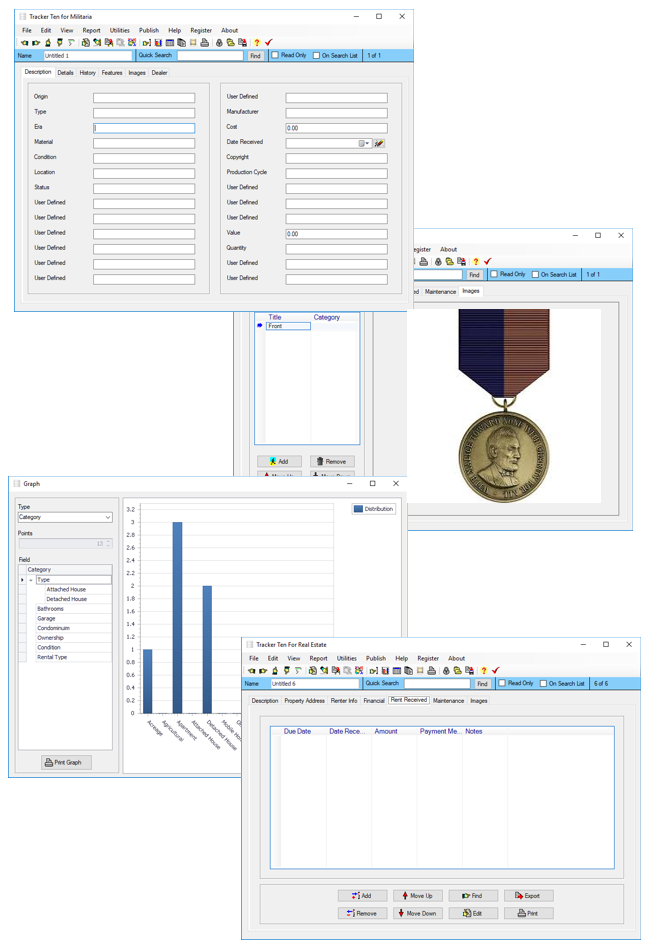
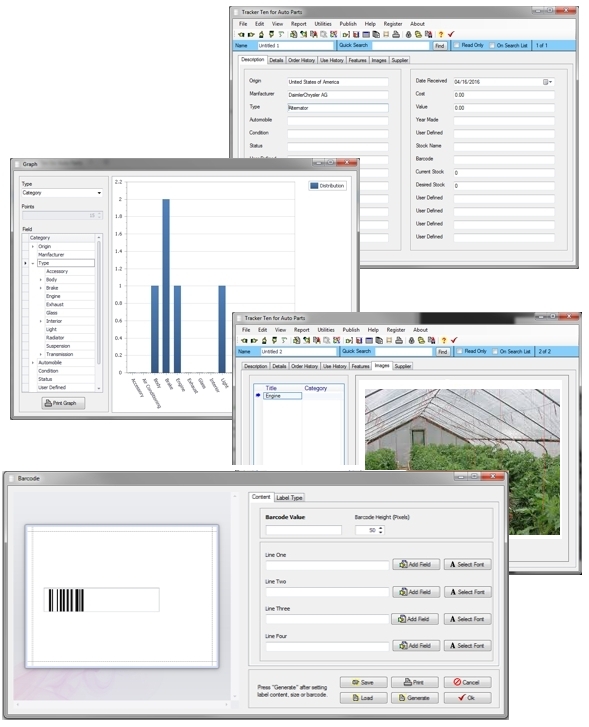
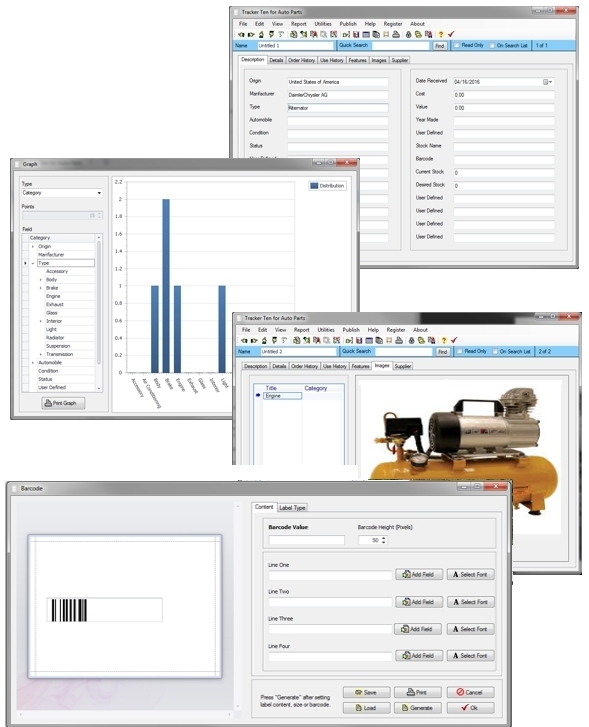
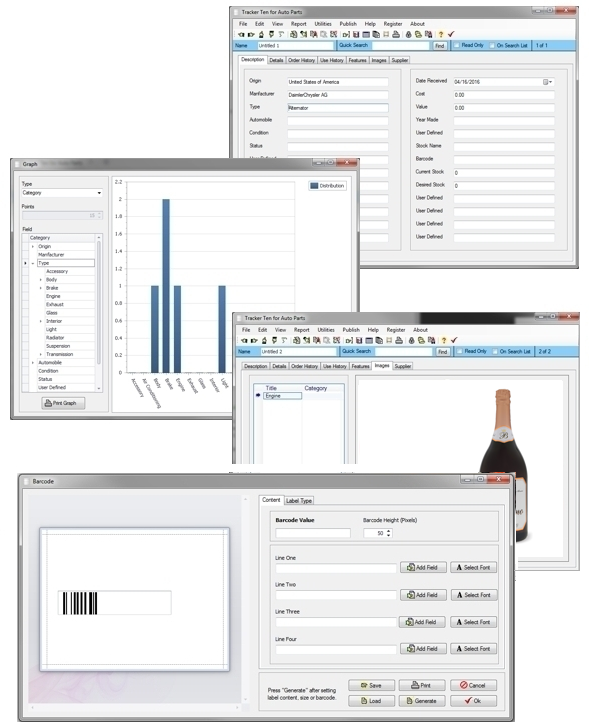
If you need a database but lack the technical skills or resources to develop one from scratch, prebuilt applications are an excellent solution. Software like Tracker Ten provides ready-to-use database applications for home, business, and hobby purposes. These applications offer intuitive interfaces, automated reporting, and robust search capabilities without requiring coding knowledge.
Tracker Ten Database Desktop Application Free Download
For users seeking a ready-made solution, Tracker Ten offers a catalog of prebuilt database applications tailored for various use cases. Whether you need to manage home inventories, business products, digital assets, or research data, Tracker Ten provides free trial downloads so you can test the software before committing to a purchase. For specialized needs, custom solutions are available by contacting their support team at info@datavillage.com.
Case Studies: Database Applications in Real Life
Databases are used in countless industries and applications. Some examples include:
Retail: Inventory management systems track stock levels, automate reordering, and generate sales reports.
Education: Student information systems maintain records of grades, attendance, and enrollment, while enabling efficient reporting for administrators.
Healthcare: Patient databases store medical history, lab results, and appointments, improving treatment quality and coordination.
Hobby Collections: Collectors of coins, stamps, or records can track items, valuations, and ownership history in a structured database.
Financial Management: Personal and professional finance databases help track investments, expenses, and portfolio performance.
Database Security and Compliance
Modern databases incorporate security features to protect sensitive data. Access control, authentication, and encryption are standard features that prevent unauthorized access. Regulatory compliance, such as GDPR for personal data or HIPAA for healthcare information, is often built into database systems, ensuring legal adherence and protecting the organization from liability.
Database Best Practices
To maximize the benefits of a database, follow these best practices:
Data Normalization: Organize data to minimize redundancy and dependency, improving efficiency and integrity.
Regular Backups: Ensure data is backed up to prevent loss in case of system failure.
Access Controls: Limit user permissions based on roles to secure sensitive data.
Indexing: Use indexes for frequently queried fields to speed up data retrieval.
Regular Maintenance: Monitor and optimize database performance through indexing, cleanup, and optimization routines.
Documentation: Maintain documentation of database design, relationships, and workflows to facilitate maintenance and onboarding of new users.
Future of Databases
Database technology continues to evolve. Cloud databases, NoSQL systems, and distributed databases enable scalability, flexibility, and real-time processing for massive datasets. Artificial intelligence and machine learning integration allows predictive analytics, intelligent query suggestions, and anomaly detection. This evolution ensures that databases remain vital for managing information efficiently in an increasingly data-driven world.
Looking for windows database software? Try Tracker Ten
- PREVIOUS Databases in Science Fiction Sunday, September 21, 2025
- NextRock Collecting Monday, September 15, 2025