Database
Tracking Auto Parts
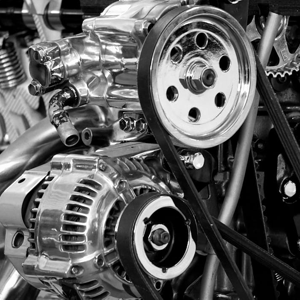
Tracking auto parts efficiently is a major challenge for auto parts stores, salvage yards, repair shops, and private car collectors. Inventories often include thousands of items that vary widely in size, condition, compatibility, and value. Parts may be new, used, refurbished, rare, or obsolete, and many look similar at a glance while having very different applications. Without a structured system, it becomes easy to lose track of quantities, misidentify parts, overlook valuable inventory, or waste time searching through shelves, bins, and yards. Tracker Ten for Auto Parts provides a centralized, flexible, and practical solution for managing auto parts inventory across a wide range of automotive operations.
At its core, Tracker Ten for Auto Parts is designed to store detailed records for every part in inventory. Each auto part can have its own database record containing identifying information such as part name, category, manufacturer, model compatibility, condition, and location. This makes it possible to distinguish between parts that may appear identical but fit different vehicles or model years. For auto parts stores and junkyards dealing with high volumes of inventory, this level of detail is essential for accuracy and efficiency.
Inventory quantity tracking is one of the most important features of Tracker Ten. For retail stores, knowing exactly how many items are in stock helps prevent overselling, stockouts, and unnecessary reorders. Quantities can be updated as parts are sold, returned, or received, ensuring inventory levels remain current. In a junkyard environment, quantity tracking can be used to record how many identical parts are available across multiple donor vehicles. For car collectors, it provides a clear picture of spare parts on hand, helping avoid duplicate purchases and supporting long-term restoration planning.
Location tracking plays a critical role in real-world auto parts management. Parts may be stored in warehouses, back rooms, shelving units, storage containers, or across large outdoor salvage yards. Tracker Ten allows users to record precise location details for each item, such as aisle numbers, bin locations, shelf codes, or yard sections. This dramatically reduces the time spent searching for parts and improves customer service by enabling faster retrieval when a sale or request is made.
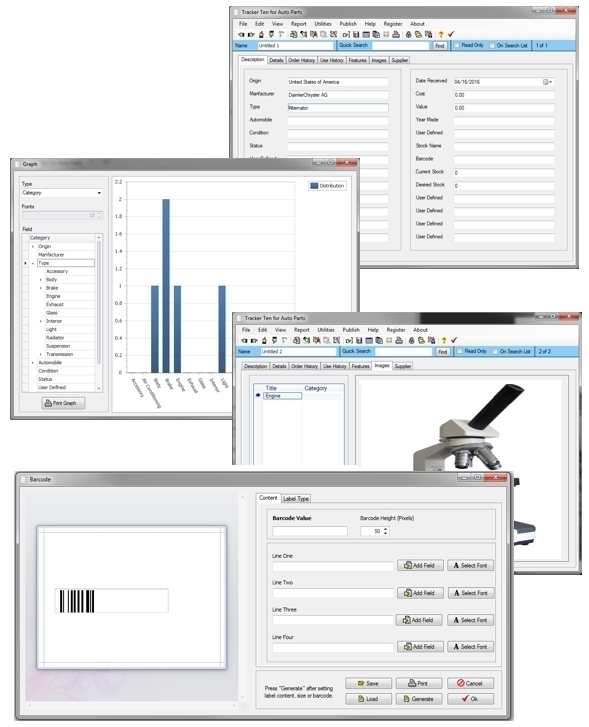
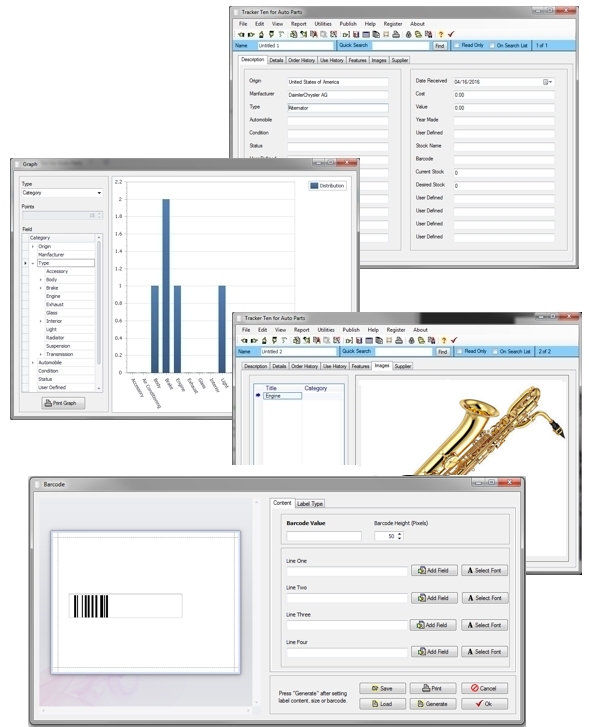
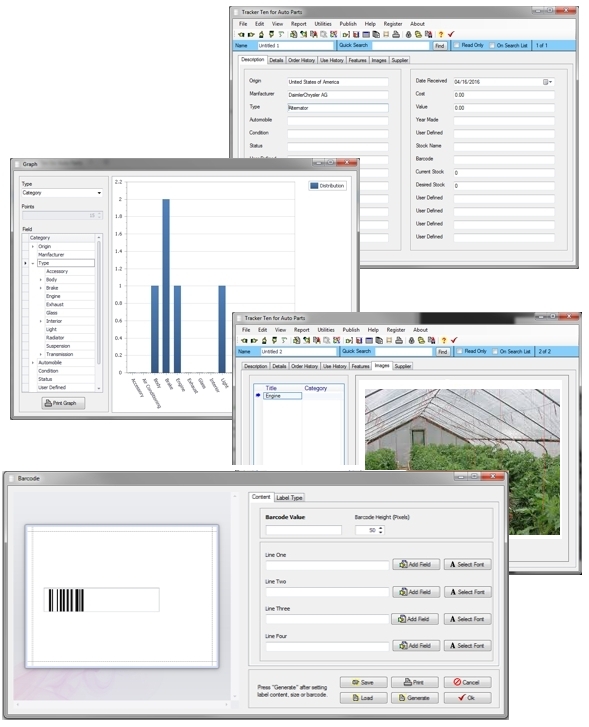
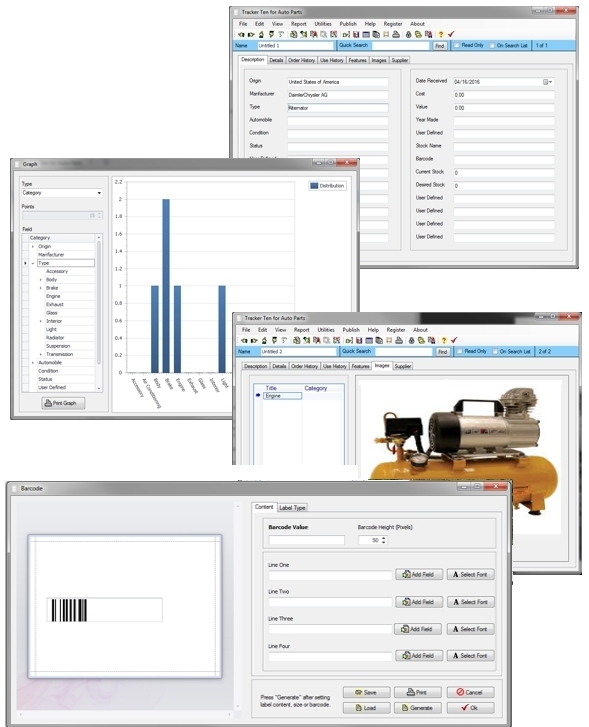
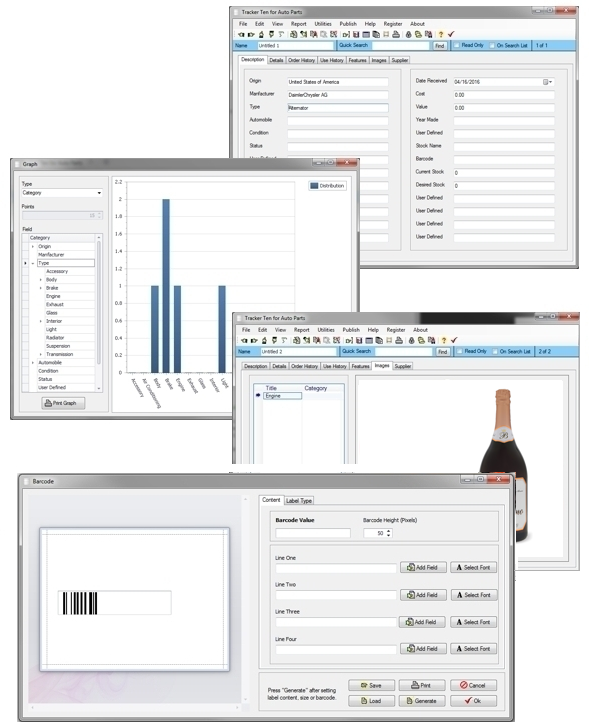
Barcode generation and printing is another powerful capability that enhances day-to-day operations. Tracker Ten can generate and print barcodes for each inventory record using standard barcode printers. Once barcodes are attached to parts, bins, or packaging, staff can scan items to quickly access records or update quantities. In busy retail environments, barcode scanning speeds up sales transactions and inventory adjustments. In junkyards, it helps reduce errors when pulling parts from storage. For collectors, barcodes add a professional level of organization to personal inventories.
The ability to customize fields makes Tracker Ten highly adaptable to different automotive use cases. Auto parts stores may want to track pricing tiers, suppliers, reorder points, and warranty information. Junkyards might focus on donor vehicle details, VIN numbers, mileage, and condition grading. Car collectors may prioritize originality, restoration status, or compatibility notes. Tracker Ten allows users to add and tailor fields so the database reflects the specific information that matters most to their operation.
Rich text edit areas further enhance record detail by allowing users to add descriptive notes that go beyond simple data fields. These notes can include compatibility warnings, installation tips, known defects, refurbishment details, or historical context. For example, a junkyard might note that a transmission was pulled from a running vehicle, while a collector might document the provenance of a rare part. These notes become especially valuable over time as inventory changes hands or staff members change.
Multi-image tracking for each record is particularly useful in the auto parts world. A single part can have multiple angles, identifying marks, casting numbers, or wear areas that are important to document. Tracker Ten allows multiple images to be attached to each record, making it easier to visually confirm part identity and condition. For online sales or customer inquiries, having images readily available improves communication and reduces misunderstandings. For collectors, photos help preserve information about rare or delicate parts without repeated handling.
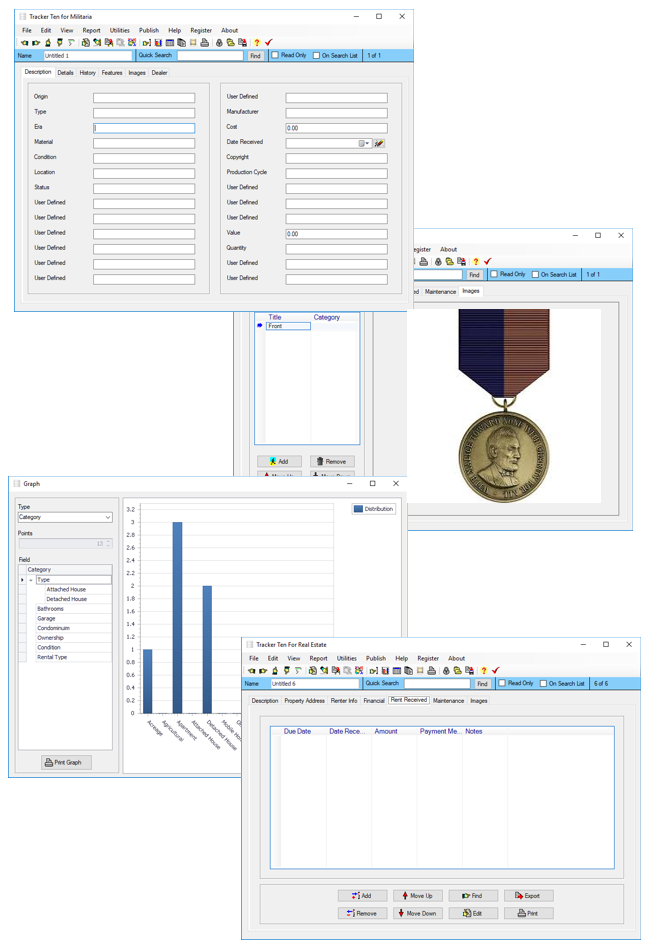
Flexible full-color reporting and graphing tools give managers and owners insight into their inventory. Reports can be generated to show current stock levels, high-value items, slow-moving parts, or parts grouped by category or vehicle type. Graphs make it easier to spot trends, such as which parts sell most frequently or which categories tie up the most capital. These insights support better purchasing decisions, pricing strategies, and inventory turnover management.
For junkyards, reporting can be used to analyze which donor vehicles produce the most valuable parts or which categories generate the highest returns. This data-driven approach helps guide acquisition decisions and yard organization. For auto parts stores, reports can highlight seasonal trends or recurring customer demand, allowing inventory to be adjusted proactively. For collectors, reports provide a clear overview of the collection’s scope, value, and restoration progress.
Tracker Ten is designed specifically for newer versions of Windows, making it accessible and familiar to most users. Its desktop-based approach offers fast performance and direct control over data without relying on constant internet connectivity. This can be especially beneficial in warehouse or yard environments where connectivity may be unreliable. Local data storage also provides a sense of ownership and control that many businesses and collectors value.
Ease of use is a defining strength of Tracker Ten. Auto parts operations are often fast-paced, and staff may not have time for complex systems. The software’s intuitive interface and straightforward data entry reduce training time and encourage consistent use. When inventory systems are easy to maintain, data quality improves, leading to more reliable information and better outcomes.
For car collectors, Tracker Ten serves not just as an inventory system but also as a long-term archive. Many collectors accumulate parts over years or decades, often across multiple projects. The software allows collectors to document what they own, where it is stored, and what it is intended for. This prevents lost parts, forgotten purchases, and unnecessary reordering. It also adds value when selling parts or entire collections, as detailed records increase credibility and transparency.
Financially, improved tracking reduces waste and increases profitability. Stores avoid tying up capital in excess inventory, junkyards reduce lost or misidentified parts, and collectors protect investments in rare components. Accurate inventory data also supports insurance documentation by providing clear records of high-value parts and collections.
In conclusion, Tracker Ten for Auto Parts is a versatile and powerful solution for tracking automotive inventory in retail stores, junkyards, and private collections. By combining inventory quantity tracking, barcode generation, customizable fields, rich text notes, multi-image support, and advanced reporting, the software addresses the real-world challenges of managing auto parts. Its flexibility allows it to adapt to a wide range of automotive operations, while its ease of use ensures consistent and accurate recordkeeping. Whether managing thousands of parts for sale or preserving a carefully curated collection, Tracker Ten provides the structure and visibility needed to stay organized, efficient, and in control.
Looking for windows database software? Try Tracker Ten
- PREVIOUS Coin Collecting Database Software Saturday, August 23, 2025
- NextHow to Organize Information Saturday, August 9, 2025