Database
Designing a Single User Database Schema

Designing a database schema can feel intimidating to a novice, especially if you have never worked with databases before. Terms like "tables," "relationships," "keys," and "normalization" can sound abstract and technical. The good news is that designing a single-user database is one of the best ways to learn database fundamentals because the scope is limited, performance demands are modest, and the design can focus on clarity and ease of use rather than complex scalability concerns. This article explains the core concepts and practical steps involved in designing a single-user database schema, using plain language and real-world examples. By the end, you should feel confident enough to design a simple, well-structured database that meets your needs and can grow with you over time.
A single-user database is exactly what it sounds like: a database that is used by one person at a time, typically on a single computer. Examples include a home inventory database, a small business customer list, a personal book collection, or a project tracker. Because only one person is accessing the data, you do not need to worry about multiple users editing the same record at once, complicated security models, or heavy server infrastructure. This allows you to focus on the most important goal of database design: organizing information in a logical, consistent, and reliable way.
The first step in designing any database schema is to clearly define the purpose of the database. Before creating tables or choosing field names, take time to think about what problem the database is meant to solve. Ask yourself what kind of information you want to store and what you want to be able to do with that information. For example, if you are designing a database to track customers and invoices, you might want to store customer contact details, invoice dates, line items, totals, and payment status. Writing these goals down in plain language helps prevent confusion later and keeps the design focused.
Once you understand the purpose, the next step is to identify the main entities in your system. An entity is a real-world object or concept that you want to store information about. In a personal library database, entities might include books, authors, and publishers. In a task-tracking database, entities could be tasks, projects, and categories. Each entity usually becomes a table in your database. Beginners often make the mistake of trying to put everything into one table, but separating information into logical entities makes the database easier to understand, maintain, and expand.
After identifying the entities, you should list the attributes for each one. Attributes are the individual pieces of information you want to store about an entity. For a "Book" table, attributes might include title, ISBN, publication year, genre, and location on a shelf. At this stage, it is helpful to think in terms of questions your database should answer. For example, "What is the title of the book?" or "When was it published?" Each answer usually corresponds to a field in a table. Keep attribute names clear and descriptive, avoiding abbreviations that might be confusing later.
One of the most important concepts in database schema design is the idea of a primary key. A primary key is a field, or combination of fields, that uniquely identifies each record in a table. In a single-user database, this is often an automatically generated number, such as an ID field that increments with each new record. Using a simple numeric primary key makes it easy to reference records and build relationships between tables. While it may be tempting to use something like a name or an email address as a primary key, these values can change over time, which can cause problems later.
Relationships between tables are another core concept that novices must understand. A relationship describes how records in one table are connected to records in another. For example, one customer can have many invoices, but each invoice usually belongs to one customer. This is known as a one-to-many relationship. In a database schema, relationships are typically implemented using foreign keys. A foreign key is a field in one table that refers to the primary key of another table. In the customer-invoice example, the Invoice table would include a CustomerID field that links each invoice to a specific customer.
Designing relationships carefully helps avoid data duplication and inconsistencies. Without relationships, you might end up storing the same customer address in multiple invoice records. If the address changes, you would have to update it in many places, increasing the risk of errors. By storing the address once in the Customer table and linking invoices to customers, you ensure that the data remains consistent and easier to maintain.
Normalization is a term that often scares beginners, but the basic idea is simple. Normalization is the process of organizing data to reduce redundancy and improve data integrity. For a novice designing a single-user database, it is usually sufficient to understand the first few normal forms. In practical terms, this means avoiding repeating groups of data in a single table and ensuring that each piece of information is stored in the most appropriate place. For example, instead of having multiple phone number fields in a Customer table, you might create a separate PhoneNumbers table if you need to store many numbers per customer. However, it is also important not to over-complicate the design. In a small single-user database, a slightly less normalized design can be acceptable if it improves simplicity and usability.
Choosing appropriate data types for each field is another key design decision. Data types define what kind of data a field can hold, such as text, numbers, dates, or boolean values. Selecting the right data type helps prevent invalid data from being entered and can improve performance. For example, a date field should be stored as a date type rather than as text, and a quantity field should be numeric. As a beginner, you do not need to memorize every possible data type, but you should understand the basic ones and use them consistently.
Naming conventions play a surprisingly important role in schema design. Clear, consistent names make the database easier to understand and use, especially as it grows. Table names are often singular nouns, such as "Customer" or "Invoice," while field names describe the data they contain, such as "FirstName" or "InvoiceDate." Avoid spaces and special characters in names, as these can cause issues in some database systems. Good naming habits established early will save you confusion later.
Another consideration in a single-user database is how much validation and constraint logic to include. Constraints are rules that enforce data integrity, such as requiring a field to have a value or ensuring that a number falls within a certain range. For example, you might require that every invoice has a date and a total amount greater than zero. Including basic constraints helps catch errors early and keeps the data reliable. In a single-user environment, you can often implement these rules directly in the database or in the application that uses it.
It is also wise to think about future growth, even when designing a database for one user. While you may only need a few tables today, your requirements might expand over time. Designing a clean schema with well-defined tables and relationships makes it easier to add new features later, such as additional reports or new types of data. At the same time, avoid designing for hypothetical future needs that may never arise. A good rule of thumb is to design for what you know you need, while leaving room for reasonable expansion.
Testing and iteration are essential parts of the design process. Once you have a draft schema, try entering sample data and performing the tasks you expect to do regularly. Does the structure feel intuitive? Are there fields you forgot or fields that seem unnecessary? Single-user databases are especially well-suited to iterative improvement, because changes can often be made without affecting other users. Do not be afraid to revise your schema as you learn more about your requirements and about database design in general.
Finally, documentation is an often overlooked but valuable practice, even for small databases. Writing brief notes about what each table represents and how tables relate to one another can be incredibly helpful in the future, especially if you return to the project after a long break. Simple documentation also reinforces your understanding of the design and makes it easier to explain the database to others if needed.
In conclusion, designing a single-user database schema is an excellent learning experience for novices. By focusing on clear goals, identifying entities and attributes, using primary keys and relationships wisely, and keeping the design simple and logical, you can create a database that is both useful and easy to maintain. While there is always more to learn about advanced database concepts, a well-designed single-user schema provides a strong foundation. With practice and thoughtful iteration, even a beginner can design a database that feels professional, reliable, and ready to support real-world tasks.
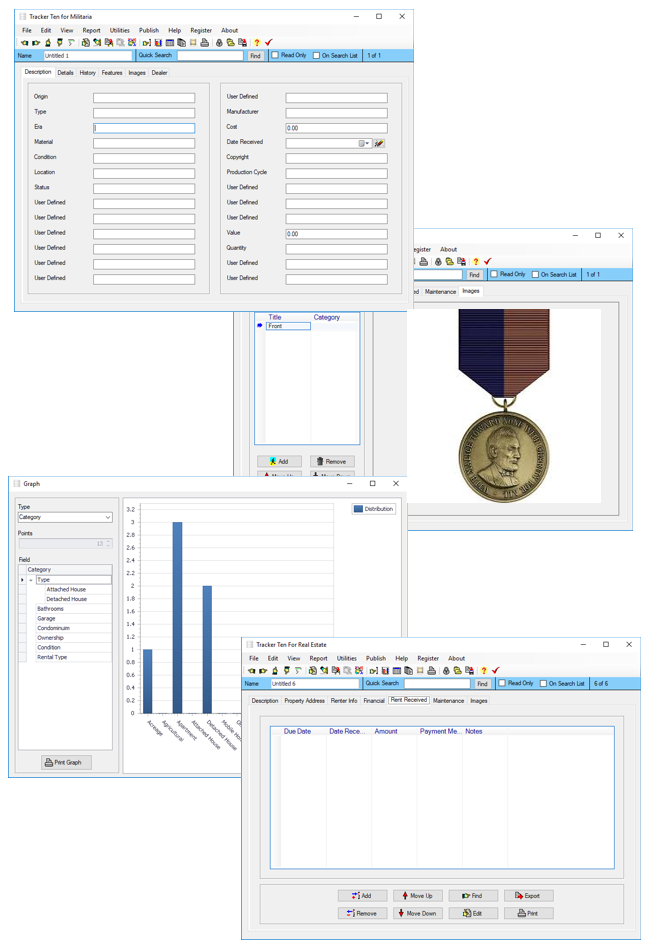
Looking for windows database software? Try Tracker Ten
- PREVIOUS Integrating with the Wikipedia & Wikidata APIs Using Python Tuesday, March 5, 2024
- NextIntellectual Property Issues For Your Database Friday, February 16, 2024