Hobbies
Tracking Your Art Collection in a Database

Whether you are a private collector, a museum curator, a gallery owner, an artist, or an art studio manager, maintaining a detailed and accurate record of your art collection is essential. Art collections often represent not only significant financial investments but also cultural, historical, and emotional value. As collections grow in size and diversity, managing them with spreadsheets, handwritten notes, or memory alone quickly becomes impractical and risky. A dedicated database provides a structured, reliable, and scalable way to document, organize, protect, and understand your collection.
An art collection can include a wide range of objects such as paintings, posters, prints, sculptures, ceramics, jewelry, rugs, tapestries, textiles, drawings, mixed-media works, installations, and even digital art. Each category has its own characteristics, storage needs, valuation methods, and documentation requirements. Despite this diversity, there are common principles that apply to tracking all forms of artwork effectively. By maintaining a comprehensive art inventory in a database, you can accurately assess the value of your collection, manage insurance coverage, track provenance, support exhibitions and loans, and prove ownership in the event of loss, theft, or damage.
In fact, insurance providers often require detailed documentation before issuing or honoring a policy. A well-maintained database, complete with photographs, appraisals, and ownership history, can significantly simplify insurance claims and reduce disputes. For a deeper discussion of insurance-related considerations, see our Asset Tracking Database for Insurance Inventory article.

Take Photographs and Videos
The foundation of any art collection database is high-quality visual documentation. The first step in cataloging your artwork is to take multiple clear, high-resolution photographs of each item from all relevant angles. These images serve several purposes: they help identify the piece, document its condition, support authentication, and provide visual evidence for insurance or appraisal purposes.
If the artwork is signed, stamped, or numbered, be sure to capture close-up images of these details. Signatures, edition numbers, and maker’s marks are often critical in establishing authenticity and value. Modern digital cameras and high-end smartphones, including Android and Apple iPhones, are usually more than sufficient, provided they are used carefully and in good lighting conditions.
In addition to still photographs, you may also consider recording short videos, especially for three-dimensional works such as sculptures, ceramics, or installations. Videos can provide a sense of scale, depth, and texture that static images sometimes miss. However, keep in mind that video frames generally have lower resolution than still images, so videos should supplement, not replace, high-quality photographs.
If you are shipping or lending an artwork, it is also wise to photograph the packaging process. Images showing protective materials such as bubble wrap, foam, crates, or corner protectors can be invaluable if damage occurs during transport. These photos demonstrate that appropriate care was taken when the item left your possession.
When photographing artwork, aim to use natural light whenever possible and avoid harsh shadows or artificial lighting that can distort colors. A clutter-free environment with a neutral, single-color background is ideal. Framed works can sometimes create glare due to glass reflections, so if it is safe and practical to do so, you may want to temporarily remove the frame for photography. The goal is to capture the artwork as accurately and clearly as possible.
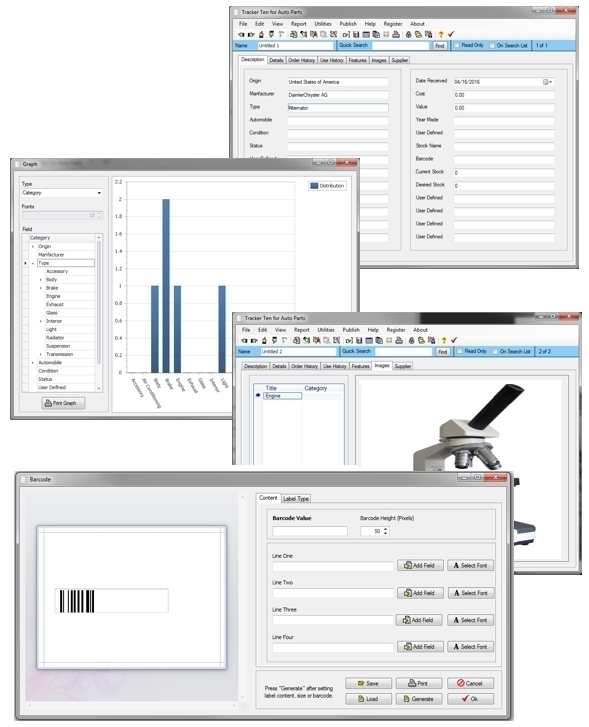
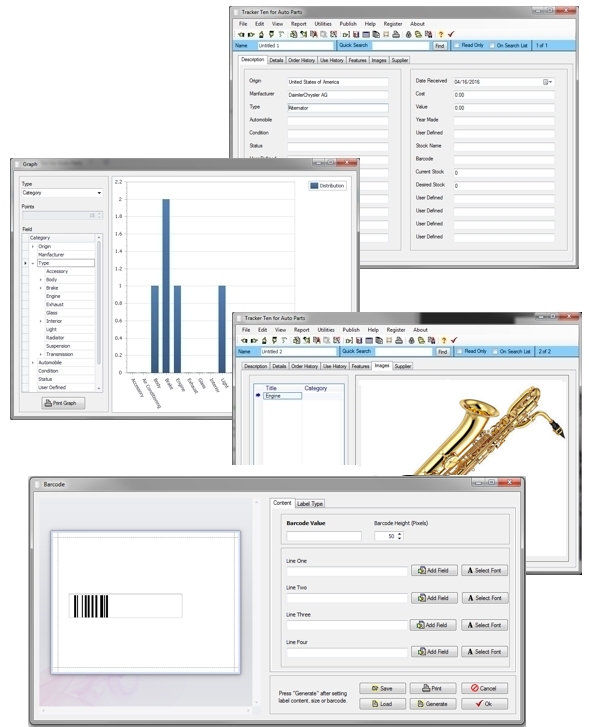
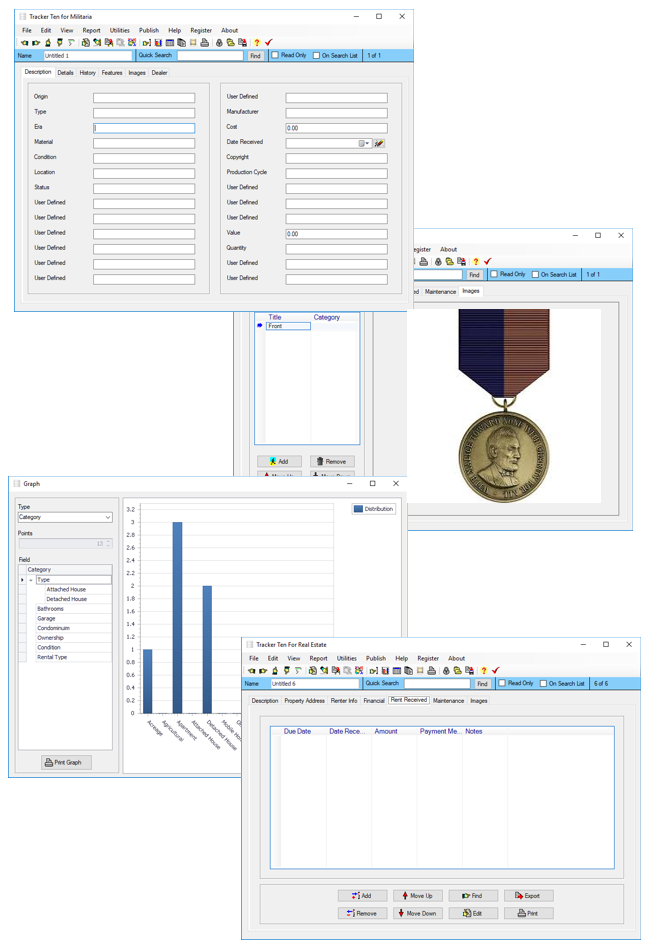
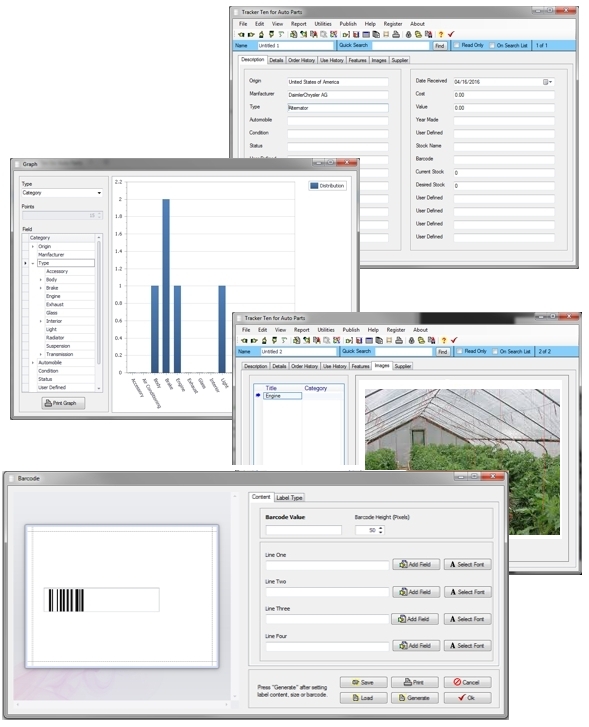
Our Tracker Ten for Art database software application provides full support for storing and organizing multiple images and videos for each artwork, making it easy to visually document your entire collection in one place.
Artwork Details, Materials, and Measurements
Photographs alone are not enough to fully document an artwork. A robust art database should also capture detailed descriptive information about each piece. These details help distinguish similar works, support appraisals, assist with conservation planning, and provide valuable context for curators, buyers, and researchers.
Basic measurements are essential. You should record the dimensions of each item, including length, width, and depth, using consistent units such as inches or centimeters. For three-dimensional objects, depth and weight may be particularly important. Even for flat works like paintings or drawings, thickness can matter for framing, storage, and shipping considerations.
Material information is another key component. Record the materials used to create the artwork, such as canvas, paper, wood, metal, clay, resin, textile, glass, or mixed media. For works on paper or canvas, you may also want to note the type of support and ground. Material details can influence conservation needs, environmental requirements, and long-term durability.
For paintings, drawings, and prints, it is useful to document the technique and medium, such as oil, acrylic, watercolor, gouache, ink, charcoal, pastel, graphite, or digital print. This information provides insight into how the work was created and how it should be handled and preserved.
Additional details may include the artist’s name, the year or approximate period when the work was created, serial numbers, catalog references, and edition or piece numbers for limited runs. Color palette, dominant hues, surface texture, and finishing techniques may also be worth recording, particularly for works where subtle variations matter.
Add Values, Appraisals, and History
One of the most important aspects of tracking an art collection is recording financial and historical information. In database terms, this often includes provenance, appraisals, and valuation data. Provenance refers to the documented history of ownership of an artwork. A clear and well-documented provenance can significantly enhance a piece’s credibility, desirability, and market value.
Whenever possible, you should record where and when an artwork was acquired, along with the name of the seller, gallery, auction house, or artist. If the item has passed through multiple owners, documenting this chain of custody helps establish authenticity and reduces the risk of acquiring stolen or disputed works. For older or historically significant pieces, provenance records can be extensive and may include references to exhibitions, collections, and publications.
Professional appraisals are another critical element. Appraisals provide an expert assessment of an artwork’s value at a specific point in time. These valuations may be used for insurance coverage, estate planning, donations, or sales. Your database should allow you to store appraisal dates, appraiser names, appraisal values, and supporting documentation.
Supporting documents such as receipts, invoices, bills of sale, certificates of authenticity, and appraisal reports should be scanned and attached to the corresponding database records. If an artwork has appeared in auction catalogs, exhibition guides, gallery publications, or museum listings, including scans or references to these materials can further strengthen documentation.
Many collectors view art as both a passion and an investment. As such, tracking financial performance over time can be valuable. You may want to record the purchase price, current estimated value, and eventual sale price if the item is sold or transferred. Because art valuation can be subjective and fluctuate based on market conditions, it is also useful to note the source of each valuation, such as a gallery listing, auction result, or professional appraisal.
Keep Accurate Artwork Notes
Beyond structured fields like dimensions and values, a good art database should allow for detailed free-form notes. These notes can capture nuances and insights that do not fit neatly into predefined categories but are nonetheless important.
Artwork notes may include observations about condition issues such as cracks, fading, repairs, or restorations. They may also document stories about previous owners, anecdotes shared by the artist, or connections to other works in a series. In many cases, small details that are not immediately obvious can have a significant impact on both appreciation and value.
If you have access to the artist, firsthand insights can be especially valuable. You may be able to record information about the inspiration behind the piece, the circumstances under which it was created, or the meaning of specific symbols, colors, or techniques. While visual art is often said to speak for itself, contextual information can greatly enrich understanding and enjoyment.
For older works where direct access to the artist is not possible, historical research and scholarly commentary can serve a similar purpose. Notes about the cultural context, artistic movement, or historical events surrounding a piece can deepen its significance and help explain stylistic choices.
To improve searchability within your database, consider adding keywords or tags to each artwork. These might include subject matter such as portrait, landscape, abstract, or still life; time period or artistic movement; thematic elements; and cultural or geographic associations. Well-chosen keywords make it much easier to locate specific items in large collections.
Track Artwork Location
As collections grow, artworks are often stored or displayed in multiple locations. Some pieces may be on display in galleries or museums, others may be in private residences, storage facilities, or warehouses. Additionally, artworks may be loaned to exhibitions, institutions, or individuals for extended periods.
For these reasons, it is essential to track the current and historical location of each item in your database. Location tracking helps prevent loss, supports logistics planning, and ensures accountability. It also simplifies tasks such as preparing exhibitions, conducting audits, and responding to insurance inquiries.
Location records may include room numbers, storage unit identifiers, crate numbers, or off-site addresses. For loaned items, you may also want to record loan start and end dates, borrower information, and return conditions.
Tracker Ten for Art
Our Tracker Ten for Art desktop database software application is designed specifically to support the needs of art collectors, galleries, museums, and studios. It allows you to store and organize all of the information discussed above in a single, easy-to-use system.
With Tracker Ten for Art, you can attach multiple photographs and videos to each artwork, record detailed descriptive and financial data, track provenance and appraisals, store scanned documents, maintain notes and keywords, and monitor item locations. The system is flexible enough to accommodate collections of all sizes and types, from small private holdings to large institutional inventories.

If you are looking for reliable, purpose-built software to help you track and protect your art collection, we invite you to explore Tracker Ten for Art. A well-organized database not only safeguards your collection but also enhances your ability to understand, enjoy, and share it for years to come.
Looking for windows database software? Try Tracker Ten
- PREVIOUS Artificial Intelligence Assisted Data Preparation Monday, November 10, 2025
- NextFuture Antiques Tuesday, October 28, 2025